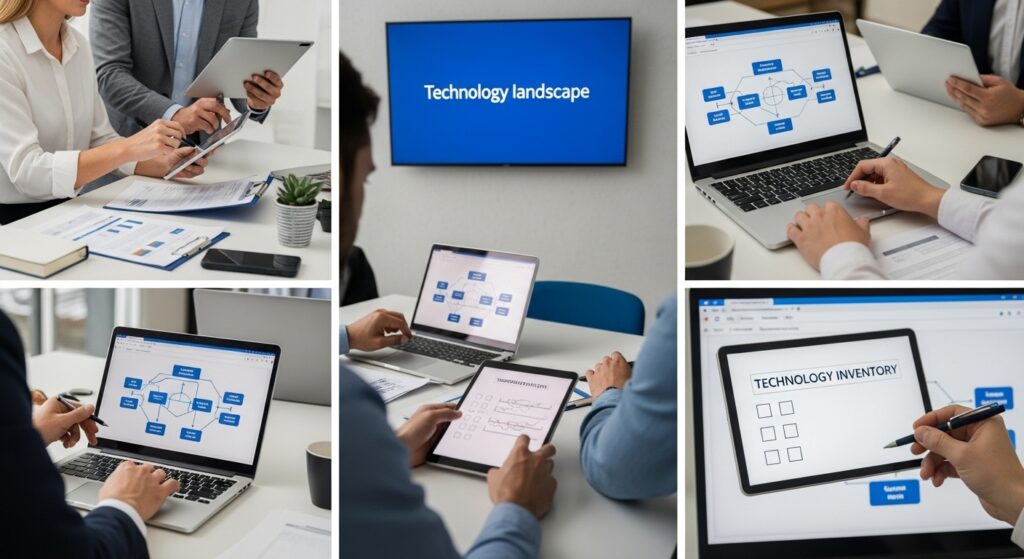
Over 80 percent of American accounting firms now rely on digital tools to stay competitive and grow their practices. Every independent CPA in Miami faces mounting pressure to deliver more value in less time. Digital transformation is redefining what it means to be an impactful accountant, making it possible to serve clients faster and smarter while tackling revenue growth head-on. Discover how simple shifts in technology adoption can dramatically widen your margin and elevate your practice.
Table of Contents
- What Digital Transformation Means For CPAs
- Core Technologies Reshaping Miami Firms
- Workflow Automation And Practice Efficiency
- Key Change Management Strategies For CPAs
- Compliance, Cybersecurity, And Implementation Risks
- Avoiding Common Pitfalls And Maximizing ROI
Key Takeaways
| Point | Details |
|---|---|
| Embrace Digital Transformation | CPAs should shift from traditional methods to incorporate technologies like AI and cloud computing for enhanced client value. |
| Focus on Workflow Automation | Implementing automation can significantly reduce processing times and allow firms to concentrate on strategic advisory roles. |
| Prioritize Change Management | Effective digital transformation requires strong internal communication and stakeholder engagement to ensure staff buy-in. |
| Manage Cybersecurity Risks | Develop comprehensive cybersecurity frameworks to protect client data and ensure compliance with evolving regulations. |
What Digital Transformation Means for CPAs
Digital transformation represents a fundamental shift in how accounting professionals approach their work, moving beyond traditional number-crunching toward strategic business partnership. For CPAs in Miami, this means reimagining service delivery through technology integration that dramatically enhances efficiency and client value. Digital transformation is fundamentally about integrating digital technologies into all areas of an organization to create value, which for accounting practices translates into reimagining how services are delivered.
At its core, digital transformation involves adopting technologies like artificial intelligence, cloud computing, and advanced data analytics to streamline workflows and provide more insightful financial guidance. CPAs who embrace these technologies can shift from compliance-based work to becoming true strategic advisors for their clients. The technologies enable faster processing of financial data, more accurate reporting, and the ability to offer predictive insights that go far beyond traditional accounting services.
The implementation of digital transformation strategies requires more than just purchasing new software. It demands a comprehensive approach that includes updating technological infrastructure, retraining staff, and developing new service models. Overcoming challenges like leadership resistance, proving return on investment, and addressing cybersecurity risks are critical steps in successfully navigating this technological evolution. Miami CPAs who proactively develop these capabilities will position themselves as forward-thinking professionals capable of meeting the complex financial needs of modern businesses.
Pro tip: Start your digital transformation journey by conducting a comprehensive technology audit of your current systems and identifying specific areas where automation and digital tools can immediately improve your practice’s efficiency.
Core Technologies Reshaping Miami Firms
The technological landscape for Miami CPA firms is experiencing a radical transformation, driven by powerful innovations that are redefining traditional accounting practices. Artificial intelligence, blockchain, and advanced analytics are no longer futuristic concepts but practical tools that are fundamentally changing how financial professionals operate. Technological innovation such as automation, AI, and blockchain is reshaping accounting practices by improving accuracy and operational efficiency, enabling accountants to shift from routine transactional work to strategic advisory roles.
Automation technologies are particularly impactful, allowing Miami accounting firms to process complex financial data with unprecedented speed and precision. Machine learning algorithms can now handle tasks like invoice processing, reconciliation, and financial report generation in minutes, tasks that previously consumed hours of manual labor. Cloud computing platforms further enhance this efficiency by providing secure, scalable infrastructure that allows real-time collaboration and data access, breaking down traditional geographical limitations and enabling more flexible work environments.
Beyond operational improvements, these technologies are creating new value propositions for CPA firms. Advanced data analytics tools can now provide predictive insights, helping businesses make more informed financial decisions. Blockchain technology offers enhanced security and transparency in financial transactions, which is particularly crucial in a dynamic market like Miami. Build A Successful Digital Transformation Roadmap by understanding that technology adoption is not just about implementing new tools, but fundamentally reimagining service delivery and client relationships.
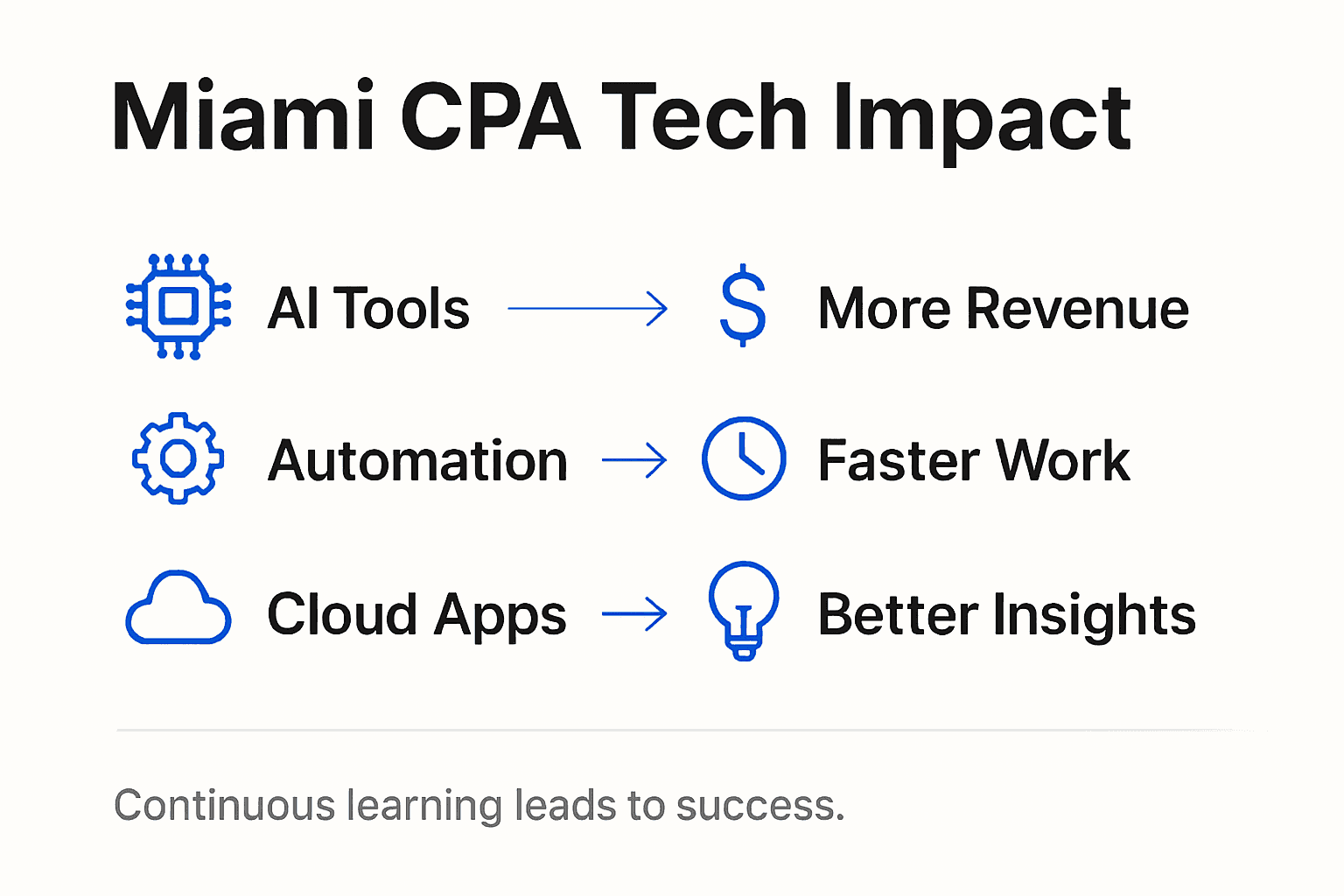
Pro tip: Prioritize continuous learning and skill development in emerging technologies, allocating at least 10% of your professional development budget specifically to understanding and mastering digital transformation tools.
Here’s a side-by-side look at how key digital technologies transform Miami CPA practices:
| Technology | Main Function | Business Impact | Strategic Opportunity |
|---|---|---|---|
| Artificial Intelligence | Automates data analysis and tasks | Faster, more accurate reporting | Predictive financial insights |
| Blockchain | Secures digital transactions | Enhances trust and transparency | Fraud reduction and audit trail |
| Cloud Computing | Enables remote collaboration | Real-time access to data | Flexible service delivery |
| Advanced Analytics | Deep dives into financial data | Informed decision-making | Identifies growth opportunities |
Workflow Automation and Practice Efficiency
Workflow automation represents a transformative approach for Miami CPA firms to dramatically enhance operational efficiency and service quality. Robotic Process Automation (RPA) is a technology that automates repetitive, rule-based tasks such as data entry and compliance checking, allowing firms to increase accuracy, speed, and efficiency. By implementing intelligent automation strategies, accounting professionals can redirect their focus from mundane administrative work to high-value strategic activities that directly impact client success.

The most significant benefits of workflow automation emerge from its ability to streamline complex operational processes. Intelligent Process Automation enables CPAs to handle multiple tasks simultaneously, reducing human error and accelerating document processing times. Why Automate Workflows: Complete Guide for Accountants highlights that automation is particularly effective for tasks like compliance form processing, financial reporting, and data reconciliation. Miami accounting firms can expect substantial improvements in operational agility, with some practices reporting up to 70% reduction in manual processing times.
Beyond efficiency gains, workflow automation fundamentally transforms how CPA firms deliver value to their clients. By eliminating repetitive tasks, professionals can invest more time in strategic advisory services, financial planning, and personalized client relationships. The technology enables real-time data analysis, predictive financial modeling, and more comprehensive insights that go far beyond traditional accounting services. Modern CPA firms that successfully integrate these technologies position themselves as innovative, forward-thinking partners in their clients’ financial success.
Pro tip: Conduct a comprehensive workflow audit every six months to identify repetitive tasks that can be automated, and allocate resources toward learning and implementing intelligent automation technologies.
Key Change Management Strategies for CPAs
Digital transformation demands more than technological implementation for Miami CPA firms. Successful digital transformation requires comprehensive change management that addresses both technical and interpersonal factors. The process involves strategic planning that goes beyond simple software upgrades, focusing on holistic organizational adaptation and cultural readiness.
Effective change management starts with building a robust internal communication strategy. CPAs must create transparent, inclusive environments where team members understand the purpose and benefits of technological transitions. This involves comprehensive training programs, open dialogue sessions, and addressing potential employee concerns proactively. Role of Change Management: Everything You Need to Know emphasizes the importance of creating a supportive ecosystem that helps professionals feel empowered rather than threatened by technological shifts.
External stakeholder engagement is equally critical in digital transformation strategies. CPAs must educate clients about new digital service delivery models, demonstrating how technological advances translate into enhanced value, improved accuracy, and more strategic financial insights. By positioning technological change as a client benefit rather than an operational disruption, accounting professionals can build trust and smooth the transition process. Successful firms develop clear communication frameworks that explain technological changes, their rationale, and the tangible improvements clients can expect.
Pro tip: Create a digital transformation roadmap with clear milestones, designate internal change champions who can support and motivate team members, and schedule regular feedback sessions to monitor and adjust your implementation strategy.
Compliance, Cybersecurity, and Implementation Risks
Digital transformation introduces complex challenges for Miami CPA firms, where managing cybersecurity and regulatory compliance becomes paramount. CPAs play a critical role in cybersecurity risk management by leveraging their expertise in IT security, internal controls, and assurance services. The intersection of technological innovation and security demands a proactive, comprehensive approach that protects both client data and organizational integrity.
Modern accounting practices must develop sophisticated cybersecurity frameworks that anticipate and mitigate potential risks. This involves implementing multi-layered security protocols, conducting regular vulnerability assessments, and creating robust incident response plans. Confronting the Digital Battleground: Navigating Cybersecurity Threats demonstrates that effective risk management requires continuous monitoring, employee training, and adaptive security strategies that evolve with emerging technological landscapes.
Compliance challenges extend beyond traditional regulatory requirements, demanding nuanced understanding of interconnected digital ecosystems. Accounting firms must balance technological innovation with stringent data protection standards, ensuring that digital transformation strategies align with industry-specific regulations. This requires developing comprehensive governance models that integrate cybersecurity considerations into every technological implementation, creating a holistic approach that protects client interests while enabling technological advancement.
Pro tip: Develop a comprehensive cybersecurity risk assessment protocol that includes quarterly comprehensive reviews, mandatory staff training programs, and a dynamic incident response framework that can quickly adapt to emerging digital threats.
The following table summarizes the risks, mitigation strategies, and expected outcomes of digital transformation for Miami CPA firms:
| Risk Type | Mitigation Strategy | Expected Positive Outcome |
|---|---|---|
| Cybersecurity Threats | Regular security assessments | Improved client data protection |
| Compliance Failures | Ongoing staff training in regulations | Reduced likelihood of regulatory penalties |
| Implementation Delays | Clear project milestones and roadmap | Timely adoption of new technologies |
| Cultural Resistance | Transparent communication and support | Higher staff engagement and innovation |
Avoiding Common Pitfalls and Maximizing ROI
Digital transformation requires strategic planning beyond technological investments for Miami CPA firms. Maximizing ROI involves focusing on cultural change, aligning strategy with digital investments, and developing organizational capabilities. Most firms fail to capture full value because they underestimate the comprehensive nature of technological integration and organizational adaptation.
Successful digital transformation demands more than simply purchasing new technologies. CPAs must develop a holistic approach that embeds technological solutions into existing business models and client service strategies. This requires creating adaptive frameworks that allow continuous learning and flexibility. The #1 Post-Close M&A Challenge: Value Realization highlights that organizations must be willing to fundamentally reimagine their operational processes, not just incrementally upgrade existing systems.
Measuring digital transformation success requires moving beyond traditional financial metrics. Accounting firms need to develop sophisticated tracking mechanisms that capture both quantitative and qualitative improvements in service delivery, operational efficiency, and client satisfaction. This means establishing clear performance indicators that reflect the multifaceted impact of technological investments, including improvements in data accuracy, response times, and strategic advisory capabilities.
Pro tip: Establish a dedicated digital transformation team with cross-functional representation, create quarterly review processes that assess technological investments against predetermined performance metrics, and maintain a flexible implementation strategy that allows rapid pivoting based on emerging insights.
Unlock Your Miami CPA Firm’s Digital Revenue Advantage Today
Many Miami CPAs face challenges adopting new technologies while managing compliance and client expectations. This article highlighted how digital transformation requires thoughtful change management, workflow automation, and cybersecurity strategies to move beyond routine tasks and become trusted strategic advisors. If you want to land bigger clients, scale your practice without proportional hiring, and build the capabilities your clients expect, then embracing digital transformation is your pathway to sustained growth.
Discover proven methods for integrating cutting-edge tools and streamlining your processes by exploring our insights on Digital Transformation and Processes.
Take control of your firm’s future and reclaim your life by partnering with experts who specialize in helping Miami professionals grow their monthly revenue by 7-8 figures through strategic technology adoption. Visit Transform42 now to start transforming your CPA practice into a scalable, efficient, and client-centered powerhouse.
Frequently Asked Questions
What is digital transformation for CPAs?
Digital transformation for CPAs involves integrating digital technologies such as AI, cloud computing, and data analytics into accounting practices to enhance efficiency and client service.
How can Miami CPAs benefit from adopting automation technologies?
By implementing automation technologies, Miami CPAs can significantly reduce manual processing times, increase accuracy, and shift their focus to high-value strategic advisory services that benefit their clients.
What are the key technologies reshaping accounting practices?
Key technologies reshaping accounting practices include artificial intelligence, blockchain, cloud computing, and advanced analytics, all of which help improve accuracy, operational efficiency, and collaboration.
What challenges do CPAs face during digital transformation?
CPAs face challenges like leadership resistance, proving return on investment, managing cybersecurity risks, and ensuring compliance with regulations during their digital transformation journey.
Recommended
- Digital Transformation: Everything You Need to Know – Stratgetic IT Consultants for Accountants
- Digital Transformation: Everything You Need to Know
- 8 Essential Digital Strategy Tips for Miami CPAs – Stratgetic IT Consultants for Accountants
- Understanding Digital Transformation Explained for CPAs – Stratgetic IT Consultants for Accountants