
Over 60 percent of American small accounting firms struggle with manual tasks that drain valuable hours and cap revenue growth. In Miami’s Little Havana, local CPAs regularly juggle administrative work that slows client service and limits their ability to scale. Business process automation software offers an effective way to eliminate repetitive duties, reduce errors, and free up time for more strategic services that drive profits. Discover solutions that can help your firm transform efficiency and reach 7 to 8 figures in annual revenue.
Table of Contents
- What Is Business Process Automation Software?
- Types and Key Features for Accounting Firms
- Top Automation Solutions for Miami CPAs
- Implementation Costs, ROI, and Common Pitfalls
- Compliance, Security, and Best Practices
Key Takeaways
| Point | Details |
|---|---|
| Business Process Automation (BPA) | BPA software enhances efficiency in Miami CPA firms by automating repetitive administrative tasks, allowing more focus on strategic consulting. |
| Types of Automation Software | The main types include traditional process automation, Robotic Process Automation (RPA), and hyperautomation, each serving different operational needs and complexities. |
| Costs and ROI | Implementation costs for automation can range from $25,000 to $250,000, with expected ROI within 6 to 18 months through reduced labor and increased accuracy. |
| Security and Compliance | Rigorous security protocols are essential, with adherence to regulations like GDPR and PCI DSS to protect sensitive financial data during automation. |
What Is Business Process Automation Software?
Business process automation software represents a powerful technological solution designed to transform how Miami CPAs manage repetitive administrative tasks. At its core, business process automation streamlines complex workflows by delegating time-consuming manual activities to intelligent software agents.
These advanced systems go beyond simple task delegation. They integrate sophisticated technologies like robotic process automation (RPA) and artificial intelligence to create intelligent workflows that can learn, adapt, and execute tasks with minimal human intervention. Accounting firms can leverage these tools to eliminate repetitive data entry, automate report generation, synchronize client information across platforms, and dramatically reduce human error.
The most effective business process automation software for CPAs typically includes features like automatic document routing, real-time compliance tracking, seamless integration with existing accounting platforms, and advanced data analytics capabilities. By implementing these solutions, accounting professionals can transform their operational efficiency, reduce operational costs, and allocate more time toward high-value strategic consulting work that directly impacts client relationships.
Pro tip: Start by mapping your current workflow processes before selecting an automation platform to ensure you choose a solution that precisely matches your firm’s unique operational needs.
Types and Key Features for Accounting Firms
Accounting firms can leverage multiple types of business process automation software, with robotic process automation (RPA) being particularly transformative. These systems fall into three primary categories: traditional process automation, robotic process automation, and hyperautomation that integrates artificial intelligence and machine learning technologies.
Key features for Miami CPAs typically include automated data entry, compliance tracking, document management, and advanced reporting capabilities. The most sophisticated platforms offer flexible integrations with existing accounting systems, enabling firms to streamline complex workflows without completely overhauling their current technological infrastructure. Specific features CPAs should look for include real-time error detection, automatic reconciliation processes, secure data handling, and scalable automation that can adapt to growing business needs.
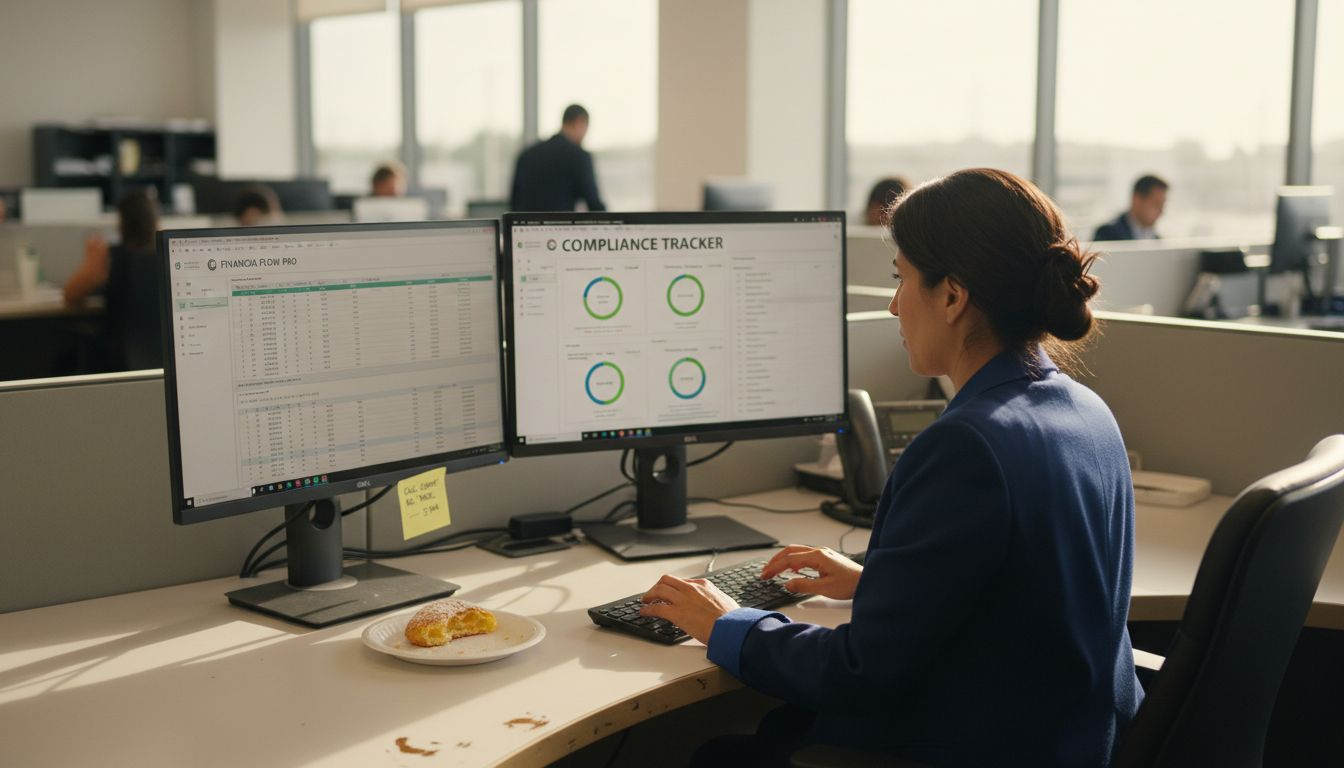
Each automation type serves different operational requirements. Traditional process automation focuses on pre-programmed rules and structured workflows, while RPA can handle both structured and unstructured data with greater intelligence. Hyperautomation represents the most advanced approach, combining RPA with artificial intelligence to create adaptive systems that can learn, predict, and continuously optimize accounting processes with minimal human intervention.
Here’s a comparison of the main business process automation types for accounting firms:
| Automation Type | How It Works | Complexity Level | Typical Benefit |
|---|---|---|---|
| Traditional Automation | Follows fixed rules, structured | Low | Streamlines basic tasks |
| Robotic Process Automation (RPA) | Mimics human actions, handles data | Medium | Reduces manual entry |
| Hyperautomation | Integrates AI for learning | High | Optimizes entire workflow |
Pro tip: Conduct a comprehensive workflow audit before implementing any automation software to identify precise bottlenecks and select a solution that directly addresses your firm’s unique operational challenges.
Top Automation Solutions for Miami CPAs
Miami CPAs have access to several powerful automation solutions designed to transform accounting workflows. Advanced accounting technologies are increasingly integrated into professional practices, offering sophisticated tools that streamline complex financial processes and enhance operational efficiency.
The most effective automation solutions for Miami accounting firms typically include enterprise resource planning (ERP) systems, robotic process automation (RPA) platforms, and artificial intelligence-powered accounting software. These technologies specialize in different operational needs: ERP systems manage comprehensive business processes, RPA handles repetitive tasks with precision, and AI-driven solutions provide predictive analytics and intelligent process optimization. Key platforms like QuickBooks Online, Xero, and Sage offer built-in automation features specifically tailored to accounting workflows.
When selecting automation solutions, Miami CPAs should prioritize platforms with robust security protocols, seamless integration capabilities, and scalability. Critical features to evaluate include automatic bank reconciliation, real-time financial reporting, compliance tracking, and machine learning algorithms that can adapt to changing regulatory requirements. Cloud-based solutions provide additional advantages like remote access, automatic updates, and enhanced data protection mechanisms that are crucial for modern accounting practices.
Pro tip: Request free demos and conduct thorough compatibility testing with your existing systems before committing to any automation platform to ensure smooth implementation and minimal disruption to your current workflows.
Implementation Costs, ROI, and Common Pitfalls
Implementing business process automation for Miami CPAs involves carefully analyzing potential returns against significant upfront investments. Robotic process automation presents both substantial opportunities and complex challenges that require strategic planning and comprehensive understanding.
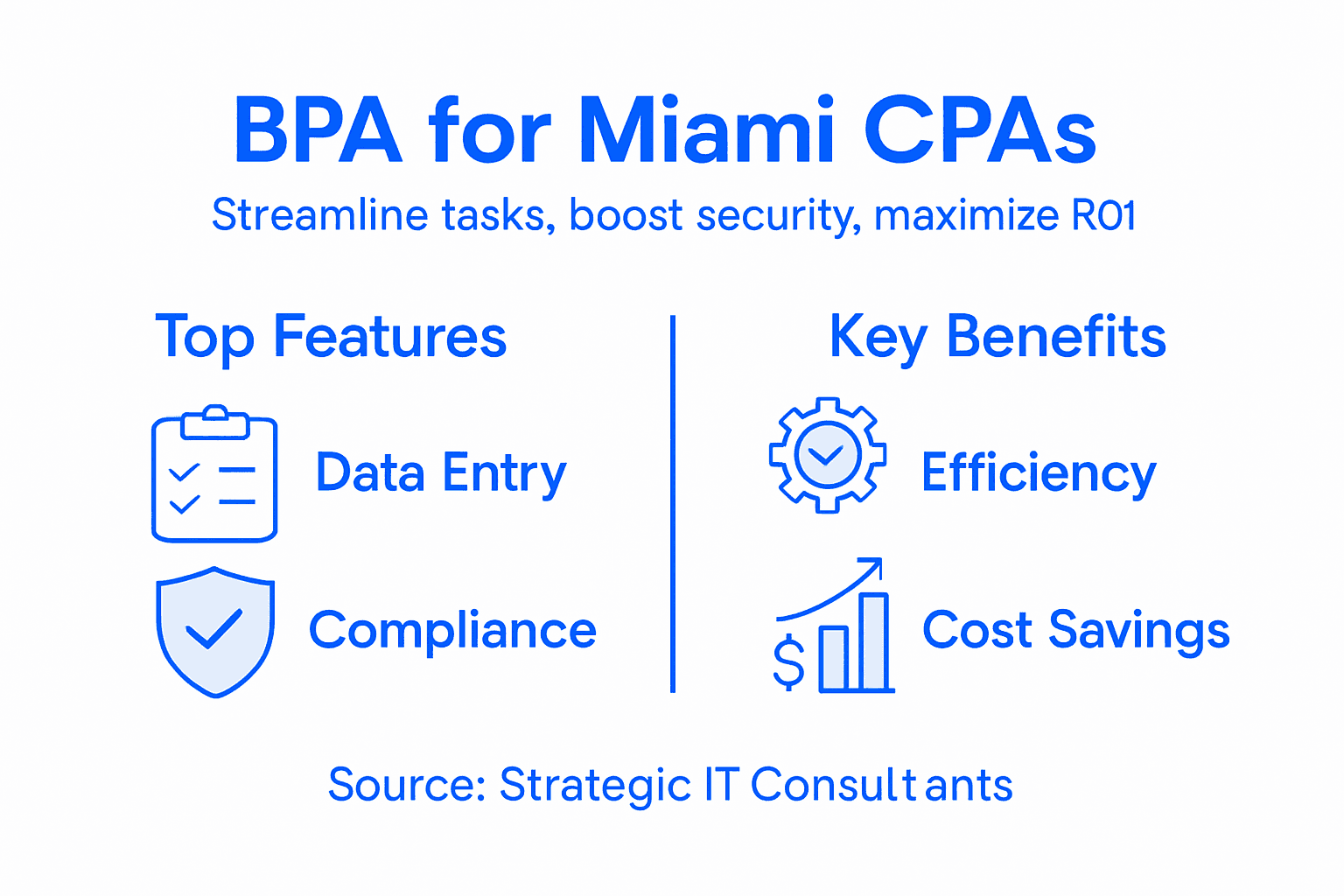
Most automation implementation costs for accounting firms range between $25,000 to $250,000, depending on firm size and complexity of workflows. The typical return on investment typically materializes within 6-18 months through reduced labor costs, increased accuracy, and enhanced productivity. Key cost components include software licensing, initial setup, staff training, system integration, and ongoing maintenance. Miami CPAs should anticipate additional expenses for customization, data migration, and potential workflow redesign to maximize automation effectiveness.
Below is a summary of key cost factors and expected benefits for business process automation:
| Cost Component | Typical Range | Business Benefit |
|---|---|---|
| Software Licensing | $10,000 – $100,000 | Access to advanced features |
| Setup & Integration | $5,000 – $60,000 | Smooth technology adoption |
| Staff Training | $2,000 – $20,000 | Enhanced employee proficiency |
| Maintenance | $1,000 – $15,000/year | Sustained performance |
| ROI Timeline | 6–18 months | Lower labor and fewer errors |
Common pitfalls in automation implementation include underestimating technical complexity, insufficient staff training, inadequate change management, and overlooking cybersecurity vulnerabilities. Successful deployment requires a holistic approach that addresses technological, human, and operational dimensions. CPAs must invest time in thoroughly mapping existing processes, identifying automation opportunities, and developing a comprehensive implementation strategy that aligns with long-term business objectives.
Pro tip: Conduct a comprehensive pilot program with a small subset of your accounting workflows to validate potential benefits and identify potential challenges before full-scale implementation.
Compliance, Security, and Best Practices
Miami CPAs must prioritize rigorous security protocols when implementing business process automation technologies. Comprehensive security controls are essential for protecting sensitive financial data and maintaining regulatory compliance across accounting workflows.
Key compliance requirements for accounting firms include adhering to multiple regulatory standards such as GDPR, HIPAA, and PCI DSS. These frameworks mandate strict data protection measures, including encryption, access controls, continuous monitoring, and robust incident response protocols. Successful implementation requires a multi-layered approach that addresses technological vulnerabilities, human factors, and organizational governance. CPAs should conduct regular security audits, implement role-based access controls, and develop comprehensive data management strategies that protect client information while enabling efficient automated processes.
Best practices for maintaining security in business process automation involve developing a comprehensive risk management framework, investing in employee cybersecurity training, selecting platforms with built-in compliance features, and maintaining detailed audit trails. Miami accounting firms must also prioritize vendor assessment, ensuring that automation software providers meet industry-standard security certifications and can demonstrate robust data protection mechanisms. Regular vulnerability assessments, encryption of sensitive data, and implementing multi-factor authentication are critical steps in safeguarding financial information.
Pro tip: Create a dedicated cybersecurity task force within your accounting firm to continuously evaluate and update your automation security strategies, ensuring ongoing compliance and protection against emerging technological threats.
Unlock Seamless Automation to Transform Your Miami Accounting Firm
The challenges of repetitive data entry, compliance tracking, and workflow inefficiencies can slow your Miami CPA practice and limit growth. Embracing advanced business process automation software is essential to eliminate costly errors and regain valuable time for strategic client consulting. Our expertise at Transform42 goes beyond technology — we help you build scalable, compliant automation systems tailored to your firm’s specific needs and workflows. Discover how to integrate intelligent tools like RPA and AI-driven platforms to streamline operations without overwhelming your staff or infrastructure.
Explore our tailored solutions in Processes Archives – Strategic IT Consultants For Accountants and learn best practices in Digital-transformation Archives – Strategic IT Consultants For Accountants. Don’t wait for complexity to hold your firm back. Visit Transform42 today to reclaim your life, land bigger clients, and scale your business. Take the first step toward smarter automation and a stronger competitive edge now.
Frequently Asked Questions
What is business process automation software?
Business process automation software is a technological solution designed to streamline complex workflows by delegating repetitive tasks to intelligent software agents, significantly improving efficiency in tasks such as data entry, report generation, and compliance tracking.
What are the types of business process automation for accounting firms?
The types of business process automation for accounting firms include traditional process automation, robotic process automation (RPA), and hyperautomation, which integrates artificial intelligence and machine learning technologies for enhanced workflow optimization.
How much does implementing business process automation software typically cost?
Implementation costs for business process automation software generally range from $25,000 to $250,000, depending on the firm’s size and workflow complexity. The ROI is typically realized within 6 to 18 months through reduced labor costs and increased accuracy.
What are the key features to look for in automation software for CPAs?
Key features to look for in automation software for CPAs include automated data entry, compliance tracking, document management, real-time reporting, seamless integration with existing systems, and advanced data analytics capabilities.
Recommended
- Business Process Automation Guide for Miami CPAs – Stratgetic IT Consultants for Accountants
- Business Process Automation Steps for Miami Accounting Firms – Stratgetic IT Consultants for Accountants
- Business Process Automation Guide for Miami CPAs
- Complete Guide to Why Automate Workflows – Stratgetic IT Consultants for Accountants
- Contact Management Software: Complete Guide for 2025 – Optio Station: Best Project Management App for Prioritization