Over one third of American accounting firms report that even a single major technology incident can lead to substantial revenue losses and loss of client trust. For independent CPAs in Miami, every interruption in IT service threatens not just workflow but the very foundation of client relationships. Understanding the definition and scope of ITSM incidents sets you up to transform unexpected challenges into opportunities for smarter, more profitable client service.
Table of Contents
- Defining ITSM Incident For Miami CPAs
- Types Of ITSM Incidents In Accounting Firms
- Incident Management Process And Best Practices
- Compliance Roles In ITSM Incident Handling
- Risks, Common Pitfalls, And Revenue Impact
Key Takeaways
| Point | Details |
|---|---|
| Understanding ITSM Incidents | ITSM incidents can disrupt technology services, affecting business performance and client engagement. Effective incident management is essential for maintaining operational stability. |
| Types of Incidents | Common incident types include system performance issues, security breaches, and data integrity problems, all of which can have significant business impacts. |
| Incident Management Process | A structured incident management process involves identification, classification, resolution, and documentation to minimize disruption and enhance client trust. |
| Compliance Roles | Clearly defined compliance roles are critical for managing incidents and ensuring adherence to legal and regulatory standards, protecting client information during incidents. |
Defining ITSM Incident for Miami CPAs
For Miami CPAs, understanding IT Service Management (ITSM) incidents is critical to maintaining smooth technological operations that support client services. An ITSM incident represents any unplanned interruption or reduction in technology service quality that impacts business performance. Computer security incident management provides a foundational framework for identifying and responding to such technological disruptions.
In practical terms, an ITSM incident could range from email system downtime preventing client communication to unexpected accounting software performance issues that delay financial reporting. The ITIL-based ITSM processes emphasize rapid restoration of normal service, minimizing potential revenue and productivity losses for accounting professionals.
Miami CPAs should recognize that ITSM incidents are not just technical problems, but potential business risks. Effective incident management requires a structured approach including immediate identification, swift response, comprehensive documentation, and strategic resolution. This means creating clear protocols for reporting technology issues, establishing priority levels, and implementing systematic recovery strategies.
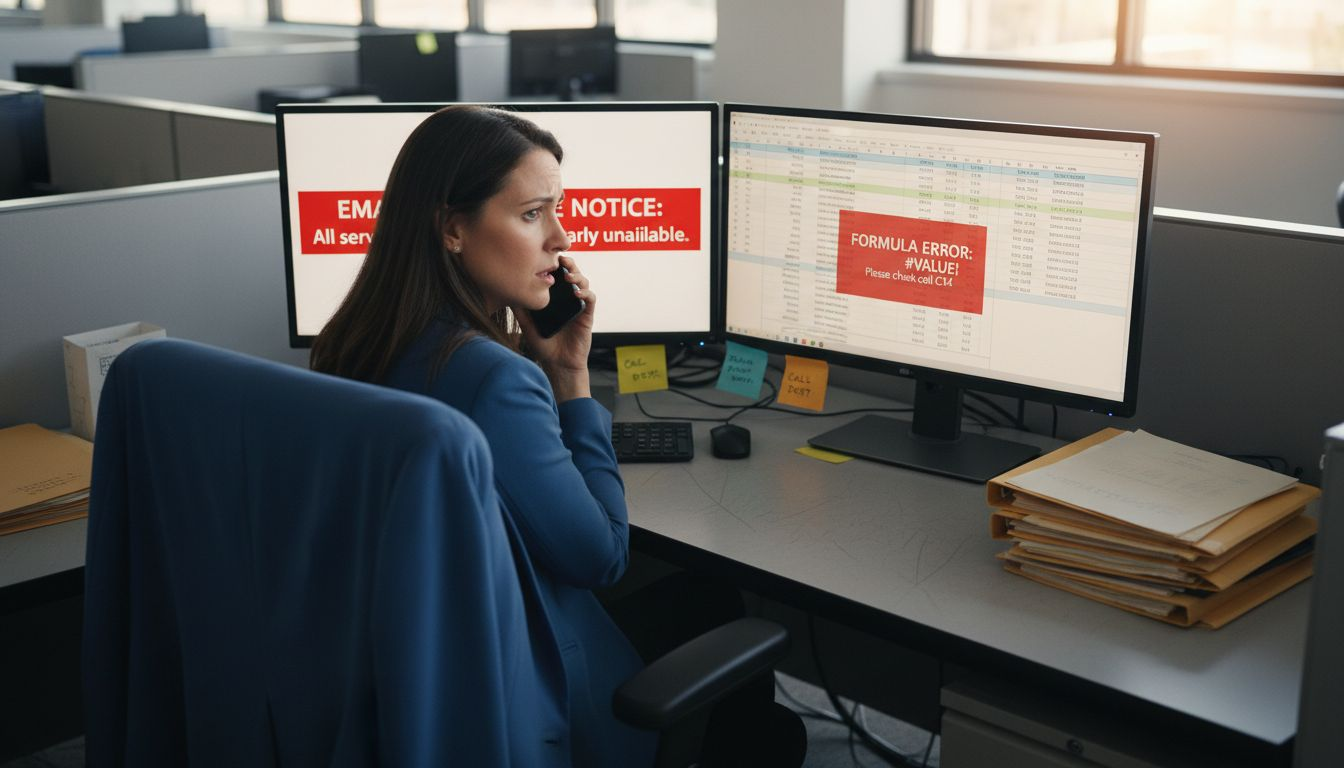
Pro tip: Develop a standardized incident reporting template that captures essential details like time of occurrence, system affected, potential business impact, and resolution steps to streamline your technology management process.
Types of ITSM Incidents in Accounting Firms
Accounting firms encounter numerous technology incidents that can significantly disrupt business operations and client service delivery. IT risk management frameworks highlight several critical categories of incidents that Miami CPAs must proactively address and understand.
The primary types of ITSM incidents in accounting environments typically include:
- System Performance Incidents: Slow financial software, database response delays, or unexpected application crashes
- Security Breaches: Unauthorized network access, potential data compromise, or suspicious login attempts
- Data Integrity Issues: Unexpected data corruption, synchronization problems between accounting platforms, or unexpected file modifications
- Network Connectivity Problems: Internet outages, email service interruptions, or cloud platform access failures
Understanding these incident types requires a strategic approach. ITSM categorization processes emphasize classifying incidents not just by technical characteristics, but by their potential business impact. For Miami CPAs, this means evaluating each incident’s potential revenue risk, client confidentiality implications, and operational disruption potential.
Here’s how major types of ITSM incidents differ in their business impact and typical causes:
| Incident Type | Common Cause | Business Impact |
|---|---|---|
| System Performance | Software bugs, overload | Delays in reporting, client frustration |
| Security Breach | Weak passwords, phishing | Data compromise, regulatory risk |
| Data Integrity Issue | Sync errors, file corruption | Misstated financials, audit challenges |
| Network Connectivity | ISP outage, hardware failure | Communication breakdown, missed deadlines |
Pro tip: Create a prioritized incident response matrix that assigns clear escalation protocols and response times for different incident types, ensuring rapid and consistent technological problem resolution.
Incident Management Process and Best Practices
For Miami CPAs, implementing a robust incident management process is crucial for maintaining technological reliability and client trust. Incident management roles involve multiple professionals working systematically to detect, respond, and resolve technology disruptions quickly and effectively.
The standard incident management process typically follows these critical stages:
- Incident Identification: Detecting and logging technology interruptions
- Initial Classification: Determining incident severity and potential business impact
- Diagnosis: Investigating root causes and potential resolution strategies
- Resolution: Implementing fixes and restoring normal system operations
- Documentation: Recording incident details for future prevention and knowledge sharing
Information security incident management standards emphasize creating a structured approach that goes beyond immediate problem-solving. For accounting firms, this means developing comprehensive protocols that protect client data, minimize operational disruptions, and maintain professional service continuity. Effective incident management requires not just technical skills, but strategic thinking about potential technology risks.
For quick reference, here’s a summary of best practices during each incident management process stage:
| Stage | Best Practice | Benefit |
|---|---|---|
| Identification | Centralized incident logging | Faster detection, track trends |
| Classification | Assign severity levels | Prioritize critical incidents |
| Diagnosis | Root cause analysis | Prevent repeat disruptions |
| Resolution | Document recovery steps | Consistent service restoration |
| Documentation | Detailed incident reports | Knowledge sharing, compliance |
Pro tip: Develop a comprehensive incident management playbook that outlines clear escalation paths, response timelines, and specific protocols for different incident types, ensuring consistent and professional technological problem resolution.
Compliance Roles in ITSM Incident Handling
For Miami CPAs, understanding compliance roles in IT service management is critical to protecting client data and maintaining professional standards. Incident management compliance responsibilities require strategic coordination among multiple professionals to ensure legal and regulatory requirements are consistently met.
Key compliance roles in ITSM incident handling typically include:
- Incident Coordinator: Manages overall incident tracking and regulatory documentation
- Data Protection Specialist: Ensures client confidentiality during incident resolution
- Legal Compliance Officer: Reviews incident reports for potential regulatory violations
- Security Compliance Analyst: Validates incident handling meets industry security standards
University IT policies emphasize the importance of maintaining confidentiality, data integrity, and transparent reporting throughout the incident management process. For accounting firms, this means creating comprehensive documentation that demonstrates professional accountability while protecting sensitive client information.
Pro tip: Develop a standardized incident reporting template that automatically tracks compliance requirements, ensuring every technological disruption is documented with legal and regulatory precision.
Risks, Common Pitfalls, and Revenue Impact
Miami CPAs face significant technological risks that can dramatically impact their firm’s financial performance and professional reputation. IT risk management research reveals multiple critical areas where unmanaged incidents can erode business value and client trust.
Common ITSM incident risks for accounting firms include:
- Data Breach Potential: Unauthorized system access compromising client financial information
- Operational Downtime: Technology failures preventing billable work
- Compliance Violations: Inadequate incident response leading to regulatory penalties
- Reputation Damage: Loss of client confidence due to technological vulnerabilities
Cyber incident detection strategies highlight that delayed incident response can multiply financial losses exponentially. For Miami CPAs, a single unresolved technology incident could mean hours of lost productivity, potential client compensation, and significant revenue disruption. Advanced incident management isn’t just about fixing problems quickly—it’s about preventing potential financial catastrophes before they occur.
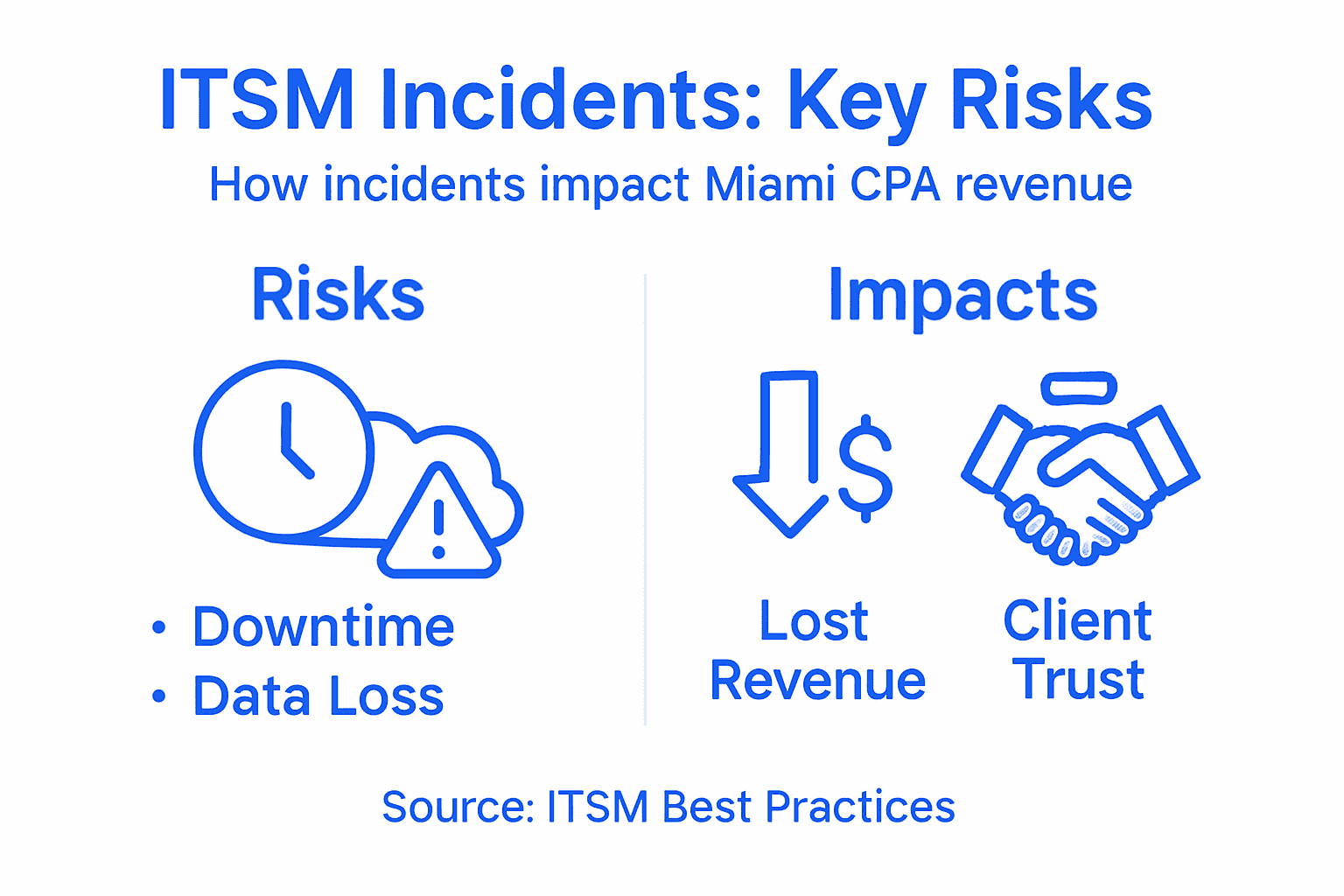
Pro tip: Implement a proactive incident risk assessment framework that quantifies potential financial impacts, allowing your accounting firm to prioritize technology investments and minimize revenue-threatening disruptions.
Strengthen Your Miami CPA Firm with Strategic ITSM Incident Management
Miami CPAs face critical technology challenges that directly affect revenue, client trust, and compliance. From unplanned system interruptions to data integrity risks these ITSM incidents can stall growth and damage your professional reputation. The article highlights important pain points like rapid incident response, structured documentation, and compliance roles that every accounting firm must master.
At Transform42, we understand how vital it is to build resilient IT capabilities that support your business goals. Our tailored technology solutions help Miami CPAs land bigger clients, scale efficiently without extra hiring, and protect sensitive data through expert incident management. Learn how to turn IT challenges into strategic advantages by visiting our main website.
Get ahead of technology disruptions with a partner who prioritizes your firm’s growth and compliance. Don’t let ITSM incidents drain your revenue or time. Visit Transform42 today and start building the capabilities your clients expect and your firm deserves.
Frequently Asked Questions
What is an ITSM incident?
An ITSM incident refers to any unplanned interruption or reduction in technology service quality that affects business performance, such as system downtime or performance issues.
How do ITSM incidents impact CPA firms’ revenue?
ITSM incidents can lead to operational downtime, delays in client communication, and potential data breaches, all of which can result in lost revenue and diminished client trust.
What are common types of ITSM incidents faced by accounting firms?
Common types of ITSM incidents include system performance issues, security breaches, data integrity problems, and network connectivity issues, each potentially disrupting business operations.
What best practices should Miami CPAs implement for incident management?
Best practices include creating standardized incident reporting templates, developing a prioritized incident response matrix, and implementing comprehensive documentation for tracking incidents and compliance.