Clients expect quick solutions when their financial data is on the line. For Miami accounting firms, technical problems can disrupt deadlines and put sensitive information at risk. An IT help desk tailored for CPAs delivers more than routine troubleshooting—it provides critical support for specialized accounting software, client confidentiality, and regulatory compliance. Discover how the right help desk service can keep your practice running smoothly and help you capture new growth opportunities.
Table of Contents
- What Is an IT Help Desk for CPAs?
- Types of Help Desk Services for Accountants
- How IT Help Desks Streamline Client Support
- Compliance, Security, and Regulatory Standards
- Common Pitfalls and Cost Considerations
Key Takeaways
| Point | Details |
|---|---|
| Dedicated IT Help Desk is Essential | A specialized IT help desk is crucial for CPA firms to manage technical issues related to sensitive client data and compliance. |
| Proactive Support Enhances Stability | Proactive monitoring and support prevent potential issues, ensuring minimal disruption during peak accounting periods. |
| Compliance is Non-Negotiable | Adherence to regulatory standards protects firms from legal risks, emphasizing the need for effective backup and security measures. |
| Cost of Poor IT Support is High | Inadequate IT support can lead to significant financial losses due to downtime, breaches, and wasted employee resources. |
What Is an IT Help Desk for CPAs?
An IT help desk is your firm’s first line of defense against technical problems. When a client can’t access their files, when your network slows down, or when accounting software crashes, the help desk responds. They troubleshoot issues, restore access, and keep your practice running without interruption.
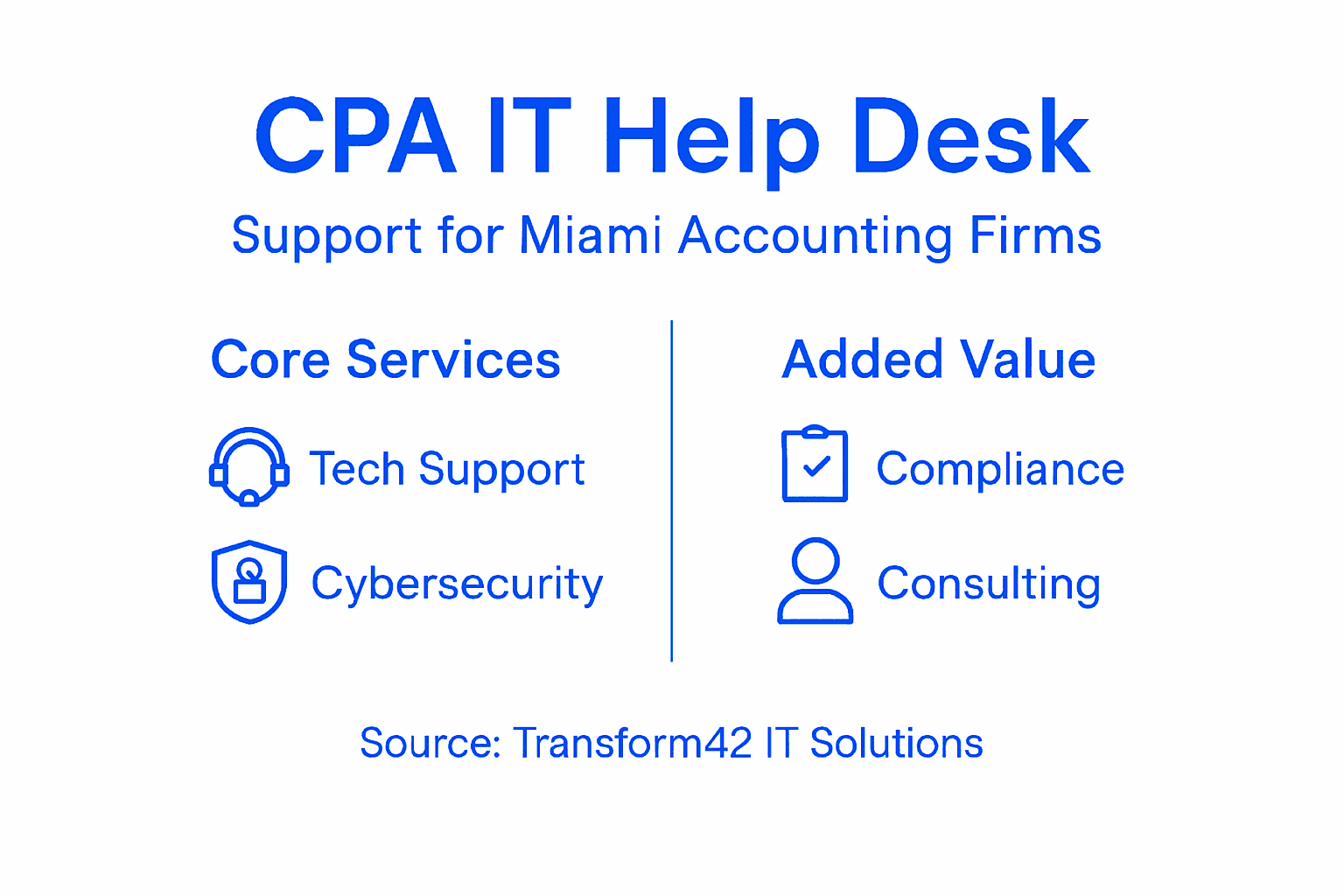
For CPA firms, an IT help desk operates differently than in other industries. Your team handles specialized accounting software, sensitive client data, and compliance requirements that most IT departments never encounter. Technical troubleshooting and support services form the foundation, but help desk specialists working with accounting practices must understand the unique pressure points in your business.
The help desk doesn’t just react to problems. They work proactively to prevent issues before they impact your clients. This means monitoring your systems, applying updates, backing up critical files, and identifying vulnerabilities before they become emergencies. When something complex requires deeper expertise, they escalate to specialized teams who can handle advanced infrastructure work.
Without a dedicated help desk, every technical issue becomes your problem. Your accountants stop working while waiting for help. Clients notice delays in their deliverables. Worst case, data gets lost or exposed. A functional help desk removes this burden entirely, letting your team focus on what they actually do best: accounting.
The reality is that most Miami CPA practices handle IT support poorly. You either have someone who knows a little bit about technology managing everything, or you’re paying per-incident rates that drain your budget. Neither approach scales as your practice grows or when you try to land bigger clients who expect better infrastructure.
Pro tip: When evaluating help desk providers, ask specifically about their experience with accounting firms and CPA practices. A generic IT help desk that works fine for law offices might miss critical requirements for tax compliance and client confidentiality.
Types of Help Desk Services for Accountants
Not all help desk services look the same. Your accounting firm needs specific types of support tailored to the unique challenges you face daily. Understanding what services exist helps you identify what your practice actually needs.
Reactive support is the most basic type. When something breaks, you call the help desk and they fix it. A software crash at 2 PM gets addressed immediately. A printer that stops working gets rebooted. This reactive approach keeps your firm running but doesn’t prevent problems from happening in the first place.
Proactive support goes further. The help desk monitors your systems 24/7, watching for signs of trouble before they impact your team. They apply security patches before hackers exploit vulnerabilities. They upgrade storage before you run out of space. They identify bottlenecks before your accountants complain about slow performance. This approach prevents costly downtime and data loss.
Advisory and consulting services help you plan technology investments strategically. A good help desk partner doesn’t just fix problems. They understand your business goals and recommend tools and infrastructure that actually support growth. They know which accounting software integrates well, where to add staff capacity, and how to scale without doubling your IT costs.
Compliance support matters enormously for CPAs. Client data confidentiality requirements, tax filing deadlines, and audit preparation demand reliable systems. The help desk ensures your infrastructure meets these requirements and maintains proper documentation. They handle backups so you can prove data integrity. They restrict access so sensitive information stays protected.
Specialized tax support is critical too. Many help desk providers offer expertise with IRS electronic filing systems and tax preparation software. They understand the unique demands of tax season when your systems face maximum strain. They know how to optimize performance during critical filing periods.
Here’s a comparison of help desk service levels for CPA firms:
| Service Level | Focus Area | Response Time | Example Activities |
|---|---|---|---|
| Reactive Support | Issue resolution | As problems occur | Fix software crashes, printer issues |
| Proactive Support | Problem prevention | 24/7 monitoring | Apply patches, prevent downtime |
| Advisory/Consulting | Strategic IT guidance | Scheduled engagements | Recommend software, plan upgrades |
| Compliance/Tax Support | Meeting regulatory standards | During audits and peak season | Manage backups, support tax software |
Pro tip: Ask prospective help desk providers which specific accounting software they support and how many CPA firms they currently serve. Experience matters more than generic IT knowledge when your revenue depends on reliable access to client accounts.
How IT Help Desks Streamline Client Support
Your clients expect fast responses. When they submit a request on Monday morning, they don’t want to wait three days for an answer. A well-organized help desk makes this possible by managing requests systematically instead of letting them disappear into someone’s email inbox.
Advanced ticketing systems form the backbone of efficient support. Every client request gets logged, tracked, and assigned to the right person automatically. Nothing falls through the cracks. Your team can see exactly which issues are pending, which ones are urgent, and how long each request has been waiting. This visibility alone cuts response times significantly.
Automation handles repetitive tasks that would otherwise waste your staff’s time. When a client reports a password reset issue, the system automatically creates a ticket, assigns it priority, and even triggers an automated response acknowledging their request. Simple problems get solved fast without human intervention. Complex issues get escalated to specialists who actually need to get involved.
Multi-channel support means clients reach you however works for them. Email, phone calls, chat messages, or web portals all funnel into the same ticketing system. A client doesn’t have to remember they emailed three days ago. The help desk remembers everything and maintains context across all communications.
Real data about your support performance becomes visible. You discover that most requests come in between 9 AM and 11 AM. You identify which issues repeat constantly, signaling a need for better training or process changes. You measure client satisfaction and adjust accordingly. This isn’t guesswork anymore.
For your accounting practice, this efficiency translates directly to client retention. Clients notice when problems get solved quickly. They remember when you actually follow up. They trust firms that communicate clearly and keep systems running reliably. A streamlined help desk builds this reputation automatically.
Pro tip: Track which client requests repeat most frequently and use that data to build self-service resources like video tutorials or FAQ documents, dramatically reducing future support volume.
Compliance, Security, and Regulatory Standards
Regulatory requirements aren’t suggestions for CPA firms. They’re non-negotiable legal obligations. The IRS, state boards, and the Federal Trade Commission all have specific rules about how you must protect client data. Violating these rules costs money, damages your reputation, and can end careers.
Your help desk isn’t just fixing computers. They’re protecting your firm from legal liability. Every system they set up, every password policy they enforce, every backup they execute is part of a compliance framework. When regulators audit your firm, they’ll review exactly what your IT team did to safeguard information.
Comprehensive cybersecurity practices form the foundation of compliance for tax professionals. This includes security software that actually works, not just software that exists. It means training your team so they don’t accidentally email sensitive data to the wrong person. It means having a documented incident response plan so when something goes wrong, you react correctly instead of panicking.
Data protection requirements keep expanding. HIPAA if you work with healthcare clients. GDPR if you serve international clients. State privacy laws that differ from one another. Your help desk must understand what data gets regulated and implement appropriate controls. This isn’t optional complexity. It’s mandatory infrastructure.
Multi-factor authentication and strong password policies are no longer best practices. They’re baseline requirements. Your team should use authenticator apps, not text messages. Passwords should be long and complex, not “Password123.” Your help desk enforces these standards across your entire firm without exception.
Backups and disaster recovery matter enormously. If ransomware hits your firm at 2 PM on Friday, can you recover your data? Do you have documented procedures? Has your team actually tested recovery? Most firms can’t answer yes to these questions, which means one attack could destroy years of work.
Your help desk partner should be certified in relevant standards. They should understand NIST frameworks. They should know audit procedures. They shouldn’t be learning compliance as they go.
Pro tip: Request a compliance checklist from any help desk provider and verify they’ve completed annual security audits before signing a contract.
The table below summarizes key security and compliance measures for CPA IT help desks:
| Security Measure | Purpose | Business Impact |
|---|---|---|
| Multi-factor authentication | Secure account access | Reduces risk of data breaches |
| Regular backups | Data recovery | Minimizes loss in disasters |
| Compliance certifications | Meet legal requirements | Avoids fines and protects clients |
| Employee training | Prevent user errors | Decreases phishing vulnerability |
Common Pitfalls and Cost Considerations
Most Miami CPA firms make the same mistakes with IT help desk decisions. They choose based on price alone, then wonder why they end up spending more. They delay investing in proper support, telling themselves they’ll handle it later. Then a crisis hits and costs explode.
Underestimating breach costs is the biggest pitfall. A single data breach doesn’t just mean you notify clients and move forward. You pay for detection services. You hire forensic investigators. You notify affected parties. You might face regulatory fines. You lose client trust and revenue. Detection, containment, and recovery expenses add up fast when you’re scrambling instead of prepared.
Insufficient employee training creates vulnerability. Your accountants don’t understand phishing attacks. They open attachments from unknown senders. They reuse passwords across multiple sites. One mistake by one person can compromise your entire firm. A proper help desk includes ongoing training, not one orientation video from five years ago.
Choosing the wrong service provider introduces hidden risks. A cheap help desk might cut corners on security monitoring. They might not understand CPA compliance requirements. They could miss critical vulnerabilities. When problems emerge, you discover you’ve been relying on inadequate support the whole time.
Outsourcing IT services requires careful evaluation of provider credentials and contract terms. Don’t assume all help desk companies are equal. Some specialize in accounting firms and understand your world. Others treat CPAs like any other business and miss critical requirements. Ask about their security certifications, their experience with CPA firms, and their incident response procedures before signing anything.
Productivity loss during outages costs more than you realize. When your accounting software goes down during busy season, every hour of lost time compounds. Clients notice delays. Revenue deadlines slip. Staff becomes frustrated. Multiply this by the number of outages per year, and the cost becomes staggering.
Most firms also ignore the cost of not having proper help desk support. Internal staff handling IT wastes billable hours on technical problems instead of client work. That’s revenue you could be earning instead of paying for password resets.
Pro tip: Request references from help desk providers and actually call them, asking specifically about costs during crises and whether hidden fees appeared after the contract started.
Elevate Your Miami CPA Practice with Expert IT Help Desk Solutions
The challenges CPA firms face with IT help desks are real and urgent. From maintaining strict compliance and securing sensitive client data to preventing costly downtime and supporting specialized accounting software, your firm deserves a partner who understands these nuances. Many Miami CPA practices still struggle with inefficient, reactive IT support that slows growth and risks client trust. It is time to transform your technology infrastructure into a strategic advantage.
Partner with Transform42 to build reliable, compliant, and scalable technology systems designed specifically for accounting professionals. Enjoy proactive monitoring, strategic IT advisory, and seamless compliance management that frees your team to focus on what they do best. Don’t let costly breaches or technical delays hold you back. Discover how we help Accountants and CPA firms in Miami secure their future, gain bigger clients, and reclaim their time today.
Take the next step toward stress-free technology and unstoppable growth by visiting our website at Transform42. Your firm’s success starts with the right IT support partner.
Frequently Asked Questions
What is the role of an IT help desk in CPA firms?
An IT help desk serves as the first line of defense against technical issues in CPA firms. They troubleshoot problems, restore access to critical systems, and ensure compliance with industry regulations, allowing accountants to focus on their work without interruption.
How does proactive support differ from reactive support in IT help desks?
Proactive support involves continuous monitoring of systems to prevent issues before they occur, while reactive support is initiated only when problems arise. Proactive support helps minimize downtime and enhances overall efficiency in CPA practices.
Why is compliance support essential for CPA firms when choosing an IT help desk?
Compliance support is crucial for CPA firms because they handle sensitive client data and must adhere to strict regulations. An IT help desk ensures that the firm meets legal obligations, protecting client information and minimizing the risk of legal liability.
What are the common pitfalls CPA firms face when selecting an IT help desk provider?
Common pitfalls include choosing a provider based solely on price, underestimating the costs of data breaches, insufficient employee training, and not properly assessing the provider’s experience with accounting firms and compliance standards.