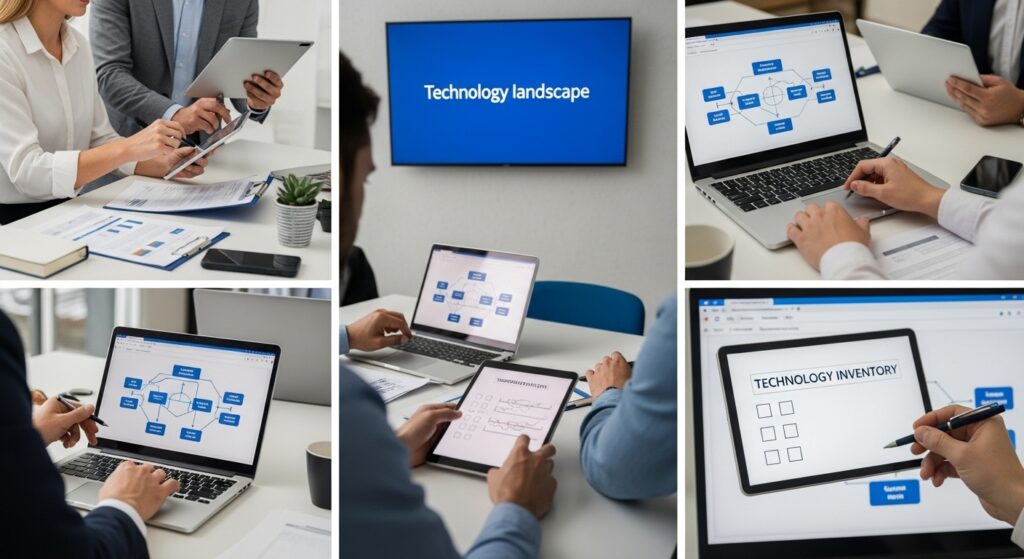
Protecting sensitive client data is a daily challenge for Miami CPAs who handle complex financial portfolios. The risks of unauthorized access and evolving cyber threats make strong digital defenses more than just a precaution—they are a necessity for maintaining client trust. Exploring solutions like multi-factor authentication and encryption can help independent professionals safeguard critical financial information while supporting high-net-worth clients with confidence.
Table of Contents
- Step 1: Assess Current Data Security Risks And Weaknesses
- Step 2: Implement Multi-Factor Authentication Protocols
- Step 3: Upgrade Encryption For Sensitive Client Data
- Step 4: Establish Secure Access And Device Controls
- Step 5: Monitor Systems And Audit Security Regularly
Quick Summary
| Key Insight | Explanation |
|---|---|
| 1. Systematic Risk Assessment | Inventory digital assets and assess vulnerabilities to protect sensitive information. |
| 2. Implement Multi-Factor Authentication | Use MFA to enhance security beyond passwords and train employees on its importance. |
| 3. Upgrade Data Encryption | Apply strong encryption for data at rest and in transit to shield client information. |
| 4. Establish Secure Access Controls | Manage user permissions carefully and implement strict device security measures. |
| 5. Regular Monitoring and Audits | Continuously assess systems and conduct audits to identify vulnerabilities and prevent breaches. |
Step 1: Assess current data security risks and weaknesses
Assessing data security risks requires a systematic approach to understanding potential vulnerabilities in your accounting firm’s digital infrastructure. Cybersecurity risk assessments help Miami CPAs protect sensitive client information and prevent potential breaches.
Start by creating a comprehensive inventory of all digital assets including client databases, financial records, communication platforms, and network systems. Walk through each system and document potential entry points where unauthorized access might occur. Pay special attention to areas like email communications, cloud storage platforms, client portals, and internal file sharing networks. Consider factors such as outdated software, weak password protocols, unencrypted data transfer methods, and insufficient access controls.
Map out potential threat scenarios by analyzing how different types of cybercriminals might attempt to infiltrate your systems. This includes understanding phishing techniques, ransomware risks, social engineering tactics, and unauthorized data access methods specific to financial services. Categorize these risks based on their potential impact and likelihood of occurrence.
Pro tip: Conduct a mock cybersecurity drill to test your team’s readiness and identify unexpected vulnerabilities in real world scenarios.
Here’s a summary of common accounting firm cybersecurity risks and their business impact:
| Risk Type | Example Threat | Potential Business Impact |
|---|---|---|
| Phishing Attacks | Malicious Emails | Client data exposure, reputation loss |
| Ransomware | File Encryption | Financial loss, operational disruption |
| Unencrypted Data Transfer | Plain Text Emails | Regulatory fines, client trust erosion |
| Weak Password Protocols | Simple Passwords | Unauthorized access, data theft |
| Social Engineering | Impersonation Calls | Compromised credentials, fraud risk |
Step 2: Implement multi-factor authentication protocols
Miami CPAs must prioritize multi-factor authentication methods to create robust security barriers protecting sensitive client information. Implementing MFA goes beyond traditional password protection by requiring multiple verification steps before granting system access.
Begin by selecting an MFA solution that integrates seamlessly with your existing technology infrastructure. Choose authentication methods that balance security with user convenience such as text message verification codes, authenticator apps, biometric checks like fingerprint or facial recognition, and hardware tokens. Configure these protocols across all critical systems including email platforms, client management software, financial databases, and cloud storage networks. Ensure each employee receives comprehensive training on how to use these authentication tools correctly and understands their importance in preventing unauthorized access.
Establish clear organizational policies that mandate MFA usage for all user accounts. This includes creating specific guidelines about password complexity, regular password rotation, and immediate reporting procedures for potential security breaches. Monitor and periodically audit your MFA implementation to identify potential vulnerabilities and adjust your security strategies accordingly.
Pro tip: Select MFA solutions that offer adaptive authentication which can detect unusual login patterns and require additional verification during high risk access attempts.
Step 3: Upgrade encryption for sensitive client data
Protecting your accounting firm’s digital assets requires implementing robust encryption protocols for client data. Encryption transforms sensitive financial information into unreadable code that can only be accessed by authorized personnel with specific decryption keys.
Begin by conducting a comprehensive audit of all existing data storage and transmission systems. Identify which platforms handle the most sensitive client information such as tax returns, financial statements, and personal identification documents. Select advanced encryption standards like AES 256 bit encryption for data at rest and TLS 1.3 for data in transit. Configure these encryption protocols across all digital platforms including email systems, cloud storage, client portals, and internal network drives. Ensure that encryption keys are managed securely using a centralized key management system with strict access controls.

Implement a systematic approach to encryption that covers both digital and physical data storage. This includes encrypting backup drives, ensuring secure deletion of outdated files, and creating encrypted archives for long term document retention. Develop clear organizational policies that mandate encryption standards and provide regular training to employees about the importance of maintaining robust data protection practices.
Pro tip: Consider utilizing hardware security modules to generate and store encryption keys separately from your primary computing infrastructure for an additional layer of protection.
Step 4: Establish secure access and device controls
Implementing robust secure access controls for accounting firms requires a comprehensive approach to managing user permissions and device security. This critical step involves creating multiple layers of protection to prevent unauthorized access to sensitive client information.
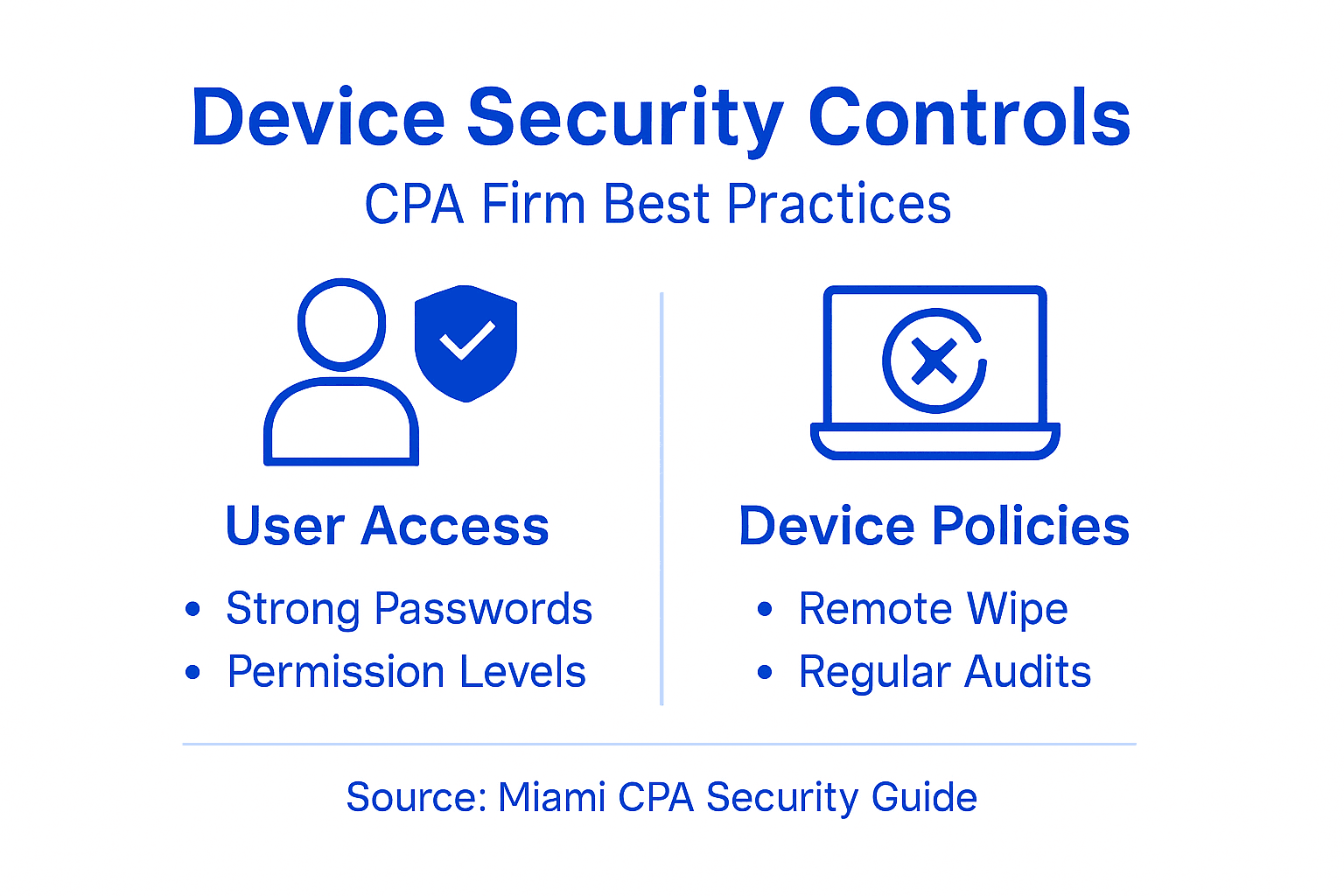
Start by developing a detailed user access management system that assigns specific permission levels based on job responsibilities. Create tiered access profiles that limit employee access to only the systems and data required for their specific roles. Configure strict password requirements including minimum length, complexity rules, and mandatory periodic password rotations. Implement endpoint protection software on all company devices that includes real time monitoring, automatic security updates, and the ability to remotely wipe data from lost or stolen devices.
Develop a comprehensive device policy that covers both company owned and personal devices used for work purposes. This should include mandatory encryption, required security software installation, and clear guidelines about connecting to external networks. Conduct regular security training sessions that educate employees about potential risks such as phishing attempts, unauthorized data transfers, and social engineering tactics. Establish a clear reporting mechanism for employees to quickly communicate potential security incidents or suspicious activities.
Pro tip: Regularly audit and update user access permissions to ensure they align with current employee roles and organizational structures.
Step 5: Monitor systems and audit security regularly
Ensuring ongoing cybersecurity protection requires implementing comprehensive security monitoring practices that continuously evaluate your accounting firm’s digital infrastructure. Regular system monitoring allows you to detect and respond to potential security threats before they can cause significant damage.
Develop a structured monitoring strategy that includes multiple layers of surveillance. Install advanced security information and event management software that provides real time tracking of network activities, user access logs, and potential anomalies. Configure automated alert systems that immediately notify your IT security team about suspicious login attempts, unauthorized access requests, or unusual data transfer patterns. Schedule quarterly comprehensive security audits that thoroughly examine your entire digital ecosystem including network configurations, user access permissions, endpoint security, and potential vulnerabilities in your current infrastructure.
Create a detailed incident response plan that outlines specific procedures for addressing and mitigating detected security threats. This should include clear communication protocols, step by step investigation procedures, and predefined mitigation strategies for different types of potential security breaches. Establish a centralized reporting mechanism where employees can quickly communicate potential security concerns and ensure that all team members understand their role in maintaining the firm’s cybersecurity defenses.
Pro tip: Implement automated vulnerability scanning tools that continuously assess your systems and provide detailed reports on potential security weaknesses.
Here’s a quick reference for security controls and their protective benefits:
| Security Control | Main Function | Protective Benefit |
|---|---|---|
| Multi-Factor Authentication | Verifies user identity | Prevents unauthorized access |
| Data Encryption | Secures data at rest/in transit | Shields client information |
| Endpoint Protection | Monitors devices | Blocks malware and data loss |
| Regular Audits | Checks policies and systems | Identifies weaknesses early |
| User Training | Educates staff | Reduces human error risk |
Strengthen Your CPA Firm’s Security with Expert Technology Solutions
The challenge of enhancing data security in Miami CPA firms is clear: protecting sensitive client information demands advanced measures like multi-factor authentication, robust encryption, and tight access controls. If you are aiming to safeguard your firm against phishing, ransomware, and unauthorized access while scaling your business effectively, you need a trusted partner who understands these specific risks. Our solutions focus on helping you build the capabilities and compliance your clients expect so you can land bigger clients and operate securely without growing your team disproportionately.
Explore our proven strategies for accounting cybersecurity and digital transformation by visiting our Security Archives – Strategic IT Consultants For Accountants and Digital-transformation Archives – Strategic IT Consultants For Accountants. Take action now to reclaim your peace of mind and grow your firm safely. Discover how all your technology needs can be met by one partner at https://www.transform42inc.com/.
Frequently Asked Questions
How can I assess data security risks in my CPA firm?
Start by creating a detailed inventory of all digital assets, including client databases and communication platforms. Document potential entry points for unauthorized access and analyze possible threat scenarios to categorize risks based on their impact and likelihood.
What multi-factor authentication methods should I implement for my accounting firm?
Implement methods such as text message verification codes, authenticator apps, or biometric checks to enhance security. Start by selecting an MFA solution that integrates smoothly with your existing systems and train your employees on its use.
How do I upgrade encryption for sensitive client data?
Conduct an audit of all data storage systems to identify where sensitive information is handled. Choose advanced encryption standards like AES 256-bit for data at rest and implement these protocols across all relevant platforms to ensure client data protection.
What access controls should I establish for my firm’s devices?
Develop a user access management system that assigns permissions based on job roles. Ensure strict password requirements and install endpoint protection software on all devices to prevent unauthorized access.
How can I monitor systems and conduct security audits regularly?
Implement a monitoring strategy with advanced security information and event management software to track network activities. Schedule quarterly audits to thoroughly examine digital infrastructure and adjust security measures as needed.
What role does employee training play in data security?
Regular training educates employees about potential risks like phishing and social engineering tactics. Conduct training sessions at least annually to reduce human error and increase security awareness within your firm.