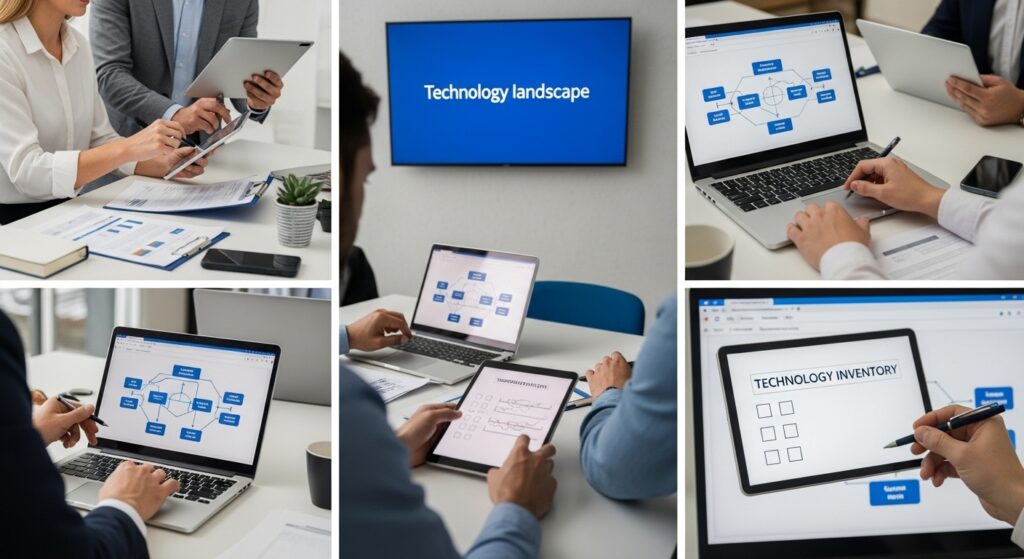
What keeps many Miami CPAs from reaching the next level of revenue growth is often hidden in daily routines. Making meaningful changes requires a detailed look at current workflows and how technology can drive efficiency. By combining team input, mapping each process, and setting clear goals, you gain real insight into opportunities for improvement. This guide highlights practical steps to help you harness technology for smarter operations and sustainable financial growth.
Table of Contents
- Step 1: Assess Current Workflows for Potential Improvements
- Step 2: Define Measurable Change Objectives with Your Team
- Step 3: Select and Integrate the Right Technology Solutions
- Step 4: Communicate Changes Clearly to All Stakeholders
- Step 5: Verify Implementation and Monitor Ongoing Results
Quick Summary
| Key Insight | Explanation |
|---|---|
| 1. Assess Current Workflows | Begin by mapping existing processes to identify inefficiencies and opportunities for improvement. |
| 2. Set SMART Objectives | Collaborate with your team to define specific, measurable, achievable, relevant, and time-bound goals. |
| 3. Choose Suitable Technology | Evaluate technologies that can automate tasks and improve workflow efficiency while considering user-friendliness. |
| 4. Communicate Changes Clearly | Develop a multi-channel communication plan to ensure all stakeholders are informed and engaged during transitions. |
| 5. Monitor and Adjust | Implement a strategy for tracking performance and obtaining feedback to continually refine processes. |
Step 1: Assess Current Workflows for Potential Improvements
Improving your accounting firm’s workflow starts with a comprehensive assessment of your current processes. This critical initial phase helps you identify inefficiencies, bottlenecks, and opportunities for strategic enhancement.
To effectively assess your current workflows, begin by mapping out existing operational processes. This involves documenting each step of your current work procedures, from client onboarding to financial reporting. Look for the following key indicators of potential improvement:
- Repetitive manual tasks that consume excessive time
- Processes requiring multiple handoffs between team members
- Areas with inconsistent documentation or tracking
- Tasks prone to human error
- Workflows that lack standardization
Organizational change management strategies emphasize the importance of critically evaluating current operational structures. Pay special attention to time-consuming activities and points where communication or data transfer might be slowing down your firm’s productivity.
Break down each workflow into granular steps, timing how long each takes and noting where potential automation or streamlining could occur. Interview your team members to gather insights about daily challenges and friction points in current processes.
Successful workflow assessment requires an objective, detail-oriented approach that prioritizes efficiency and team input.
Key documentation matters. Create visual workflow diagrams that capture current processes, making it easier to identify improvement opportunities. Use tools like process mapping software or simple flowchart applications to create these representations.

Here’s a quick summary of workflow assessment techniques and their impacts:
| Assessment Technique | Description | Potential Business Impact |
|---|---|---|
| Process Mapping | Visualize each step of workflow | Reveals hidden inefficiencies |
| Team Interviews | Gather employee feedback on tasks | Identifies friction points and challenges |
| Time Analysis | Measure duration of each task | Highlights areas for automation |
| Documentation Review | Evaluate consistency and completeness | Ensures regulatory compliance |
Pro tip: Involve your team members in the assessment process, as they often have the most nuanced understanding of daily operational challenges.
Step 2: Define Measurable Change Objectives with Your Team
Defining clear and actionable change objectives is critical for successfully transforming your accounting firm’s workflows. This step involves collaborative goal-setting that ensures your entire team understands and commits to the proposed improvements.
Start by organizing a dedicated team meeting to discuss potential performance improvement targets. Collaborative change management strategies emphasize the importance of involving team members in objective development. Your goals should be specific, measurable, achievable, relevant, and time-bound (SMART):
- Reduce document processing time by 35% within 90 days
- Minimize manual data entry by implementing automated systems
- Standardize client onboarding procedures across all team members
- Improve interdepartmental communication efficiency
- Create transparent performance tracking mechanisms
Each objective should directly address the inefficiencies identified during your initial workflow assessment. Quantify your goals with precise metrics that demonstrate tangible improvements in productivity, accuracy, and operational efficiency.
Successful change management requires clear objectives that resonate with your team’s daily experiences and professional growth.
Documentation is key. Create a comprehensive objective tracking sheet that outlines each goal, responsible team members, target completion dates, and specific success indicators. This transparency helps maintain accountability and provides a clear roadmap for transformation.

Pro tip: Schedule monthly review sessions to assess progress and adjust objectives based on real-world implementation challenges.
Step 3: Select and Integrate the Right Technology Solutions
Selecting and integrating the right technology solutions is a pivotal moment in transforming your accounting firm’s operational efficiency. This step requires careful evaluation of technologies that will directly address the workflow challenges you’ve identified.
Structured technology implementation approaches are crucial for minimizing disruption and ensuring successful adoption. When evaluating potential technology solutions, consider the following critical selection criteria:
For quick reference, here are technology selection criteria and their benefits:
| Selection Criterion | Benefit for Accounting Firm | Example Consideration |
|---|---|---|
| System Compatibility | Smooth integration and transitions | Works with current software stack |
| Automation Capabilities | Reduces manual workload | Bulk data imports or exports |
| Scalability | Supports business growth | Handles increasing client volume |
| User-Friendly Design | Faster team adoption | Intuitive interface for all users |
| Security & Compliance | Protects sensitive client data | Meets industry legal requirements |
- Compatibility with existing accounting systems
- Scalability to support future firm growth
- User-friendly interface for easy team adoption
- Advanced automation capabilities
- Robust data security and compliance features
- Cost-effectiveness and return on investment
- Comprehensive training and support options
Vendor evaluation becomes critical in this process. Schedule demonstrations with potential technology providers, requesting detailed walkthroughs that showcase how their solutions specifically address your firm’s unique challenges. Involve key team members in these demonstrations to gather diverse perspectives and ensure widespread support.
Technology integration is not just about purchasing a tool, but about transforming your firm’s entire operational approach.
Pilot testing matters. Before full implementation, select a small team or specific workflow to test the new technology. This approach allows you to identify potential challenges, gather real-world feedback, and make necessary adjustments before company-wide rollout.
Pro tip: Create a technology implementation task force with representatives from different departments to ensure comprehensive evaluation and smooth transition.
Step 4: Communicate Changes Clearly to All Stakeholders
Effective communication is the backbone of successful organizational change, especially for Miami accounting firms navigating complex technological transformations. Your ability to communicate transparently and strategically will determine how smoothly your team adapts to new workflows and technologies.
Organizational change communication strategies emphasize the importance of multi-channel, frequent, and transparent messaging. Develop a comprehensive communication plan that addresses the diverse informational needs of different stakeholder groups:
- Immediate team members who will directly implement changes
- Supporting departments that interact with primary workflows
- Leadership and management who oversee strategic implementation
- External partners and clients who might be impacted
- Vendors and technology support teams
Messaging consistency matters. Create a core narrative that explains why these changes are happening, what specific benefits will emerge, and how each stakeholder group will be supported during the transition. Use clear, jargon-free language that demystifies the technological changes and highlights potential opportunities.
Successful change communication transforms uncertainty into excitement by providing clarity and vision.
Develop multiple communication channels. Do not rely on a single method of communication. Combine email updates, team meetings, individual consultations, written documentation, and visual presentations to ensure your message reaches everyone effectively.
Pro tip: Designate specific team members as change communication ambassadors who can answer questions, address concerns, and provide ongoing support during the transition.
Step 5: Verify Implementation and Monitor Ongoing Results
The final critical phase of change management involves rigorously tracking and validating the effectiveness of your technological transformation. This step ensures your accounting firm realizes the anticipated improvements and can make data-driven adjustments as needed.
Process implementation evaluation techniques provide a structured approach to measuring change outcomes. Develop a comprehensive monitoring strategy that includes:
- Quantitative performance metrics
- Regular team feedback sessions
- Comparative analysis of pre and post-implementation results
- Technology utilization tracking
- Key performance indicator (KPI) assessments
Tracking mechanisms matter. Create a dashboard that visualizes critical metrics, allowing you to quickly identify areas of success and potential improvement. This real-time insight enables rapid response and continuous optimization of your new workflows and technological solutions.
Effective monitoring transforms change from a one-time event into an ongoing strategic improvement process.
Data-driven decision making becomes crucial. Schedule monthly review meetings where you analyze implementation data, gather team insights, and make incremental adjustments. This approach prevents minor issues from becoming significant obstacles and demonstrates your firm’s commitment to continuous improvement.
Pro tip: Implement a quarterly review system that includes anonymous team surveys to capture authentic feedback about the technological changes.
Accelerate Your Change Management Success with Strategic Technology Partnerships
Improving workflows and driving growth for Miami CPAs requires more than just strategy it demands a partner who understands the unique technology needs of accounting firms. This article highlights key challenges such as inefficient processes unclear change objectives and technology integration hurdles that can slow your firm’s transformation. At Transform42 we specialize in turning these obstacles into opportunities using proven digital transformation and process optimization solutions tailored for accountants. By leveraging our expertise you can reduce manual tasks standardize workflows and implement secure scalable technology that supports your firm’s growth ambitions.
Take control of your firm’s future today. Explore our Processes Archives – Strategic IT Consultants For Accountants to learn how to align operational workflows with strategic goals. Discover the power of seamless Digital-transformation Archives – Strategic IT Consultants For Accountants that delivers a competitive edge. Ready to reclaim your time land bigger clients and boost your revenue significantly? Visit Transform42 now to partner with technology experts dedicated to Miami accounting professionals. Act now to build the capabilities and compliance your clients expect while scaling efficiently.
Frequently Asked Questions
How can I assess my current workflows to identify areas for improvement?
To assess your current workflows, map out each operational process, noting steps from client onboarding to financial reporting. Identify repetitive tasks, bottlenecks, and inconsistencies, then discuss these with your team to pinpoint areas needing enhancement.
What should I include when defining change objectives for my CPA firm?
Define your change objectives using the SMART criteria: specific, measurable, achievable, relevant, and time-bound. For example, aim to reduce document processing time by 35% within 90 days, ensuring all team members are on board with these goals.
What technology solutions should I consider for improving workflow efficiency?
Select technology solutions based on criteria such as compatibility, automation capabilities, and user-friendly design. Aim to integrate systems that can handle increasing client volume and ensure data security, testing them in small groups before full rollout.
How do I effectively communicate changes to my team and stakeholders?
Develop a comprehensive communication plan that addresses the needs of all stakeholder groups, using multiple channels like emails and meetings. Ensure your messaging explains the reasons for changes clearly and highlights the benefits everyone can expect.
What steps should I take to monitor the effectiveness of the implemented changes?
Create a monitoring strategy that includes quantitative metrics and regular team feedback sessions to track the effectiveness of the new workflows. Schedule monthly review meetings to assess these metrics and make adjustments as needed for continuous improvements.
How can I involve my team in the change management process?
Involve your team by conducting interviews to gather insights and feedback on current processes and potential changes. Encourage participation in defining objectives and selecting technology to ensure their buy-in and foster a collaborative atmosphere.
Recommended
- Business Process Change: Driving Growth For Miami CPAs
- Role of Change Management: Everything You Need to Know
- Role of Change Management: Everything You Need to Know – Stratgetic IT Consultants for Accountants
- Agile Methodology Explained: Complete Guide for CPAs – Stratgetic IT Consultants for Accountants