TL;DR:
- Supply chains are under unprecedented pressure, making proactive risk management essential to avoid costly disruptions. Building a detailed risk map, diversifying suppliers, and deploying real-time technology can significantly enhance resilience. Embedding routine risk assessments and translating concerns into financial impacts secure leadership support for lasting supply chain strategies.
Supply chains are breaking under pressure right now, and the cost of doing nothing is rising fast. The GEP Global Supply Chain Volatility Index jumped to 1.64 in April 2026 from just 0.57 the month before, the highest level since the 2022 crisis. Geopolitical tensions, tariff shocks, and logistics disruptions are hitting businesses simultaneously. If your organization does not have a real plan for mitigating supply chain risk, you are already behind. This guide gives you the concrete strategies to close that gap before the next disruption hits.
Table of Contents
- Key takeaways
- Mitigating supply chain risk starts with knowing what you face
- Supplier diversification and inventory strategy
- Technology and collaboration for real-time visibility
- Building a risk management program that lasts
- My take: where most organizations get this wrong
- How Transform42inc can help you build real resilience
- FAQ
Key takeaways
| Point | Details |
|---|---|
| Map your full supply chain | Identify every supplier tier to find hidden vulnerabilities before a crisis exposes them. |
| Diversify suppliers strategically | Use dual-sourcing at 10 to 20% volume to stay ready without doubling costs. |
| Invest in real-time technology | AI monitoring and digital twins give you early warning before disruptions become disasters. |
| Embed risk as routine | Treat risk management as a scheduled discipline, not a reaction to emergencies. |
| Speak the language of money | Translate risk into financial impact to get leadership commitment and budget. |
Mitigating supply chain risk starts with knowing what you face
Most businesses think they know their supply chain. Then a second-tier supplier goes offline and the whole operation stalls. The problem is not that the risk was unforeseeable. The problem is that nobody mapped it.
Build your risk map from the bottom up
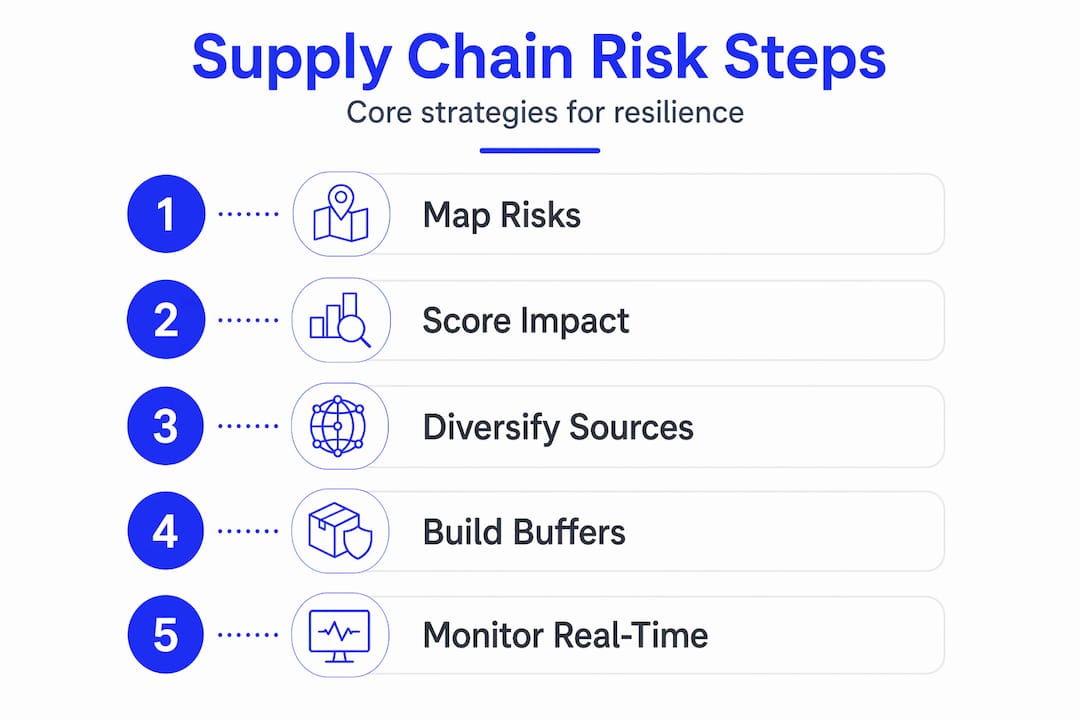
Effective supply chain risk management starts with mapping every layer of your supply chain, not just your direct suppliers. That means going to tier two and tier three. A part you buy from a local distributor may actually originate from a single factory in a politically volatile region. Supply chain mapping and risk scoring create a clear priority matrix so you can focus your time and money on the highest-threat areas.
When you map your bill of materials to supplier sites, you often uncover component obsolescence and concentration risk that would otherwise stay invisible until a real failure happens.
Categories of risk you need to track
Not all supply chain risks look the same. You need to watch for:
- Operational risk: Factory shutdowns, quality failures, labor shortages
- Geopolitical risk: Trade restrictions, tariffs, sanctions, regional conflict
- Financial risk: Supplier bankruptcy, currency fluctuation, credit exposure
- Environmental risk: Natural disasters, climate disruption, port closures
- Cyber risk: Data breaches, ransomware attacks on supplier systems
Score each risk by two factors: how likely it is to happen, and how damaging it would be if it did. That scoring matrix tells you where to spend resources first.
Pro Tip: Revisit your risk scores quarterly. A supplier that was low risk six months ago may have changed ownership, taken on debt, or become exposed to new geopolitical pressure. Risk profiles are not static.
Supplier diversification and inventory strategy
Once you know your risks, the next step is building the supply chain structures that absorb shocks instead of collapsing under them. Two of the most powerful tools you have are supplier diversification and smarter inventory management.
Why single-supplier dependency is a trap
82% of supply chain organizations were hit by new tariffs in 2025. Companies locked into a single supplier or a single country of origin had almost no options when those tariffs landed. They either absorbed the cost or faced delays while scrambling to qualify new sources. Neither outcome is good.
Dual-sourcing is the most practical first move for most businesses. But here is the detail most guides miss: effective dual-sourcing does not mean splitting volume 50/50. You place 10 to 20% of volume with a secondary supplier to keep the relationship active and the quality validated, without the overhead of running two equal operations. If your primary supplier fails, you can scale the secondary fast because the relationship and processes are already in place.
Comparing supply chain sourcing approaches
| Approach | Cost impact | Risk reduction | Best for |
|---|---|---|---|
| Single source | Lowest unit cost | Highest exposure | Stable, low-risk categories |
| Dual source (10 to 20% secondary) | Moderate increase | Significant reduction | Most critical components |
| Multi-source (3 or more suppliers) | Higher management cost | Maximum flexibility | Highest-criticality categories |
| Geographic diversification | Variable | Reduces correlated regional risk | Any category with regional concentration |
Strategic inventory buffers: the insurance policy you can quantify
Lean inventory models made sense in a stable world. That world no longer exists. Transportation costs hit record highs in April 2026 due to maritime disruption and geopolitical events. Businesses that had buffer stock rode through the disruption. Those running zero safety stock did not.
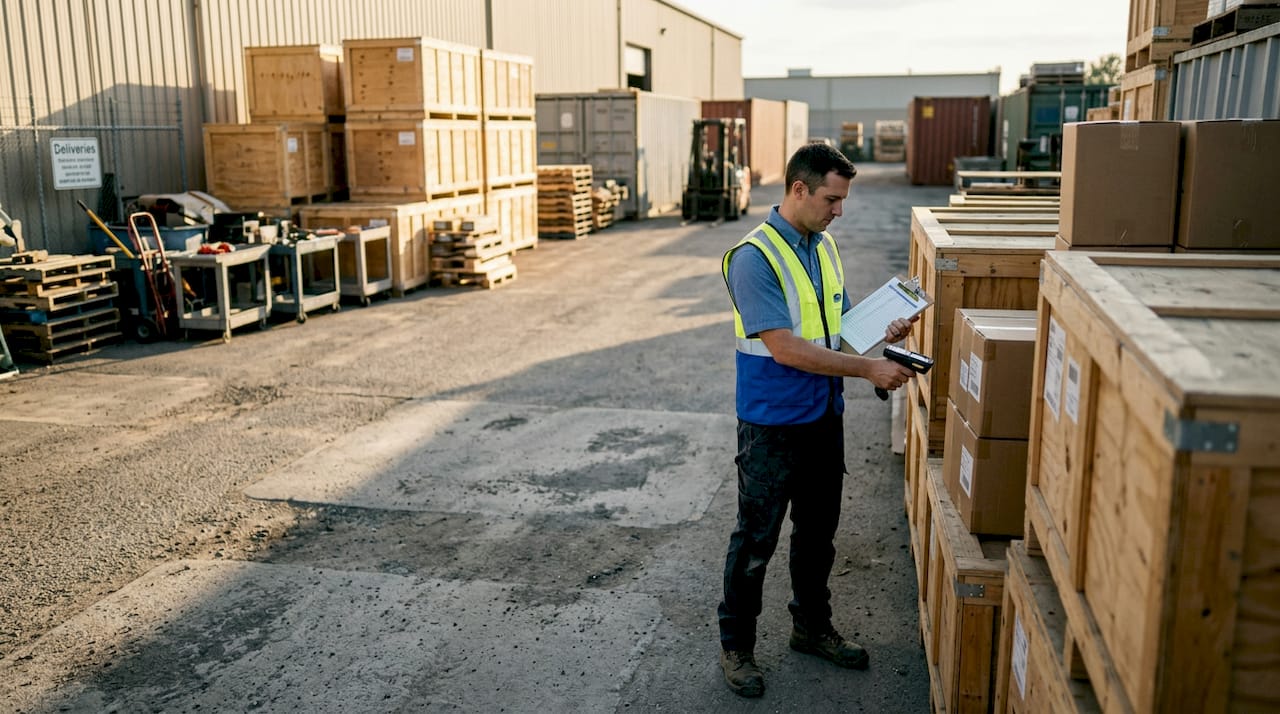
Calculate your buffer inventory based on lead time variability and the financial cost of a stockout, not just carrying cost. That math often reveals that maintaining 30 extra days of critical component stock costs far less than a single production shutdown.
Pro Tip: Segment your inventory by supply risk, not just by demand velocity. A low-volume part from a single source in a volatile region deserves a bigger safety buffer than a high-volume part with five qualified suppliers.
Technology and collaboration for real-time visibility
Knowing your risks on paper is one thing. Seeing them move in real time is a different capability entirely. That is where technology and supplier relationships change the game.
What real-time monitoring actually looks like
AI-powered platforms now monitor supplier financial health, geopolitical events, weather patterns, and logistics disruptions simultaneously, and they flag emerging risks before they become operational problems. The global AI in supply chain market is projected to reach $41.23 billion by 2030, and that growth is being driven by real demand, not hype.
Digital twins take this further. A digital twin of your supply chain lets you run scenario models. What happens if your primary port is closed for two weeks? What if your top supplier goes offline for a month? You get answers before the scenario is real, which means your response plan is ready when it matters. Managing geopolitical risk with digital twins and scenario modeling gives operations teams a concrete way to quantify disruption impact rather than guessing.
The digital tools for supply chain resilience available today can connect data from ERP systems, logistics platforms, and supplier portals into a single dashboard your team can actually act on.
Supplier collaboration as a risk mitigation tool
Technology is only half of the visibility equation. Suppliers who trust you will call you when something goes wrong. Suppliers who feel like they are being squeezed will not. Build real relationships with your critical suppliers. Share your demand forecasts. Give them early warning when your needs are changing. That kind of supplier capability and relationship building consistently outperforms the strategy of cutting suppliers to reduce cost.
Pro Tip: Designate a supplier relationship owner for each of your top ten suppliers. One person. Accountable. With regular check-ins that go beyond purchase orders and invoices.
Here are the technology investments that deliver the most supply chain risk value:
- AI-driven risk monitoring with supplier financial health alerts
- Digital twin platforms for scenario planning
- ERP integration with supplier portals for real-time order visibility
- Automated alerts for logistics delays and port disruption
- Cybersecurity protocols extended to include supplier network access
Building a risk management program that lasts
A risk assessment you do once and file away is not a risk management program. It is a compliance checkbox. And a compliance checkbox will not protect your business when the next disruption hits.
Turn risk management into routine work
Supply chain risk management is most effective as routine, measurable work rather than ad hoc responses to crises. That means embedding it into your operations calendar, not treating it as a special project.
Here is how to structure a formal program:
- Assign ownership. Designate a risk lead or a small cross-functional team. Risk without an owner does not get managed.
- Set a review cadence. Quarterly risk reviews at minimum. Monthly for high-volatility periods.
- Run tabletop exercises. Twice a year, walk your team through a simulated disruption. Identify gaps in your response plan before a real event reveals them.
- Update supplier risk scores. Revisit your risk matrix every quarter based on market changes, supplier performance, and geopolitical shifts.
- Track and report key metrics. Monitor supplier on-time delivery, lead time variability, and single-source exposure as standard operational data.
Getting leadership to fund risk programs
This is where most risk programs die. The supply chain team knows what is at stake. Leadership hears “risk management” and thinks cost, not protection. Translating risk data into business language is what changes that conversation. Stop talking about probability scores. Start talking about “if this supplier fails, we lose $4 million in revenue and miss three client deliveries.” That is a conversation executives can act on.
Connect your risk exposure directly to financial outcomes, margin impact, and customer satisfaction. When risk is framed in business terms, it gets funded. Supply chain resilience strategies become part of the business case, not a separate conversation about worst-case scenarios.
Pro Tip: Build your risk management pitch around the cost of the last disruption your company actually experienced. Real numbers from your own history are far more persuasive than hypothetical scenarios.
My take: where most organizations get this wrong
I have worked with enough organizations to see the pattern clearly. Most leaders treat supply chain risk management as something you do after a crisis forces your hand. You scramble, you fix the immediate problem, and then you go back to normal. And normal is exactly the state that left you exposed.
The mistake I see most often is the decision to cut suppliers in the name of efficiency. It feels disciplined. It reduces vendor management complexity. But what it actually does is concentrate your exposure until a single point of failure can shut you down completely. Cutting suppliers weakens resilience. I have watched that play out in real time, and it is not a lesson you want to learn on the fly.
What actually works is integrating risk awareness into everyday decisions, not just quarterly reviews. When your purchasing managers are factoring supplier concentration into every sourcing decision, when your finance team understands the margin impact of a 30-day disruption, and when leadership has seen a tabletop exercise go sideways, the culture shifts. Risk becomes visible before it becomes a crisis. That is the difference between organizations that survive disruptions and organizations that get defined by them.
— Joe
How Transform42inc can help you build real resilience
If reading this article made you realize your current approach to supply chain risk has gaps, you are not alone. And the technology to close those gaps exists right now.
Transform42inc brings together the technology and digital transformation services that give your operations real visibility and responsiveness. From AI integration and ERP connectivity to supplier analytics and scenario planning tools, we put everything your team needs into one partner. We help you stop reacting to disruptions and start seeing them coming. If you are ready to build a supply chain your business can actually rely on, explore our digital transformation solutions or reach out to talk through what your specific operation needs. The next disruption is already forming. The question is whether you will be ready for it.
FAQ
What is mitigating supply chain risk?
Mitigating supply chain risk means identifying potential disruptions before they happen and putting strategies in place to reduce their impact. This includes supplier diversification, inventory buffers, real-time monitoring, and formal risk management processes.
How do you start a supply chain risk assessment?
Start by mapping your full supply chain including tier two and tier three suppliers, then score each risk by likelihood and potential impact. That priority matrix tells you where to focus your mitigation efforts first.
What is the best strategy for reducing supply chain vulnerabilities?
Dual-sourcing is one of the most cost-effective strategies. Placing 10 to 20% of volume with a secondary supplier keeps the relationship validated and ready to scale without significantly increasing costs.
How does technology improve supply chain risk management?
AI monitoring platforms and digital twins give you real-time visibility into supplier health, logistics disruptions, and geopolitical events. They let you run scenario models so your team has a response plan ready before a crisis hits.
Why do supply chain risk programs fail?
Most programs fail because risk data never gets translated into financial terms that executives care about. When leadership cannot connect risk exposure to revenue loss or margin impact, risk programs lose funding and priority.
Recommended
- Strengthening Defense Supply Chains Strategies – Stratgetic IT Consultants For Accountants
- Defense Supply Chains Strategies For Resilience In A Volatile World – Stratgetic IT Consultants For Accountants
- Navigating Supply Chain Disruptions In The Defense Industry: Challenges And Solutions – Stratgetic IT Consultants For Accountants