Every CPA owner in Miami knows the pressure of guarding client data while growing revenue, yet too many firms remain underprotected against cybercriminals who see accounting offices as honey pots. Recent threats like phishing, ransomware, and cloud vulnerabilities target independent firms for their valuable financial records and weaker defenses. Learning how to strengthen your digital security means not just protecting sensitive information, but also building client trust and securing your firm’s reputation for future growth.
Table of Contents
- Defining Digital Security For CPAs
- Types Of Threats Facing CPA Firms
- Regulatory Compliance And Legal Mandates
- Risks Of Neglecting Digital Security
- Best Practices To Protect Client Data
Key Takeaways
| Point | Details |
|---|---|
| Importance of Digital Security | CPA firms are prime targets for cybercriminals due to the financial data they handle, necessitating robust digital security measures. |
| Common Cyber Threats | Phishing, ransomware, and data breaches remain prevalent threats that can jeopardize client trust and business continuity. |
| Regulatory Compliance | Adhering to regulations like the AICPA Code and GDPR is essential to avoid severe penalties and maintain client confidentiality. |
| Implementing Best Practices | Establishing a written information security plan and training employees on security measures is crucial to safeguard client data effectively. |
Defining Digital Security for CPAs
Digital security isn’t just IT jargon. It’s your protection against criminals who specifically target accounting firms because they hold financial data and access to client accounts. CPA firms are viewed as “honey pots” by hackers due to the valuable information stored in your systems and, frankly, because many firms haven’t invested heavily in defenses.
At its core, digital security means putting safeguards in place to protect sensitive client information from unauthorized access and attacks. Think of it like locking your office door, but instead you’re securing data that clients trust you with.
The NIST Cybersecurity Framework defines digital security as a comprehensive approach to managing cybersecurity risks. It involves understanding your vulnerabilities, assessing what could go wrong, and communicating your security efforts to clients and stakeholders. This framework applies to any organization, regardless of size, and helps you tailor protections to your specific situation.
For CPAs specifically, digital security encompasses several key areas:
- Protecting client data from theft and unauthorized access
- Preventing attacks like phishing emails that trick your staff
- Securing cloud systems where you store files and client information
- Managing access controls so only authorized people can view sensitive documents
- Responding to threats quickly if something does go wrong
The reality is that CPAs face prevalent cyber threats including phishing, ransomware, and social engineering attacks. Ransomware locks up your files until you pay. Phishing emails trick employees into giving up passwords. These aren’t theoretical concerns—they happen regularly to accounting firms across Miami and nationwide.
When you practice cyber security measures consistently, you’re doing more than protecting data. You’re building trust with clients, meeting legal obligations, and avoiding the massive costs of a breach.
Digital security isn’t one system or one password. It’s a combination of technology, employee training, processes, and monitoring that work together to keep criminals out.
Your clients don’t just expect you to keep their financial information safe—they depend on it. A breach could destroy your reputation and your firm’s ability to serve them.
Pro tip: Start by identifying where your most sensitive client data lives. This might be your tax software, accounting records, or client files stored on servers. Once you know where the valuable information sits, you can focus your security efforts there first.
Types of Threats Facing CPA Firms
You’re not just protecting data. You’re protecting your firm’s survival. The threats targeting CPA firms today are sophisticated, relentless, and designed specifically to exploit the value of financial information you hold.

Cybercriminals know that accounting firms have access to sensitive client data, banking information, and financial records. They also know that many firms haven’t invested as heavily in security as larger corporations. This combination makes you a target.
Here are the main threats you face:
- Phishing attacks where criminals impersonate the IRS, clients, or trusted vendors to trick employees into revealing passwords or downloading malware
- W-2 scams targeting payroll data through fake requests that look legitimate
- Ransomware that locks your entire system until you pay thousands or millions in ransom
- Cloud vulnerabilities from misconfigured storage systems or third-party access gone wrong
- Data breaches where criminals steal client information to sell or use for identity theft
Phishing is the most common attack vector. An employee receives an email that looks like it’s from their bank or the IRS. They click a link or download an attachment. Suddenly, criminals have access to your network.
The cyber threat landscape includes organized crime groups, nation-states, and individuals motivated by profit, espionage, or simple malice. These aren’t random attacks anymore. Criminals research your firm, identify valuable targets, and strike with precision.
Ransomware is particularly devastating. Attackers encrypt your files, making them completely inaccessible. Your clients can’t access their records. Your staff can’t work. The pressure to pay is immense, and some firms have paid hundreds of thousands of dollars to get their systems back.
Cloud security problems often stem from simple mistakes. A misconfigured server. Shared passwords. Third-party vendors with access to your systems. Each creates an opening for attackers.
The criminals attacking your firm are not amateurs. They’re organized, well-funded, and patient. They’ll try multiple approaches until something works.
Pro tip: Educate your team on phishing red flags. Teach them to verify requests through a separate communication channel, never click suspicious links, and report anything odd to leadership immediately. Your staff is your first line of defense.
Regulatory Compliance and Legal Mandates
You’re not just protecting your firm when you invest in digital security. You’re complying with the law. If you don’t, the penalties can be devastating—fines, loss of licensing, and lawsuits from clients whose data you failed to protect.
CPA firms operate under strict regulations. The AICPA Code of Professional Conduct requires you to maintain confidentiality, exercise due care, and act with integrity when handling client data. This isn’t optional. It’s a professional mandate that affects your license to practice.
Beyond the AICPA, you face federal and state regulations that mandate specific security practices:
- HIPAA Security Rule if you handle protected health information or sensitive medical data
- State data breach notification laws requiring you to notify clients within specific timeframes if a breach occurs
- IRS regulations governing the security of tax information and client financial records
- Florida data protection laws that impose strict penalties for inadequate safeguards
- GDPR compliance if you have any international clients or handle European client data
The AICPA Code of Professional Conduct specifically addresses your responsibility to safeguard client data through administrative, physical, and technical controls. This means you need policies in place, physical security measures, and technology solutions working together.
Many CPAs don’t realize that compliance failures can trigger serious consequences. A data breach notification can cost tens of thousands of dollars just in notification and credit monitoring services. Regulatory fines can range from thousands to millions depending on the violation and number of records affected.
When you implement proper security safeguards and access controls, you’re protecting yourself legally and protecting your clients’ trust. You’re also demonstrating due diligence if an attack does occur, which can reduce your liability exposure.
The regulations keep evolving. What’s compliant today might not be sufficient next year. Staying ahead requires ongoing assessment and updates to your security infrastructure.
Here’s a summary of regulations CPAs must monitor for compliance:
| Regulation | What It Covers | Who It Applies To |
|---|---|---|
| AICPA Code | Confidentiality and due care | All U.S. CPAs |
| IRS Regulations | Tax data security | Any tax preparer |
| HIPAA Security Rule | Health data protection | Firms handling medical information |
| State Data Laws | Breach notification, data handling | Based on state of operation |
| GDPR | International data protection | Firms with European clients |
Regulatory compliance isn’t a one-time checkbox. It’s a continuous process of assessment, improvement, and documentation that protects both your firm and your clients.
Pro tip: Document everything. Keep records of your security assessments, employee training sessions, and any security incidents or near-misses. This documentation proves you took due care and can significantly reduce liability if regulators ever investigate.
Risks of Neglecting Digital Security
Ignoring digital security isn’t just a technology problem. It’s a business survival problem. When you neglect security, you’re gambling with your entire firm’s future.
Here’s what happens when a breach occurs. Your systems go down. Your staff can’t access client files. Your clients can’t get their financial information. Meanwhile, you’re scrambling to figure out what happened and how to fix it.
The costs are staggering:
- Ransom payments ranging from thousands to millions of dollars
- Business downtime that can cost thousands per hour in lost productivity
- Notification expenses required by law, including credit monitoring for affected clients
- Regulatory fines that can reach millions depending on violations
- Litigation costs from clients whose data was compromised
- Lost revenue as clients leave your firm due to lost trust
But the financial cost is only part of the problem. The reputational damage is often worse. When clients learn their sensitive financial data was stolen, they leave. They tell other potential clients about the breach. Your firm’s reputation, built over years, can be destroyed in days.
Business continuity suffers dramatically. Data breaches cause extended downtime that disrupts operations and forces you to rebuild systems from scratch. Some firms never fully recover from the operational impact.
Your competitive advantage evaporates. While you’re dealing with a breach, competitors are signing new clients. They’re expanding their services. You’re fighting fires instead of growing.
RegulatoryConsequences compound the damage. State attorneys general investigate breaches. The IRS reviews your security practices if client tax data was exposed. Compliance agencies impose penalties. You may lose your ability to handle certain types of client data.
Large firms can absorb these hits. Independent CPAs cannot. One serious breach can force you out of business.
Here’s how major digital security incidents impact CPA firms:
| Incident Type | Immediate Impact | Long-Term Consequence |
|---|---|---|
| Data Breach | Client data exposure | Loss of client trust |
| Ransomware | Inaccessible financial records | Prolonged business downtime |
| Regulatory Violation | Legal investigation | Fines and license risk |
| Reputational Loss | Client departures | Reduced new business |
A data breach isn’t an “if.” It’s a “when.” The question is whether you’ll be ready or destroyed by it.
Pro tip: Calculate your firm’s worst-case breach scenario right now. What’s the cost to notify clients? What’s your potential liability? What’s the downtime impact? This number should terrify you enough to invest in proper security today.
Best Practices to Protect Client Data
Protecting client data isn’t complicated. It requires discipline, not genius. You need consistent practices applied across your entire firm, from the moment a client gives you information until years after they stop working with you.
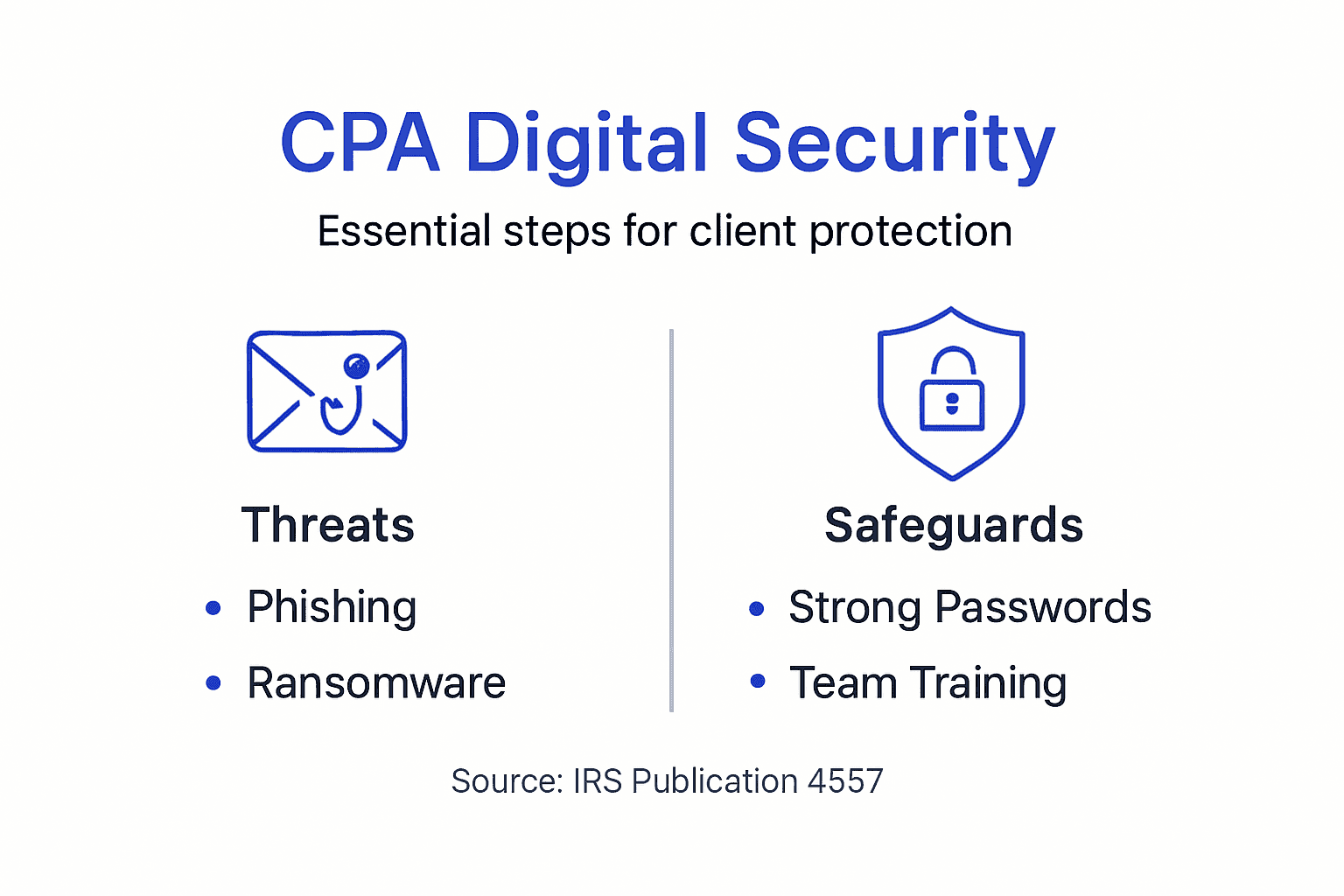
Start with the foundation. You need a written information security plan that documents how you handle, store, and protect client data. This plan should cover physical security, digital security, employee access, and what happens when something goes wrong.
Here are the core practices that actually work:
- Multi-factor authentication on every system that touches client data
- Strong passwords that are complex, unique, and changed regularly
- Regular software updates for all systems, servers, and applications
- Encrypted storage for all client files, both on servers and devices
- Secure wireless networks with strong encryption and limited access
- Employee training on phishing, social engineering, and password security
- Access controls so employees only see data they need for their job
- Incident response plans detailing exactly what you’ll do if a breach occurs
Employee training is critical. Phishing scams and social engineering attacks succeed because people are tricked, not because systems fail. Your team needs regular training on how to spot suspicious emails, verify requests through separate channels, and report concerns without penalty.
Your passwords need to be genuinely strong. Not “Password123” strong. We’re talking 16+ characters with uppercase, lowercase, numbers, and symbols. Better yet, use a password manager so employees don’t reuse passwords across systems.
Software updates matter because they patch security holes. Criminals scan for outdated software and exploit known vulnerabilities. If you’re running last year’s version of your accounting software, you’re asking to be hacked.
Access controls prevent damage from inside threats. If a disgruntled employee or compromised account only has access to limited data, the breach is contained. If every employee can access every client file, one mistake or malicious act compromises everything.
Best practices aren’t optional extras. They’re the minimum required to keep your clients’ financial lives safe from criminals.
Pro tip: Start with the IRS Publication 4557 security guidelines as your foundation for a written security plan. It’s free, specific to CPAs, and auditors will recognize it as the industry standard.
Strengthen Your Digital Security and Grow Your Miami CPA Firm
The article highlights how Miami CPAs face constant digital security threats like phishing, ransomware, and data breaches that put your client data and firm reputation at risk. You need more than basic protections because safeguarding sensitive financial information and meeting strict regulatory requirements demands a strategic approach. Your goals likely include protecting client trust, preventing costly downtime, and scaling your practice without risking your firm’s future.
That is where Transform42 comes in as your all-in-one technology partner. We help Miami CPAs build advanced security capabilities and compliance frameworks that resonate with clients and regulators alike. Our solutions help you reclaim peace of mind by:
- Implementing strong access controls and multi-factor authentication
- Ensuring continuous monitoring and rapid threat response
- Streamlining compliance with industry standards and regulations
Practice cyber security for client data with confidence and gain the strategic advantage needed to land bigger clients and scale profitably without adding staff strain.
Act now to protect your firm before the next breach. Visit Transform42 to learn how our tailored digital security solutions can empower your Miami CPA practice. Secure your technology infrastructure today and build the trust that grows your monthly revenue into 7-8 figures.
Frequently Asked Questions
What is digital security for CPAs?
Digital security for CPAs involves implementing safeguards to protect sensitive client information from unauthorized access and cyberattacks. It includes recognizing vulnerabilities and managing risks through various security measures.
Why are CPAs targeted by cybercriminals?
CPAs are often targeted due to the valuable financial data they hold and the perception that small to mid-sized firms may not have invested as heavily in cybersecurity as larger corporations, making them easier targets for attacks.
What are common cyber threats faced by CPA firms?
Common cyber threats include phishing attacks, ransomware, W-2 scams, and data breaches. These threats aim to compromise sensitive client data, disrupt operations, and potentially lead to significant financial losses.
What should CPA firms do to comply with legal regulations regarding digital security?
CPA firms must adhere to various regulations, such as the AICPA Code of Professional Conduct, HIPAA Security Rule, and state data breach notification laws. This involves maintaining client confidentiality, implementing security measures, and having clear protocols for data protection and breach notifications.
Recommended
- Why Cybersecurity Matters For Miami CPAs
- Complete Guide To Cyber Security For Miami CPAs – Stratgetic IT Consultants For Accountants
- Complete Guide To Cyber Security For Miami CPAs – Stratgetic IT Consultants For Accountants
- 7 Cybersecurity Best Practices For Miami CPAs
- Esperto di reputazione per PMI: guida completa • Gio Talente
- Datensicherheit im BPO – Minimierung von Risiken und Haftung