Manual processes drain hours you could spend serving clients. Many Miami independent accountants struggle with outdated systems that slow turnaround times, limit service capacity, and leave revenue on the table. Digital transformation is no longer optional in 2026. It’s the difference between competing for small clients and landing seven-figure accounts. This guide walks you through a clear, actionable roadmap to modernize your firm, enhance client service, and unlock sustainable revenue growth. You’ll learn how to assess your current state, execute transformation systematically, avoid common pitfalls, and measure results that matter.
Table of Contents
- Preparing For Your Digital Transformation Journey
- Step-By-Step Execution Of Digital Transformation In Your Miami Firm
- Troubleshooting And Avoiding Common Pitfalls In Digital Transformation
- Measuring Success And Continuous Improvement After Transformation
- Support Your Digital Transformation With Expert IT Consulting
- Frequently Asked Questions About Digital Transformation For Miami Accountants
Key takeaways
| Point | Details |
|---|---|
| Foundation matters | Thorough assessment of workflows and client needs prevents costly missteps during transformation. |
| Structured execution reduces risk | Following clear implementation steps with pilot testing ensures smooth adoption and staff buy-in. |
| Common pitfalls are avoidable | Proactive change management and expert guidance help you sidestep resistance and integration issues. |
| Measurement drives improvement | Tracking KPIs like client satisfaction and revenue growth enables continuous optimization post-transformation. |
| Expert support accelerates ROI | Partnering with specialized consultants shortens timelines and maximizes technology investments. |
Preparing for your digital transformation journey
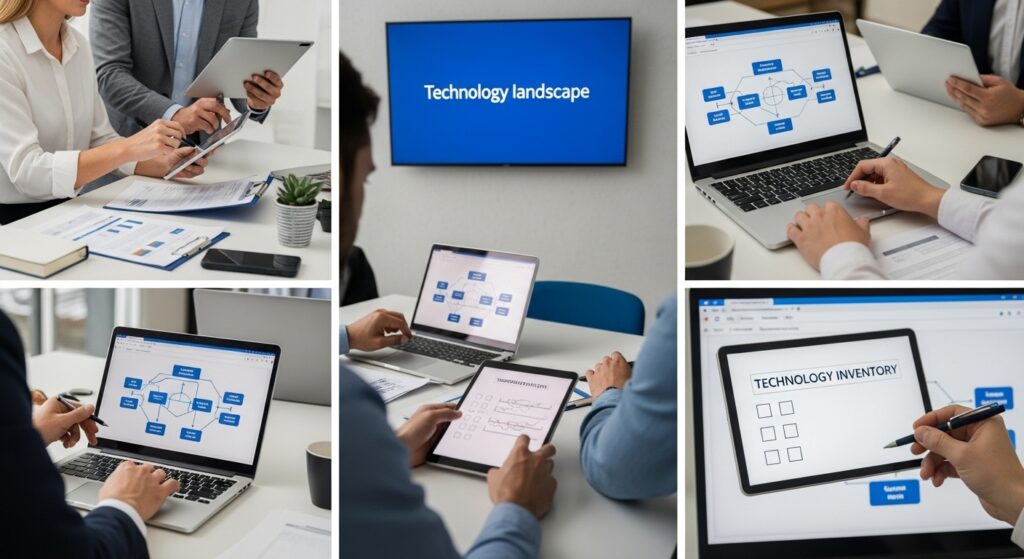
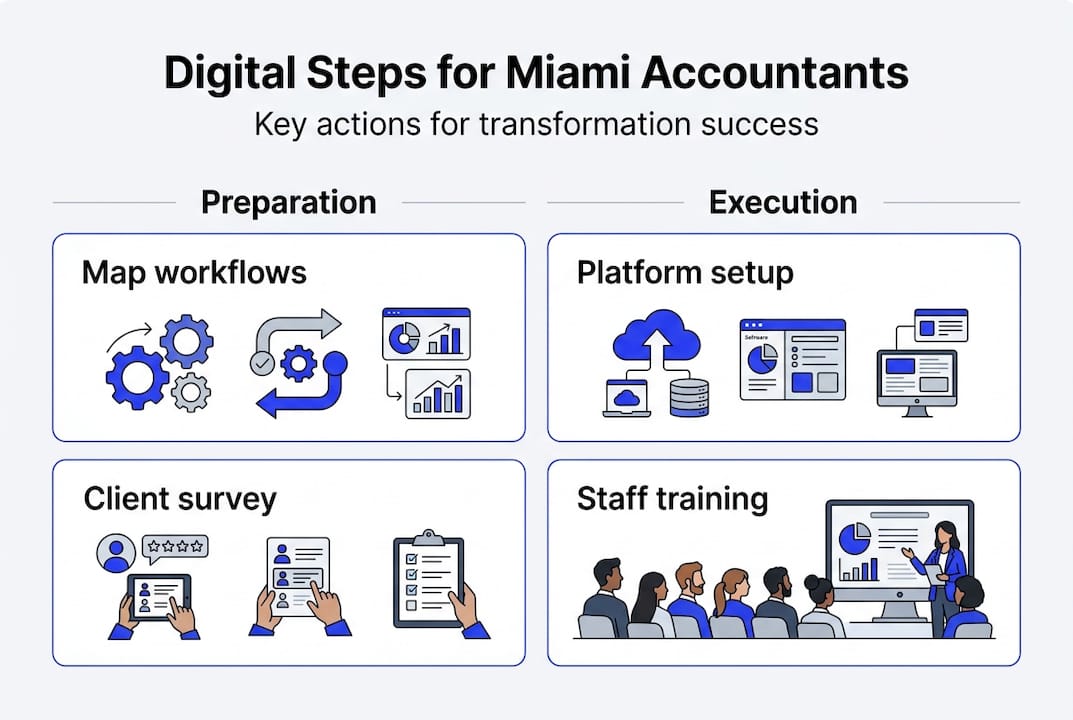
Before you install a single software tool, you need a clear picture of where you stand. Start by mapping your current workflows. Document every client touchpoint, from initial inquiry to final deliverable. Identify bottlenecks where tasks pile up or require excessive manual input. Are you re-entering data across multiple platforms? Do clients wait days for simple reports you could automate?
Next, talk to your clients. Schedule brief calls or send surveys to understand their expectations. What services do they wish you offered? Where do they feel communication lags? Assessment of existing workflows and client expectations is a foundational step in digital transformation. This feedback reveals gaps your technology can fill and services that command premium fees.
Inventory your current technology stack honestly. List every software tool, its purpose, and how well it integrates with other systems. Note licensing costs, user adoption rates, and pain points. Many firms discover they’re paying for underutilized platforms or maintaining redundant systems that create data silos.
Set preliminary goals that tie directly to business outcomes. Vague aims like “go digital” waste time and money. Instead, target specific improvements: reduce month-end close from five days to two, increase client capacity by 30% without new hires, or launch advisory services that generate $50,000 in new annual revenue. Write these down and share them with your team.
Create a simple assessment table to organize your findings:
| Dimension | Current State | Pain Points | Target Outcome |
|---|---|---|---|
| Client onboarding | Paper forms, email back-and-forth | Takes 3-5 days, prone to errors | Digital portal, same-day completion |
| Tax preparation | Desktop software, manual data entry | Limited remote access, time-consuming | Cloud platform with automation |
| Client communication | Email, phone calls | Scattered information, delays | Centralized client portal |
| Reporting | Manual Excel compilation | Hours per client, inconsistent format | Automated dashboards |
This table becomes your transformation roadmap. It shows exactly what needs fixing and what success looks like.
Pro Tip: Involve your team in the assessment process. Staff who use systems daily spot inefficiencies leadership misses, and early participation builds buy-in for upcoming changes.
Consider engaging digital transformation consulting early in this phase. Expert consultants help you see blind spots and benchmark against industry best practices, saving months of trial and error.
Step-by-step execution of digital transformation in your Miami firm
With assessment complete, you’re ready for systematic implementation. Following structured transformation workflows reduces risk and improves adoption rates in accounting firms. Here’s your execution sequence:
-
Prioritize initiatives by impact and feasibility. Plot each potential change on a simple matrix. High-impact, easy-to-implement projects go first. They build momentum and demonstrate quick wins that justify further investment. For most Miami firms, automating client onboarding or moving to cloud accounting ranks high on both dimensions.
-
Select appropriate digital tools through careful evaluation. Research platforms designed specifically for accounting firms. Cloud-based solutions like QuickBooks Online, Xero, or Karbon offer mobility and real-time collaboration. Document automation tools like Dext or Receipt Bank eliminate manual data entry. Client portal platforms centralize communication and file sharing. Request demos, check integration capabilities, and read reviews from firms similar to yours.
-
Train staff thoroughly before rollout. Schedule hands-on workshops where team members practice with new tools using real scenarios. Record training sessions for future reference. Assign internal champions who master each platform and support colleagues during transition. Make training ongoing, not a one-time event.
-
Pilot new processes with select clients to gather feedback. Choose clients who are tech-savvy and patient. Explain you’re testing improvements to serve them better. Monitor their experience closely. What works smoothly? Where do they hit friction? Use this feedback to refine before wider rollout.
-
Scale rollout systematically while monitoring performance. Move in phases rather than switching everything overnight. Migrate one service line or client segment at a time. Track metrics weekly. Are turnaround times improving? Is staff adoption growing? Address issues immediately before they become ingrained habits.
Compare common platforms to find your best fit:
| Tool Category | Platform Example | Key Benefits | Best For |
|---|---|---|---|
| Cloud Accounting | QuickBooks Online | Real-time access, strong integrations | Small to mid-size firms |
| Practice Management | Karbon | Workflow automation, team collaboration | Firms prioritizing efficiency |
| Document Automation | Dext | Receipt capture, data extraction | High-volume transaction processing |
| Client Portal | SmartVault | Secure file sharing, e-signatures | Client-facing communication |
Pro Tip: Start with one integrated platform rather than multiple point solutions. Fewer systems mean easier training, better data flow, and lower total cost of ownership.
The digital transformation workflow accountants follow typically spans three to six months for core systems. Rushing creates chaos. Dragging it out loses momentum. Set realistic timelines with clear milestones, and communicate progress to your team regularly.

Troubleshooting and avoiding common pitfalls in digital transformation
Even well-planned transformations hit snags. Anticipating problems lets you address them before they derail progress. Resistance to change and poor technology integration are top barriers in accounting digital transformation.
Inadequate training tops the list of transformation killers. Staff who don’t understand new tools revert to old methods or work around systems, creating data inconsistencies. Combat this with ongoing education, not just launch-day training. Schedule monthly skill-building sessions. Create quick-reference guides. Celebrate team members who master new capabilities.
Unclear goals lead to scope creep and wasted investment. You buy tools that sound impressive but don’t solve actual problems. Revisit your assessment table regularly. Does each technology decision directly support a documented pain point and target outcome? If not, pause and reconsider.
Software compatibility issues surface when platforms don’t integrate smoothly. Data gets trapped in silos, requiring manual transfer that defeats automation’s purpose. Before purchasing, verify integration capabilities. Test data flow between systems during pilot phase. Budget for integration support if needed.
Leadership disengagement signals to staff that transformation isn’t serious. Partners who keep using old methods while expecting staff to change breed cynicism. Leaders must adopt new tools visibly and enthusiastically. Share your own learning process. Ask staff to teach you features.
Underestimating change management effort is the silent killer of digital transformation. Technology is the easy part. Shifting mindsets, habits, and workflows requires sustained attention, clear communication, and patience. Allocate at least 40% of your transformation budget and time to the people side, not just the technology side.
Engage staff early in decision-making. When people help choose tools and shape processes, they own the outcome. Run surveys, hold focus groups, and incorporate feedback genuinely. This investment in participation pays dividends in adoption rates.
Pro Tip: Identify and address skeptics directly. Schedule one-on-one conversations to understand their concerns. Often, resistance stems from fear of obsolescence or past failed initiatives. Acknowledge these feelings and show how transformation makes their work easier, not redundant.
When facing complex IT challenges like data migration, security configuration, or system architecture decisions, consult experts rather than guessing. Mistakes in these areas create technical debt that haunts you for years. Explore digital transformation accounting basics to build foundational knowledge, then bring in specialists for execution.
Measuring success and continuous improvement after transformation
Implementation is just the beginning. Sustained value comes from measuring results and optimizing continuously. Consistent measurement and adjustment of digital strategies drive sustained revenue growth for accounting firms.
Identify KPIs that reflect your transformation goals. If you aimed to reduce month-end close time, track actual hours spent. If client capacity was the target, monitor active client count and revenue per team member. If new services were the goal, measure adoption rates and revenue contribution. Choose three to five metrics that matter most.
Set up dashboards that make KPIs visible to your team. Most modern accounting platforms include reporting features. Customize views to show progress toward goals. Review metrics in weekly team meetings. Celebrate improvements and troubleshoot declines immediately.
Incorporate client feedback systematically. After major milestones like tax season, send brief surveys. Ask specific questions: Did our new portal make document sharing easier? How satisfied are you with response times? What additional services would you value? Use Net Promoter Score to track overall satisfaction trends.
Schedule quarterly technology reviews. New tools emerge constantly. Features you wished for six months ago may now exist. Assess whether current platforms still serve your needs or if alternatives offer better value. Stay connected to industry forums and peer groups to learn what’s working elsewhere.
Track these recommended KPIs:
| KPI | Measurement Method | Target | Review Frequency |
|---|---|---|---|
| Client satisfaction score | Post-service surveys | Above 8.5/10 | Quarterly |
| Average task completion time | Project management data | 30% reduction year one | Monthly |
| Revenue per team member | Financial reports | 20% increase year one | Quarterly |
| New service adoption rate | Client contracts | 25% of clients | Quarterly |
| System uptime/reliability | IT monitoring tools | 99.5% availability | Monthly |
Pro Tip: Share KPI results transparently with your team. When everyone sees how their work drives metrics, accountability and motivation increase naturally. Tie bonuses or recognition to transformation goals.
Document lessons learned as you go. What worked better than expected? What would you do differently? This institutional knowledge guides future improvements and helps you advise peers. Consider publishing case studies that position your firm as a technology leader in Miami’s accounting community.
Continuous improvement means small, regular adjustments rather than waiting for another big transformation project. Dedicate time monthly to process refinement. Empower team members to suggest improvements. The best optimization ideas come from people using systems daily.
Partner with business transformation consulting services for periodic health checks. External experts spot optimization opportunities you miss and benchmark your progress against industry standards.
Support your digital transformation with expert IT consulting
You’ve learned the roadmap, but executing alone is harder than it needs to be. Transform42 specializes in helping Miami accounting firms navigate digital transformation successfully. We understand the unique challenges independent accountants face, from compliance requirements to client expectations in South Florida’s competitive market.
Our digital transformation services cover every phase: assessment, planning, implementation, and ongoing optimization. We’ve helped dozens of Miami CPAs modernize operations, and our clients report an average 28% revenue increase within 18 months of automation implementation. We don’t just recommend technology. We integrate it into your workflows, train your team, and stick around to ensure adoption.
Whether you need help selecting the right platforms, migrating data securely, or building custom integrations, our team brings deep expertise in business transformation for CPAs. We’ve seen what works and what wastes money. That experience saves you months of trial and error.
Pro Tip: Engage experts early in your transformation journey, not after problems emerge. Upfront consulting prevents costly mistakes and accelerates ROI significantly. The investment in professional guidance typically pays for itself within the first year through efficiency gains alone.
Ready to build capabilities that land bigger clients and scale without proportional hiring? Explore our technology solutions designed specifically for Miami’s accounting professionals. Let’s turn your digital transformation goals into measurable revenue growth.
Frequently asked questions about digital transformation for Miami accountants
What is the first step in digital transformation for accountants?
Start with a thorough assessment of your current workflows, technology stack, and client needs. Document pain points and set specific, measurable goals tied to business outcomes like reduced turnaround times or increased client capacity. This foundation prevents wasted investment in tools that don’t solve real problems.
How long does a typical digital transformation take for a small accounting firm?
Core system implementation typically spans three to six months for small firms. This includes assessment, tool selection, pilot testing, and phased rollout. However, transformation is ongoing. Continuous improvement and optimization continue indefinitely as technology evolves and your practice grows.
What common technologies should Miami accountants invest in first?
Prioritize cloud-based accounting platforms for real-time access and collaboration, followed by document automation tools to eliminate manual data entry. Client portals that centralize communication and file sharing deliver immediate client satisfaction improvements. Choose integrated solutions over multiple point products to simplify training and data flow.
How can I measure if digital transformation is improving my firm’s revenue?
Track revenue per team member, new service adoption rates, and client retention metrics quarterly. Monitor operational KPIs like task completion times and client satisfaction scores monthly. Compare these metrics to pre-transformation baselines. Most successful transformations show measurable improvements within six to twelve months.
Who can assist with a successful digital transformation in Miami?
Specialized IT consulting firms like Transform42 understand accounting-specific requirements and Miami’s market dynamics. Look for consultants with proven experience in digital transformation consulting for CPAs, not generic IT providers. The right partner guides you through assessment, implementation, and ongoing optimization while avoiding common pitfalls.