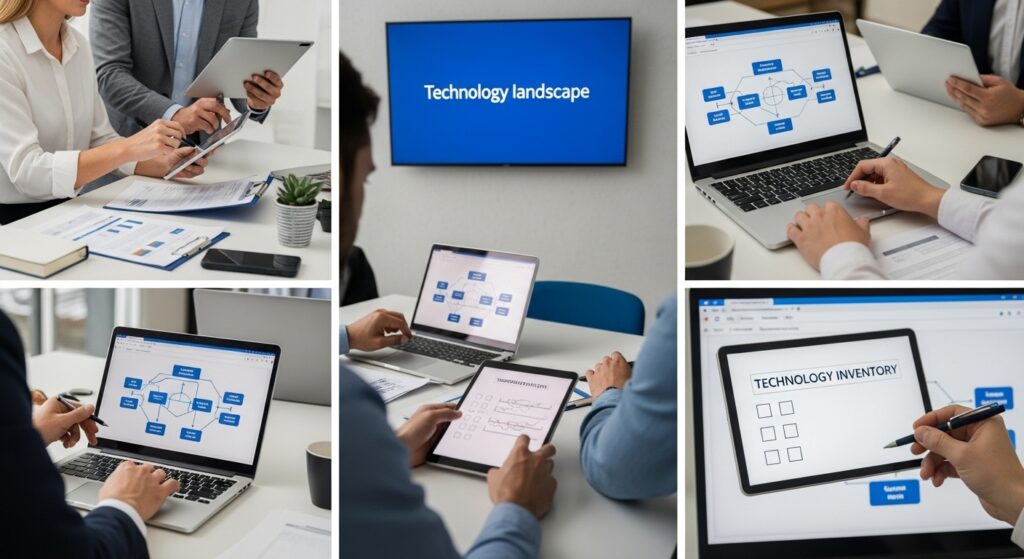
Managing a busy Miami CPA practice can quickly highlight how every minute lost to manual tasks and slow systems costs you real revenue. Overworking teams and bottlenecks in tax calculations often drain time, resources, and productivity. Tackling these challenges head-on unlocks the path to operational efficiency and sustained profit growth. This guide shows how strategic workflow assessment, automation, and compliance tools can help Miami accountants transform day-to-day processes and reclaim billable hours.
Table of Contents
- Step 1: Assess Existing Workflows And Identify Bottlenecks
- Step 2: Integrate Automation Tools For Core Processes
- Step 3: Standardize Documentation And Compliance Tracking
- Step 4: Optimize Client Communications With Technology
- Step 5: Monitor Performance And Adjust Workflows Continuously
Quick Summary
| Key Point | Explanation |
|---|---|
| 1. Assess workflows to identify inefficiencies | Evaluate your current processes to discover time and productivity losses that can be addressed immediately. |
| 2. Automate repetitive core processes | Implement automation tools to handle repetitive tasks, freeing your team for higher-value work and reducing errors. |
| 3. Standardize documentation for compliance | Create systematic processes for documentation to enhance compliance and reduce operational risks effectively. |
| 4. Enhance client communication using technology | Utilize advanced communication tools to improve client interactions and streamline communication workflows for better service. |
| 5. Continuously monitor and optimize workflows | Establish a data-driven approach to regularly review performance and adjust workflows for continual improvements. |
Step 1: Assess existing workflows and identify bottlenecks
Streamlining operations for Miami CPAs starts with a critical evaluation of your current workflows. The goal is to pinpoint exactly where your firm loses time, money, and productivity. By systematically analyzing workflow bottlenecks, you can transform inefficient processes into streamlined, profitable systems.
To conduct a comprehensive workflow assessment, follow these strategic steps:
- Review current process documentation and map out each step in your existing workflows
- Time each task and track how long different activities actually take
- Identify manual data entry points where automation could reduce errors
- Analyze communication channels between team members and clients
- Examine compliance and reporting processes for potential redundancies
Specifically, look for red flags like repeated manual reconciliations, time-consuming tax calculations, and communication gaps that slow down client service. Pay special attention to tasks that require multiple team members or create unnecessary handoff delays.
Bottlenecks are not just inefficiencies – they’re revenue leaks that directly impact your firm’s bottom line.
Once you’ve mapped your workflows, categorize each process as high-value, moderate-value, or low-value. This helps you prioritize which areas need immediate transformation and where technology can provide the most significant improvements.

Here’s a summary of process value categories and their typical impact on CPA firm operations:
| Process Category | Impact on Productivity | Common Examples |
|---|---|---|
| High-value | Drives revenue, improves service | Tax consulting, client strategy |
| Moderate-value | Supports operations, some automation potential | Invoicing, reporting |
| Low-value | Prone to bottlenecks, ideal for automation | Manual data entry, reconciliations |
Pro tip: Schedule a dedicated workflow analysis session with your entire team to gain multiple perspectives on existing operational challenges.
Step 2: Integrate automation tools for core processes
Transforming your Miami CPA firm’s operational efficiency requires strategic automation of core processes. Hyper-automation technologies represent a powerful approach to streamlining workflows, combining artificial intelligence, robotic process automation, and machine learning to dramatically reduce manual work.
To implement automation effectively, focus on these key areas:
- Document management and digital filing systems
- Client onboarding and intake procedures
- Invoice generation and financial reporting
- Tax preparation and compliance tracking
- Communication and follow-up workflows
Start by identifying repetitive, rule-based tasks that consume significant staff time. Look for processes with clear, predictable steps that can be standardized. Process automation tools like Microsoft Power Automate can help eliminate manual data entry and reduce human error.
Automation is not about replacing your team – it’s about empowering them to focus on high-value strategic work.
Prioritize integrations that provide clean, centralized data management. This means selecting tools that communicate seamlessly across your existing software ecosystem and provide robust reporting capabilities.
Pro tip: Involve your team in automation tool selection to ensure the technology genuinely addresses their workflow challenges and improves their daily work experience.
Step 3: Standardize documentation and compliance tracking
Ensuring your Miami CPA firm maintains rigorous compliance requires developing systematic documentation processes that protect your business and clients. Document management systems provide critical infrastructure for maintaining regulatory standards and reducing operational risks.
Implement a comprehensive compliance tracking strategy by focusing on these key elements:
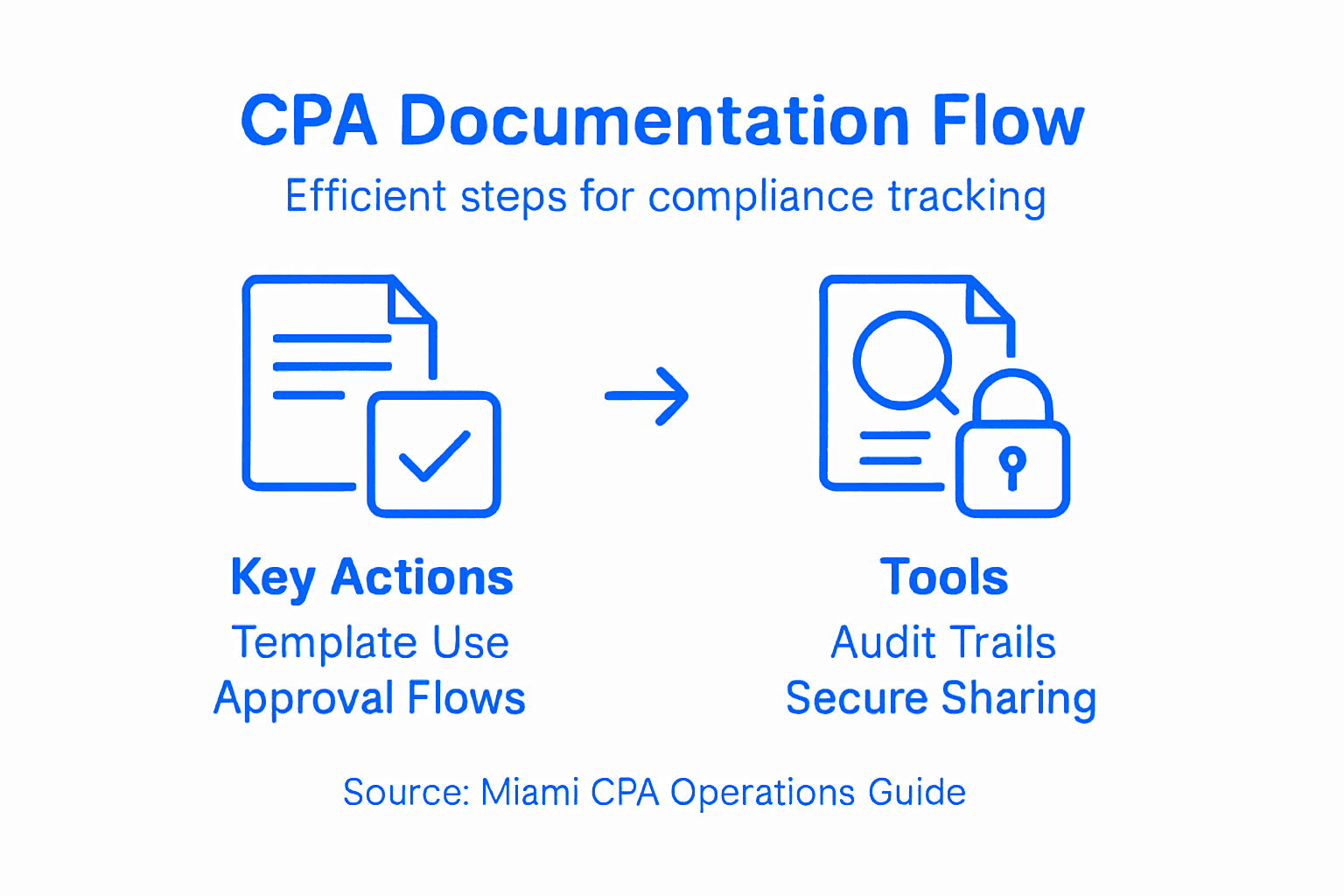
- Create standardized templates for client documentation
- Establish clear approval workflows
- Develop permission-based access controls
- Implement regular internal audits
- Design consistent record-keeping protocols
Your documentation strategy must align with comprehensive compliance requirements including federal regulations, professional standards, and industry-specific guidelines. This means developing structured policies that address Sarbanes-Oxley, IRS rules, and PCAOB standards while maintaining flexibility for your firm’s unique needs.
Effective compliance is not about perfect documentation – it’s about consistent, transparent processes that demonstrate professional accountability.
Ensure your documentation system provides robust audit trails, secure sharing capabilities, and real-time collaboration tools. This approach transforms compliance from a burdensome requirement into a strategic advantage for your firm.
Pro tip: Schedule quarterly compliance review sessions to continuously refine your documentation processes and stay ahead of evolving regulatory landscapes.
Step 4: Optimize client communications with technology
Transforming client communications in your Miami CPA firm requires embracing cutting-edge technological solutions that enhance engagement and streamline interactions. Tech modernization strategies are critical for creating seamless, responsive communication channels that meet contemporary client expectations.
Implement these key technological communication strategies:
- Adopt cloud-based collaboration platforms
- Integrate AI-powered client communication tools
- Develop secure client portals
- Create automated communication workflows
- Implement real-time messaging capabilities
Focus on technologies that enable instant, transparent, and personalized client interactions. This means moving beyond traditional email and phone communications to create multi-channel engagement systems that provide clients with immediate access to information, document sharing, and collaborative spaces.
Technology transforms communication from a transactional experience to a strategic partnership.
Ensure your technological solutions prioritize data security, ease of use, and seamless integration with existing systems. The goal is to make communication feel effortless and professional while reducing administrative overhead for your team.
Compare key technology solutions for modernizing client communications:
| Technology Type | Main Benefit | Example Use Case |
|---|---|---|
| Cloud Collaboration | Real-time document sharing | Joint financial review sessions |
| AI-Powered Messaging | Personalized client responses | Automated status updates |
| Secure Client Portal | Centralized access and storage | Tax document uploads |
Pro tip: Conduct periodic client surveys to continuously refine your communication technology and ensure it meets evolving client preferences.
Step 5: Monitor performance and adjust workflows continuously
Transforming your Miami CPA firm’s operational efficiency requires implementing a dynamic, data-driven approach to workflow management. Workflow management software enables real-time tracking and continuous optimization of your firm’s performance and productivity.
Establish a comprehensive performance monitoring strategy through these key practices:
- Set clear, measurable performance metrics
- Implement regular performance review cycles
- Use data analytics to track workflow efficiency
- Identify and eliminate process bottlenecks
- Create adaptive workflow improvement protocols
Track key performance indicators that reveal operational insights, such as task completion rates, time spent on specific processes, client satisfaction scores, and revenue per billable hour. Look for patterns that indicate where your team can streamline activities and reduce unnecessary administrative overhead.
Continuous improvement is not a destination – it’s an ongoing journey of incremental enhancements.
Utilize technology that provides granular visibility into your team’s workflows, allowing you to make data-driven decisions that incrementally improve efficiency and client service quality. The most successful firms treat workflow optimization as a continuous, iterative process.
Pro tip: Schedule monthly workflow performance reviews and empower team members to contribute improvement suggestions.
Unlock Operational Excellence and Revenue Growth for Your Miami CPA Firm
Struggling with workflow bottlenecks and inefficient manual processes is a challenge that can hold your Miami CPA firm back from reaching its full potential. This article highlights the need to transform core operations through automation, standardized compliance, and enhanced client communication to boost productivity and protect your bottom line. If reclaiming time, landing bigger clients, and scaling your firm without proportional hiring feels urgent, then integrating a cohesive technology strategy is your next step.
Discover how we help Miami professionals like you build streamlined processes that deliver a strategic advantage. Explore our Processes Archives to see how systemizing workflows can eliminate bottlenecks and improve productivity. Learn about our approach to Digital Transformation that empowers your team and enhances client experiences. Ready to take control of your firm’s growth and compliance needs? Visit us now at Transform42 to start building the efficient, scalable CPA firm you deserve.
Frequently Asked Questions
How can I identify workflow bottlenecks in my CPA firm?
To identify workflow bottlenecks, review your process documentation and map out each step in your existing workflows. Track the time each task takes and look for areas with repeated manual efforts or communication gaps that slow down operations.
What are the key areas where automation can help streamline my CPA firm’s operations?
Focus on automating repetitive and manual tasks within document management, client onboarding, invoice generation, and tax preparation. Streamlining these core areas can significantly reduce manual work and improve accuracy within 30–60 days.
How should I standardize documentation to ensure compliance in my CPA firm?
Standardize documentation by creating templates for client documents and establishing clear approval workflows. This will help maintain compliance while promoting transparency and efficiency throughout your processes.
What technologies can I use to enhance client communications in my CPA firm?
Adopt cloud-based collaboration platforms and AI-powered client communication tools to improve client interactions. These technologies facilitate instant messaging and document sharing, ensuring a seamless and responsive communication experience.
How can I continuously monitor and improve my CPA firm’s workflows?
Set clear performance metrics to track key indicators such as task completion rates and client satisfaction. Schedule regular performance reviews to identify bottlenecks and make incremental improvements based on your team’s feedback.
How quickly can I expect to see improvements in my firm’s operations after implementing these strategies?
You can expect to see improvements within 30–60 days after implementing streamlined workflows and automation tools. Regularly monitoring performance will help you make adjustments and enhance efficiency over time.
Recommended
- 8 Essential Digital Strategy Tips for Miami CPAs
- 8 Essential Digital Strategy Tips for Miami CPAs – Stratgetic IT Consultants for Accountants
- 7 Types of Management Consulting Every Miami CPA Should Know – Stratgetic IT Consultants for Accountants
- Business Process Automation Steps for Miami Accounting Firms – Stratgetic IT Consultants for Accountants