Most American CPA firms lose up to 40 percent of billable time each week to inefficient technology systems. Facing intense competition in Miami, firm owners know that smarter IT decisions can mean the difference between stagnation and millions in extra revenue. Discover how expert IT consulting empowers independent and mid-sized firms to break through digital barriers, secure client trust, and rapidly increase operational efficiency without chasing costly trial and error.
Table of Contents
- Defining IT Consulting for CPA Firms
- Major IT Consulting Service Types Explained
- How Technology Consulting Drives Revenue Growth
- Compliance, Security, and CPA Firm Risks
- Avoiding Common IT Implementation Mistakes
Key Takeaways
| Point | Details |
|---|---|
| IT Consulting Enhances Efficiency | IT consulting helps CPA firms streamline workflow processes and enhance operational efficiency through specialized technology solutions. |
| Cybersecurity is Paramount | Consultants provide essential services to protect sensitive financial data and ensure compliance with industry regulations. |
| Revenue Growth through Automation | Workflow automation and advanced analytics drive revenue growth by allowing CPA firms to focus on higher-value financial advisory services. |
| Avoiding Implementation Pitfalls | Proper planning and stakeholder engagement are critical to successful IT implementation, minimizing resistance and enhancing adoption. |
Defining IT Consulting for CPA Firms
IT consulting for CPA firms represents a strategic partnership designed to transform technological capabilities and drive business performance. These specialized services go far beyond basic technical support, offering comprehensive guidance that helps accounting professionals leverage technology to unlock significant revenue growth and operational efficiency.
At its core, IT consulting involves providing expert technology advice to diagnose organizational challenges and recommend targeted solutions. For CPA firms, this means having a dedicated technology partner who understands the unique digital ecosystem of accounting practices. Consultants act like technology physicians, assessing current systems, identifying potential bottlenecks, and prescribing precise technological interventions that align with the firm’s strategic objectives.
The primary goals of IT consulting for accounting firms include streamlining workflow processes, enhancing data security, improving client service delivery, and creating scalable technological infrastructure. These services typically encompass a wide range of support areas such as cloud migration, cybersecurity implementation, software integration, compliance technology, and strategic digital transformation planning. By partnering with experienced IT consultants, CPA firms can focus on their core competency of financial expertise while ensuring their technological backbone remains robust, secure, and future-ready.
Pro tip: Schedule a comprehensive technology audit annually to proactively identify and address potential IT vulnerabilities before they impact your firm’s performance and client trust.
Major IT Consulting Service Types Explained
IT consulting for CPA firms encompasses a diverse range of specialized service types designed to address the complex technological challenges facing modern accounting practices. Major consulting services are strategically crafted to enhance operational efficiency, improve technological infrastructure, and drive strategic business growth.
Technology Strategy Consulting represents a critical service type where consultants work closely with CPA firms to develop comprehensive digital roadmaps. These strategic plans align technological investments with the firm’s long-term business objectives, ensuring that every technological solution contributes directly to revenue generation and operational optimization. Key focus areas include identifying emerging technologies, assessing current system capabilities, and creating actionable implementation strategies that minimize disruption while maximizing technological potential.
Another crucial service category is Cybersecurity and Compliance Consulting. For CPA firms handling sensitive financial data, these services are paramount. Consultants provide comprehensive security assessments, implement robust protection mechanisms, and develop compliance frameworks that meet stringent industry regulations. This includes advanced threat detection, data protection protocols, secure cloud migration strategies, and ongoing security monitoring to safeguard client information and maintain regulatory compliance.

Digital Transformation Consulting rounds out the core service types, focusing on comprehensive technological reimagining of accounting firm operations. These services involve implementing cutting-edge technologies like artificial intelligence, machine learning, advanced data analytics, and automated workflow systems. By modernizing technological infrastructure, CPA firms can dramatically improve client service delivery, reduce operational costs, and create scalable, future-ready business models that position them competitively in an increasingly digital marketplace.
Pro tip: Conduct a comprehensive technology maturity assessment annually to identify gaps and prioritize IT consulting investments that directly contribute to your firm’s strategic objectives.
Here’s a summary of core IT consulting service types and their unique impact on CPA firms:
| Service Type | Main Focus | Business Impact |
|---|---|---|
| Technology Strategy Consulting | Align IT investments with firm goals | Drives growth and process optimization |
| Cybersecurity & Compliance | Enhance data protection & regulations | Safeguards reputation and client trust |
| Digital Transformation | Modernize operations and workflows | Boosts efficiency and scalability |
How Technology Consulting Drives Revenue Growth
Technology consulting has emerged as a transformative force for CPA firms seeking sustainable revenue growth and competitive advantage. Digital technologies boost productivity by fundamentally redesigning how accounting practices operate, generate value, and interact with clients.
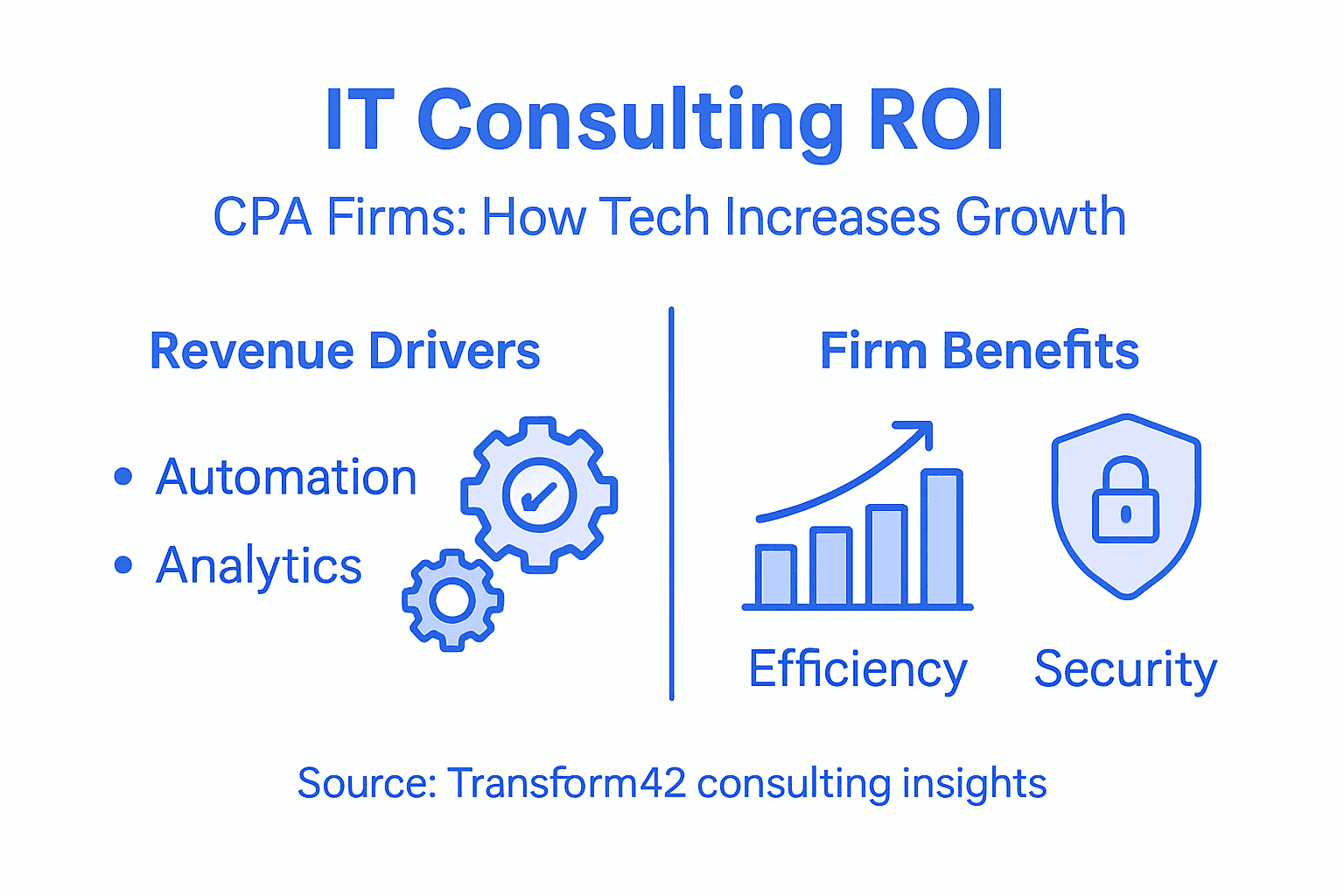
One of the most significant revenue drivers is workflow automation. By systematically eliminating manual processes, CPA firms can dramatically reduce operational costs and redirect human capital toward high-value strategic activities. Automation technologies enable accountants to spend less time on repetitive tasks like data entry, reconciliation, and report generation, and more time providing nuanced financial advisory services that directly generate additional revenue streams. This shift not only increases efficiency but also allows firms to take on more clients without proportionally increasing staff.
Advanced analytics and intelligent technology solutions represent another critical pathway to revenue expansion. By implementing sophisticated data analysis tools, CPA firms can uncover deeper insights for clients, develop more proactive financial strategies, and position themselves as strategic partners rather than transactional service providers. These technologies enable more sophisticated risk assessment, predictive financial modeling, and personalized client recommendations that can command premium pricing and foster long-term client relationships.
Moreover, technology consulting helps CPA firms create robust, scalable infrastructure that supports rapid growth. Cloud-based systems, integrated communication platforms, and secure collaboration tools enable firms to operate with greater agility, expand geographical reach, and respond quickly to market opportunities. This technological foundation allows for seamless service delivery, enhanced client experiences, and the ability to adapt rapidly to changing market dynamics.
Pro tip: Invest in continuous technology training for your team to maximize the revenue potential of new consulting-driven technological solutions.
Compliance, Security, and CPA Firm Risks
CPA firms face an increasingly complex landscape of technological risks that demand sophisticated, proactive management strategies. Cybersecurity risks threaten financial data across multiple dimensions, requiring comprehensive approaches to protection and compliance.
Data Vulnerability represents a critical concern for accounting practices. Sensitive financial information makes CPA firms prime targets for cybercriminals seeking to exploit potential security gaps. Potential risks include ransomware attacks, phishing schemes, and sophisticated data breaches that can compromise client confidentiality, destroy firm reputation, and potentially trigger significant legal and financial consequences. Modern IT consulting addresses these vulnerabilities by implementing multi layered security protocols, including advanced encryption, secure network architectures, and continuous monitoring systems that detect and neutralize potential threats before they can cause substantive damage.
Regulatory compliance adds another complex layer of risk management for CPA firms. Financial reporting standards, data protection regulations, and industry specific guidelines create a challenging environment where technological solutions must align precisely with legal requirements. Effective IT consulting helps firms develop robust compliance frameworks that not only protect against security threats but also ensure adherence to evolving regulatory landscapes. This involves creating comprehensive documentation processes, implementing secure data management protocols, and developing transparent reporting mechanisms that demonstrate ongoing commitment to regulatory standards.
The human element remains a critical factor in managing technological risks. Employee training, awareness programs, and carefully designed access control systems are essential components of a comprehensive risk management strategy. IT consultants help CPA firms develop sophisticated yet user friendly security protocols that balance stringent protection with operational efficiency, ensuring that team members can work effectively while maintaining the highest standards of data security and confidentiality.
Pro tip: Implement a quarterly comprehensive security audit to proactively identify and address potential vulnerabilities in your firm’s technological infrastructure.
Avoiding Common IT Implementation Mistakes
Navigating the complex landscape of IT implementation requires strategic planning and awareness of potential pitfalls that can derail technological transformation for CPA firms. Common implementation mistakes create significant risks for organizations seeking to modernize their technological infrastructure and enhance operational efficiency.
Inadequate Planning and Requirements Definition represents one of the most critical errors CPA firms encounter during IT implementation. Many organizations rush into technological solutions without thoroughly understanding their specific needs, existing infrastructure limitations, and long term strategic objectives. This approach often leads to expensive, misaligned technology investments that fail to deliver expected outcomes. Successful implementation demands comprehensive initial assessments that map current technological capabilities, identify specific performance gaps, and develop precise, measurable implementation goals that align with the firm’s broader business strategy.
Stakeholder engagement and change management represent another crucial area where implementation efforts frequently falter. Technological transformations are not just about hardware and software but about people and processes. CPA firms must develop robust communication strategies that involve team members at all levels, address potential resistance to technological change, and create clear pathways for training and skill development. By treating technological implementation as a collaborative organizational journey rather than a top down directive, firms can dramatically improve adoption rates and minimize disruption.
Risk management and continuous monitoring are essential components of successful IT implementation strategies. This involves developing comprehensive contingency plans, establishing clear governance frameworks, and creating mechanisms for ongoing performance evaluation. CPA firms should view technological implementation as an iterative process, with built in flexibility to adjust strategies based on real world performance, emerging technological capabilities, and evolving business requirements.
Pro tip: Create a dedicated implementation task force with representatives from technology, operations, and client service teams to ensure holistic perspective and comprehensive strategy development.
Compare common IT implementation mistakes and recommended solutions for CPA firms:
| Mistake | Consequence | Solution Recommendation |
|---|---|---|
| Poor planning and requirements | Misaligned technology investments | Conduct detailed assessments |
| Weak stakeholder engagement | Low adoption and resistance | Develop robust communication |
| Insufficient risk management | Unaddressed system vulnerabilities | Implement ongoing monitoring |
Unlock Your CPA Firm’s Full Potential with Strategic IT Solutions
CPA firms face critical challenges around technology strategy, cybersecurity, and digital transformation that directly impact revenue growth and client trust. If your goal is to streamline processes, safeguard sensitive data, and scale efficiently without constant hiring increases, you need a partner who understands these unique pain points and can translate them into actionable technology roadmaps. This article underlines the importance of aligning IT investments with firm goals and adopting proven strategies to avoid costly implementation mistakes.
Take control of your firm’s future today by partnering with experts who specialize in helping accounting professionals grow confidently through technology. Discover insights from our Processes Archives – Stratgetic IT Consultants For Accountants to create scalable workflows that enhance operational efficiency while maintaining compliance. Empower your team by exploring leadership strategies in our Leadership Archives – Stratgetic IT Consultants For Accountants. With all your technology in one trusted partner, you can focus on delivering exceptional financial expertise and winning bigger clients.
Don’t let technology challenges hold your firm back. Visit Transform42 now and take the first step toward unlocking substantial revenue growth and operational resilience with tailored IT consulting services designed specifically for CPA firms.
Frequently Asked Questions
What is IT consulting for CPA firms?
IT consulting for CPA firms involves partnering with technology experts to enhance technological capabilities, streamline operations, and drive revenue growth through tailored solutions.
How can technology consulting help improve revenue for CPA firms?
Technology consulting can improve revenue by automating workflows, implementing advanced analytics, and modernizing infrastructure, allowing firms to focus on high-value services and expand client relationships.
What types of IT consulting services are essential for CPA firms?
Essential IT consulting services for CPA firms include technology strategy consulting, cybersecurity and compliance consulting, and digital transformation consulting, each aiming to enhance efficiency and safeguard data.
How do CPA firms address compliance and security risks through IT consulting?
CPA firms can address compliance and security risks by implementing comprehensive security assessments, developing compliance frameworks, and training employees on best practices, all of which are supported by IT consultants.
Recommended
- 7 Types of Management Consulting Every Miami CPA Should Know
- 7 Types of Management Consulting Every Miami CPA Should Know – Stratgetic IT Consultants for Accountants
- Digital Innovation For CPAs – Revenue Growth In Miami
- Understanding the Role of Consulting Firms in Business – Stratgetic IT Consultants for Accountants