
Every Miami CPA and tax lawyer knows that handling confidential financial records comes with constant security challenges. Cyberattacks are unpredictable and can threaten client trust and regulatory compliance. Understanding penetration testing helps you stay ahead by exposing vulnerabilities before they can be exploited. Discover how ethical hackers simulate real-world attacks to protect your firm, support compliance, and attract discerning clients who demand rigorous cybersecurity measures.
Table of Contents
- What Penetration Testing Means In Cybersecurity
- Penetration Testing Types And Key Differences
- The Penetration Testing Process Explained
- Compliance Benefits For Miami Professionals
- Legal Risks And Common Pitfalls To Avoid
Key Takeaways
| Point | Details |
|---|---|
| Penetration Testing Definition | Penetration testing simulates cyberattacks to identify vulnerabilities in an organization’s digital infrastructure, helping prevent potential breaches. |
| Types of Testing | There are three primary approaches: Black Box, White Box, and Gray Box testing, each differing in the level of tester knowledge about the system. |
| Penetration Testing Process | The testing process consists of five stages: Planning, Scanning, Gaining Access, Maintaining Access, and Reporting, ensuring thorough vulnerability assessment. |
| Compliance Benefits | Regular penetration testing helps organizations comply with regulations, demonstrate proactive risk management, and avoid legal penalties. |
What Penetration Testing Means in Cybersecurity
Penetration testing represents a strategic cybersecurity approach where authorized professionals simulate real-world cyberattacks to uncover vulnerabilities in an organization’s digital infrastructure. By proactively identifying security weaknesses, these specialized experts help businesses prevent potential breaches before malicious actors can exploit them.
At its core, penetration testing involves a systematic and controlled exploration of an organization’s networks, applications, and devices. Cybersecurity professionals use sophisticated techniques to mimic the strategies of actual hackers, attempting to breach systems through multiple vectors. These ethical hacking techniques help organizations understand their true security posture by revealing potential entry points that might otherwise remain undetected.
The primary objectives of penetration testing include:
- Discovering hidden vulnerabilities in IT systems
- Evaluating the effectiveness of existing security controls
- Validating compliance with regulatory requirements
- Providing actionable recommendations for security improvements
- Helping organizations prioritize their cybersecurity investments
By simulating cyberattack scenarios, penetration testers go beyond traditional security assessments. They actively attempt to exploit discovered vulnerabilities, demonstrating the potential real-world impact of security weaknesses. This approach gives business leaders a comprehensive understanding of their cybersecurity risks, enabling them to make informed decisions about protecting their digital assets.
Pro tip: Schedule penetration tests at least annually and after any significant infrastructure changes to maintain robust cybersecurity defenses.
Penetration Testing Types and Key Differences
Penetration testing encompasses a diverse range of approaches designed to systematically evaluate an organization’s cybersecurity defenses. Different testing methodologies provide unique perspectives on potential security vulnerabilities, enabling businesses to comprehensively assess their digital infrastructure.

The primary classification of penetration testing methodologies involves three fundamental knowledge-based approaches:
Here’s a comparison of the three primary penetration testing approaches:
| Approach | Tester Knowledge Level | Real-World Use Case |
|---|---|---|
| Black Box | No internal system details | External attacker simulation |
| White Box | Full system information | Insider threat or compliance testing |
| Gray Box | Partial system knowledge | Partner or semi-trusted party test |
- Black Box Testing: Testers have no prior knowledge of the internal system
- White Box Testing: Testers possess complete internal system information
- Gray Box Testing: Testers have partial information about the system
Beyond knowledge-based classifications, penetration testing further branches into specialized types targeting specific technological domains:
Summary of specialized penetration testing types and their main targets:
| Test Type | Primary Target |
|---|---|
| Network | Routers, firewalls, servers |
| Web Application | Websites, APIs |
| Wireless Network | Wi-Fi, access points |
| Social Engineering | Employee security behavior |
| Physical Security | Facilities, physical assets |
- Network Penetration Testing (internal and external networks)
- Web Application Penetration Testing
- Wireless Network Penetration Testing
- Social Engineering Penetration Testing
- Physical Security Penetration Testing
Penetration testing scenarios aim to simulate realistic attack vectors that malicious actors might exploit. Each testing type focuses on uncovering unique vulnerabilities within an organization’s technological ecosystem. Network tests, for instance, examine firewall configurations and potential entry points, while social engineering tests evaluate human-related security risks by attempting to manipulate employees into revealing sensitive information.
The selection of a specific penetration testing approach depends on an organization’s unique technological landscape, regulatory requirements, and specific security concerns. Professional cybersecurity teams customize their testing strategies to provide the most comprehensive and relevant security assessment possible.
Pro tip: Rotate between different penetration testing methodologies to ensure a holistic understanding of your organization’s potential security vulnerabilities.
The Penetration Testing Process Explained
Comprehensive penetration testing methodologies provide organizations with a structured approach to identifying and mitigating cybersecurity vulnerabilities. The process is a carefully orchestrated series of strategic steps designed to simulate real-world cyber attacks and uncover potential security weaknesses before malicious actors can exploit them.
The penetration testing process typically encompasses five critical stages:
-
Planning and Reconnaissance
- Define project scope and objectives
- Gather initial information about target systems
- Identify potential attack vectors
-
Scanning and Vulnerability Assessment
- Conduct automated and manual vulnerability scans
- Map network infrastructure
- Identify potential entry points and system weaknesses
-
Gaining Access
- Exploit discovered vulnerabilities
- Attempt to penetrate system defenses
- Validate potential security breaches
-
Maintaining Access
- Establish persistent system access
- Evaluate potential long-term infiltration scenarios
- Test lateral movement capabilities
-
Reporting and Analysis
- Document discovered vulnerabilities
- Provide detailed remediation recommendations
- Prioritize security improvements
Penetration testing standards offer a comprehensive framework that guides ethical hackers through controlled testing environments. These standards ensure a systematic and thorough approach to uncovering potential security risks, transforming abstract vulnerabilities into actionable insights for organizational cybersecurity strategies.
Professional penetration testers leverage advanced techniques and tools to simulate sophisticated attack scenarios. By mimicking real-world cyber threats, they provide organizations with a proactive mechanism to strengthen their digital defenses and protect critical infrastructure.
Pro tip: Engage independent penetration testing experts annually to maintain an objective and comprehensive view of your cybersecurity landscape.
Compliance Benefits for Miami Professionals
Cybersecurity compliance strategies provide Miami professionals with critical protection against regulatory risks and potential financial penalties. Penetration testing has become an essential mechanism for demonstrating due diligence and maintaining robust security standards across various industry sectors.
Key compliance benefits for Miami professionals include:
- Validating adherence to industry-specific regulations
- Identifying potential security vulnerabilities before they escalate
- Demonstrating proactive risk management to clients and regulators
- Preventing potential data breaches and associated legal consequences
- Maintaining professional credibility and trust
Professionals in Miami must navigate complex regulatory landscapes, particularly in sectors like healthcare, finance, and legal services. Regulatory compliance extends beyond mere checkbox exercises, requiring comprehensive and strategic approaches to cybersecurity.
PCI DSS testing guidelines emphasize the importance of regular internal and external security assessments. These standards help Miami professionals protect sensitive information, avoid significant financial penalties, and maintain their professional reputation.
By implementing systematic penetration testing, Miami professionals can transform compliance from a potential burden into a strategic advantage. The process provides actionable insights that not only meet regulatory requirements but also strengthen overall organizational cybersecurity.
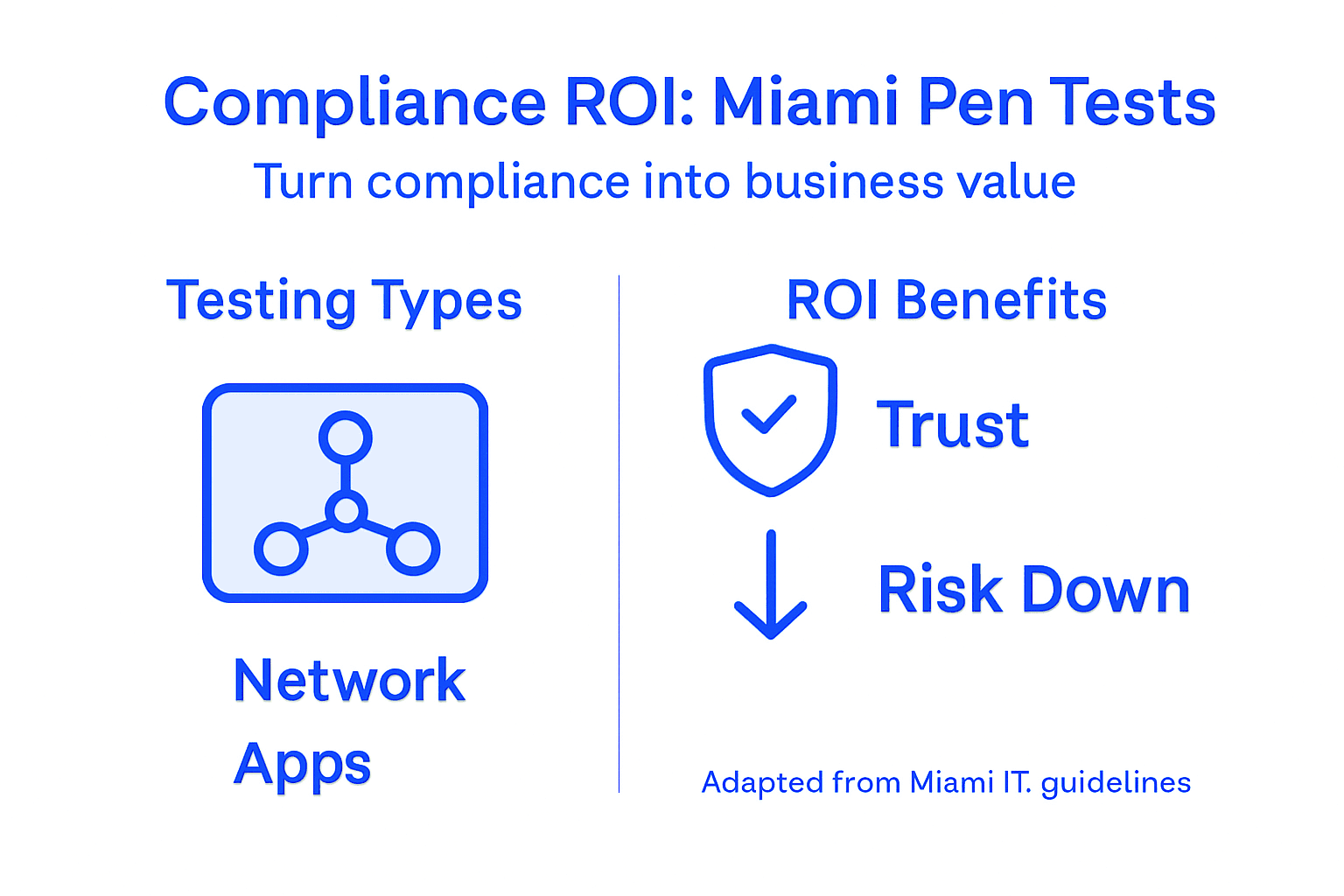
Pro tip: Schedule comprehensive penetration tests annually and immediately after significant technological infrastructure changes to ensure continuous compliance and security.
Legal Risks and Common Pitfalls to Avoid
Penetration testing legal risks represent a critical consideration for cybersecurity professionals in Miami. Understanding potential legal vulnerabilities is essential to conducting ethical and compliant security assessments that protect both the organization and the testing team.
Common legal risks and pitfalls include:
- Unauthorized system access without explicit written permission
- Inadequate documentation of testing scope and boundaries
- Unintentional disruption of production systems
- Potential data privacy violations
- Insufficient contractual protections
- Crossing ethical boundaries during testing
Miami professionals must carefully navigate these risks by implementing robust legal safeguards and comprehensive engagement protocols. Penetration test authorization requires meticulous planning and explicit consent from all relevant stakeholders to avoid potential criminal liability.
The most significant legal risks emerge from poorly defined testing parameters and inadequate documentation. Organizations must develop clear, detailed contracts that outline:
- Precise testing scope and limitations
- Explicit permission for simulated attacks
- Protocols for handling discovered vulnerabilities
- Confidentiality agreements
- Liability limitations
Unauthorized or poorly executed penetration tests can result in significant legal consequences, including potential lawsuits, regulatory penalties, and professional reputation damage. Cybersecurity professionals must approach testing with the same level of legal precision they apply to technical assessments.
Pro tip: Always secure comprehensive written authorization and develop detailed testing agreements before initiating any penetration testing activities.
Strengthen Your Miami Practice with Expert Penetration Testing and Compliance Solutions
The article highlights the critical challenge Miami professionals such as Doctors, Lawyers, and Accountants face in maintaining cybersecurity compliance while managing complex penetration testing requirements. You may be concerned about navigating legal risks, protecting sensitive client data, and ensuring your technology infrastructure meets regulatory standards—all while aiming to grow your practice and increase monthly revenue. Key pain points include maintaining continuous compliance, prioritizing security investments, and preventing costly breaches through strategic vulnerability assessments.
At Transform42, we specialize in providing Miami professionals with comprehensive technology solutions that integrate robust cybersecurity practices including penetration testing. Our approach empowers you to build capabilities your clients expect, scale your business without proportional hiring, and gain a strategic advantage with technology designed to safeguard your compliance and drive significant revenue growth. Discover how to turn cybersecurity challenges into business opportunities by partnering with experts who understand your unique needs.
Looking for reliable ways to secure your practice and elevate client trust in Miami
Get started today by exploring how our tailored technology solutions can help you navigate penetration testing complexities and compliance hurdles. Visit Transform42 Main Website to learn more. Secure your future now and reclaim your time while growing to 7-8 figures monthly revenue. Don’t wait until vulnerabilities turn into costly breaches—take action and protect your practice today.
Frequently Asked Questions
What is penetration testing in cybersecurity?
Penetration testing is a strategic cybersecurity approach where authorized professionals simulate real-world cyberattacks to identify vulnerabilities in an organization’s digital infrastructure before they can be exploited by malicious actors.
What are the main types of penetration testing?
The main types of penetration testing include network testing, web application testing, wireless network testing, social engineering testing, and physical security testing, each focused on different areas of an organization’s technology and security posture.
Why is penetration testing important for compliance?
Penetration testing is crucial for compliance as it validates adherence to industry-specific regulations, helps identify vulnerabilities before they escalate, and demonstrates proactive risk management to clients and regulators, ultimately protecting sensitive information.
What should organizations avoid during penetration testing?
Organizations should avoid unauthorized access, inadequate documentation of the testing scope, unintentional disruption of production systems, and insufficient contractual protections. Clear agreements and explicit permission are essential to protect against legal risks.
Recommended
- Pen Testing For Accounting Firms – Stratgetic IT Consultants For Accountants
- Pen Testing For Accounting Firms – Stratgetic IT Consultants For Accountants
- Securing the Defense Industry: Tackling Cybersecurity in an Interconnected World
- All Article Archives – Stratgetic IT Consultants For Accountants
- Nätverkssäkerhet – Så skyddar du Unifi-nätverk
- Dubai Brevetta Sicurezza e Velocità nei Pagamenti Digitali – Avvocato Carmine Coviello