
American CPA firms in Miami aiming for 7 or 8 figure growth face a tough truth. Over 60 percent of mid-sized practices still manage core processes with outdated systems that drag down efficiency and profits. Staying competitive in the American accounting market requires smarter technology strategies that actually scale—not just quick upgrades. This guide breaks down actionable steps for technology modernization that help you overhaul workflow, uncover new revenue streams, and protect your firm’s future.
Table of Contents
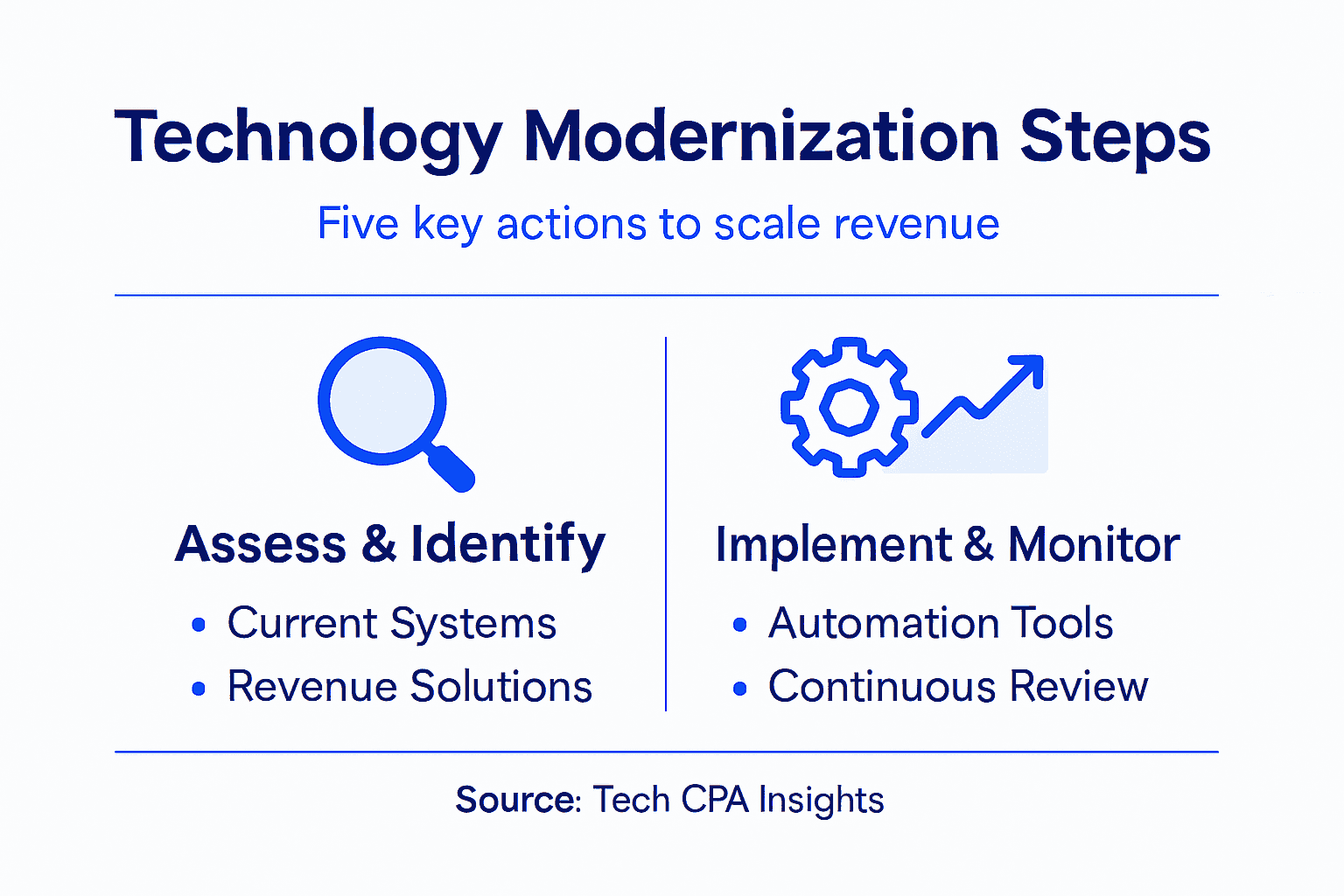
- Step 1: Assess Current Systems And Workflow
- Step 2: Identify Revenue-Boosting Technology Solutions
- Step 3: Implement Automation And Integration Tools
- Step 4: Upgrade Security And Compliance Measures
- Step 5: Monitor Results And Optimize Continuously
Quick Summary
| Key Insight | Explanation |
|---|---|
| 1. Assess Current Systems | Review existing technologies to identify manual processes and bottlenecks that hinder efficiency. |
| 2. Identify Effective Technologies | Research AI and automation tools that can enhance productivity and improve service delivery for your firm. |
| 3. Implement Automation Tools | Automate repetitive tasks to streamline workflows and allow staff to focus on higher-value activities. |
| 4. Upgrade Security Measures | Strengthen protocols to protect sensitive data and ensure compliance with industry regulations. |
| 5. Monitor and Optimize Continuously | Establish metrics for performance tracking and regularly review tools for ongoing improvement and adaptation. |
Step 1: Assess Current Systems and Workflow
Assessing your current technology infrastructure is the critical first step toward scaling your CPA firm’s revenue and operational efficiency. This process helps you understand exactly where technology can transform your existing workflows and identify potential bottlenecks that are holding your firm back.
Start by conducting a comprehensive review of your current systems using a systematic approach. Accounting technology evaluations reveal that many firms still rely on outdated manual processes that consume significant staff time. Inventory all your current software applications tracking client information, tax preparation, bookkeeping, and financial reporting. Pay special attention to how these systems integrate (or fail to integrate) with each other. Look for manual data entry points where staff spend excessive time transferring information between platforms.
Focus on mapping out your current workflow from client onboarding through service delivery and billing. Track how long each process takes and identify repetitive tasks that could potentially be automated. Automation strategies for accounting teams demonstrate that streamlining these workflows can dramatically increase team productivity. Document each step meticulously noting time spent and potential inefficiencies.
Pro tip: Create a visual workflow diagram that highlights every step of your current processes, making it easier to spot redundancies and opportunities for technological improvement.
Step 2: Identify Revenue-Boosting Technology Solutions
Identifying the right technology solutions is crucial for transforming your CPA firm’s revenue potential and operational effectiveness. This step involves strategic research and evaluation of technologies that can directly impact your firm’s financial performance and client service delivery.
Start by exploring AI-powered digital accounting solutions that can dramatically improve your firm’s efficiency and service quality. Focus on technologies that automate repetitive tasks such as data entry, compliance form processing, and financial reporting. Look for tools that integrate artificial intelligence for cash flow analysis, audit process automation, and enhanced client communication. These technologies not only reduce operational costs but also free up your team to focus on high-value advisory services that generate significant revenue.

Prioritize solutions that provide comprehensive functionality across your firm’s core processes. Evaluate platforms that offer seamless integration between client management, tax preparation, bookkeeping, and financial analysis. Automation technologies for accounting firms demonstrate substantial gains in productivity and service delivery speed. Consider cloud-based systems that allow real-time collaboration, secure data sharing, and scalable infrastructure that can grow with your firm’s needs.
Pro tip: Create a detailed technology comparison matrix that ranks potential solutions based on their revenue impact, integration capabilities, cost-effectiveness, and alignment with your specific firm’s workflow requirements.
Compare key technology selection criteria for your firm:
| Criteria | Why It Matters | Example Consideration |
|---|---|---|
| Integration Ability | Avoids data silos | Connects bookkeeping and tax apps |
| AI Functionality | Automates complex analysis | Predicts cash flow trends |
| Cloud Capabilities | Supports remote collaboration | Enables secure client portals |
| Cost Effectiveness | Maximizes technology ROI | Subscription fits current budget |
Step 3: Implement Automation and Integration Tools
Implementing automation and integration tools represents a transformative step for your CPA firm, enabling you to dramatically improve operational efficiency and service delivery. This critical phase moves your technology strategy from planning to execution, turning your strategic vision into tangible business results.
Robotic Process Automation technologies offer powerful solutions for streamlining complex accounting workflows. Begin by identifying specific repetitive tasks in your current processes that consume significant staff time. These might include invoice processing, compliance document checking, financial report generation, and data reconciliation. Select tools that can intelligently automate these activities while maintaining high accuracy and audit quality. Look for platforms that offer seamless integration across your existing software ecosystem, ensuring smooth data transfer and reducing manual intervention.
Prioritize implementing business process automation solutions that connect different accounting applications and facilitate simultaneous access to critical information. Focus on platforms with advanced features like predictive analytics and natural language processing that can provide deeper insights while reducing administrative workload. Pay special attention to security protocols, ensuring that any new automation tools meet industry compliance standards and protect sensitive financial data.
Pro tip: Start with a pilot implementation of automation tools in one specific workflow to demonstrate value and build organizational confidence before full scale deployment.
Here’s a summary of common automation opportunities and their benefits for CPA firms:
| Task Automated | Immediate Benefit | Long-Term Impact |
|---|---|---|
| Data entry | Reduces manual errors | Enables staff to focus on analysis |
| Invoice processing | Speeds up billing cycles | Improves cash flow reliability |
| Compliance checks | Ensures faster accuracy | Enhances audit readiness |
| Financial report creation | Delivers quick insights | Increases client satisfaction |
Step 4: Upgrade Security and Compliance Measures
Upgrading security and compliance measures is a critical strategy for protecting your CPA firm’s reputation, client data, and long-term business sustainability. This step involves implementing robust protocols that shield your organization from emerging technological risks and regulatory challenges.
Security controls for information systems provide a comprehensive framework for enhancing your firm’s digital defense strategy. Focus on implementing access enforcement mechanisms that limit sensitive information exposure. Establish clear separation of duties, enforce least privilege principles, and develop sophisticated threat detection protocols. These approaches ensure that only authorized personnel can access critical financial data while maintaining granular control over system interactions.
Prioritize building a compliance infrastructure that goes beyond basic regulatory requirements. Compliance program frameworks emphasize the importance of creating a culture that proactively identifies and mitigates technological risks. Invest in analytics tools that provide real time monitoring, develop clear whistleblower protection policies, and ensure your compliance team has immediate access to comprehensive data. This approach transforms compliance from a reactive checklist to a strategic business advantage.
Pro tip: Conduct regular third party security audits and penetration testing to identify potential vulnerabilities before they become critical risks.
Step 5: Monitor Results and Optimize Continuously
Monitoring and optimizing your technology investments is the final crucial step in scaling your CPA firm’s revenue through strategic technological transformation. This ongoing process ensures that your technological initiatives continue to deliver measurable value and adapt to changing business landscapes.
Continuous performance monitoring provides the insights necessary to fine-tune your technological strategies. Establish a robust analytics framework that tracks key performance metrics such as task completion times, error rates, employee productivity, and direct revenue impact. Create dashboards that offer real time visibility into how your automation and integration tools are performing. Pay special attention to metrics that demonstrate efficiency gains, cost reductions, and improvements in service delivery quality.
Digital transformation auditing requires a proactive approach to risk management and continuous improvement. Develop a structured feedback mechanism where your team regularly reviews technological implementations. Schedule quarterly deep dive sessions to assess the effectiveness of your digital tools, identify potential bottlenecks, and explore emerging technologies that could further enhance your firm’s capabilities. This iterative approach transforms technology optimization from a periodic task into a strategic continuous improvement process.
Pro tip: Create a dedicated technology optimization team responsible for tracking performance metrics and recommending strategic upgrades, ensuring your firm stays ahead of technological trends.
Unlock Revenue Growth With Expert Technology Modernization for CPA Firms
Scaling your CPA firm’s revenue requires more than just upgrading systems. The article highlights challenges such as inefficient workflows, lack of automation, and inadequate integration that slow growth and limit your firm’s potential. At Transform42, we understand these pain points and help you build a powerful technology foundation that drives operational efficiency, compliance, and client satisfaction. From automating repetitive tasks to ensuring secure data management, our tailored solutions align perfectly with your firm’s goals for smarter revenue scaling.
Explore how strategic technology investments can transform your processes and give you the competitive edge you deserve by visiting our Digital-transformation Archives – Strategic IT Consultants For Accountants.
Don’t let technology gaps hold your firm back. Partner with us to land bigger clients, scale without adding headcount, and reclaim your time. Learn more about building the modern CPA firm at Transform42 or dive deeper into optimizing your workflows at Processes Archives – Strategic IT Consultants For Accountants. Take the first step toward transforming your firm’s future today.
Frequently Asked Questions
How can I assess my CPA firm’s current technology systems?
Assess your firm’s current technology by conducting a comprehensive review of all software applications and workflows. Inventory your tools for client management, tax preparation, and bookkeeping within 30 days to identify outdated processes and potential inefficiencies.
What technology solutions should I consider to boost my CPA firm’s revenue?
Consider adopting AI-powered accounting solutions and automation tools that streamline repetitive tasks such as data entry and financial reporting. Research potential solutions over the next 60 days to evaluate their integration capabilities and ensure they align with your firm’s core services.
How should I implement automation tools in my CPA firm?
Start implementing automation tools by identifying specific repetitive tasks that consume staff time, such as invoice processing. Conduct a pilot testing phase in one workflow to demonstrate the tool’s value before rolling it out across your firm.
What steps can I take to upgrade my security measures?
Upgrade security measures by implementing strict access controls and developing a compliance infrastructure that exceeds basic regulatory requirements. Invest time in defining clear roles for data access within the next month to protect sensitive financial information.
How can I continuously monitor and optimize my technology investments?
Continuously monitor your technology investments by establishing an analytics framework that tracks key performance metrics like error rates and productivity. Set up quarterly reviews with your team to assess tool effectiveness and identify opportunities for improvements on an ongoing basis.