Nearly half of American accounting firms report that digital transformation directly drives higher monthly revenue. Independent CPAs in Miami face increasing pressure to modernize their practices or risk falling behind competitors who have already adopted advanced technological solutions. This article reveals how digital transformation consulting brings proven strategies, smarter workflows, and scalable systems that help solo practitioners maximize efficiency and grow profits fast.
Table of Contents
- Digital Transformation Consulting Explained
- Types Of Digital Transformation For CPAs
- How Consulting Drives Revenue And Efficiency
- Compliance, Security, And Ethical Considerations
- Key Risks, Challenges, And Common Mistakes
Key Takeaways
| Point | Details |
|---|---|
| Digital Transformation Consulting | It helps organizations integrate technology comprehensively to enhance operations and create value beyond traditional practices. |
| Types of Transformation | CPAs can choose from digitization, digitalization, business transformation, and innovation to align with specific technological advancements. |
| Revenue and Efficiency | Successful consulting creates higher margins and operational efficiency by reallocating time to high-value advisory services. |
| Compliance and Security | Robust cybersecurity and ethical practices are essential to maintain client trust amidst technological innovations. |
Digital transformation consulting explained
Digital transformation consulting provides strategic guidance to businesses seeking to leverage technology for comprehensive organizational change. More than just implementing new software, this approach represents a holistic reimagining of how organizations operate, compete, and deliver value.
At its core, digital transformation consulting helps businesses integrate advanced technological solutions with their existing operational frameworks. These strategic interventions connect technological adoption with broader business innovation, ensuring that technological investments align with specific organizational goals and challenges. For independent CPAs in Miami, this means moving beyond traditional accounting practices to create more efficient, scalable service models.
The consulting process typically involves several critical stages: comprehensive organizational assessment, technology strategy development, implementation planning, and ongoing optimization. Consultants work closely with leadership to identify technological gaps, recommend precise solutions, and support seamless integration of new systems. This might include adopting cloud-based accounting platforms, implementing advanced data analytics tools, or redesigning client interaction processes to enhance efficiency and customer experience.
Successful digital transformation requires more than technical expertise. It demands a deep understanding of an organization’s unique culture, workflow, and strategic objectives. Consultants must balance technological possibilities with practical implementation, ensuring that digital solutions genuinely enhance rather than disrupt existing operational strengths.
Pro tip: Start your digital transformation journey by conducting a detailed audit of your current technological infrastructure and identifying specific pain points where digital solutions can provide immediate, measurable improvements.
Types of digital transformation for CPAs
Digital transformation for CPAs is not a one-size-fits-all approach but a nuanced strategy with multiple implementation levels. These transformation tiers range from foundational digitization to comprehensive business model reinvention, offering independent accounting professionals strategic pathways to technological advancement.
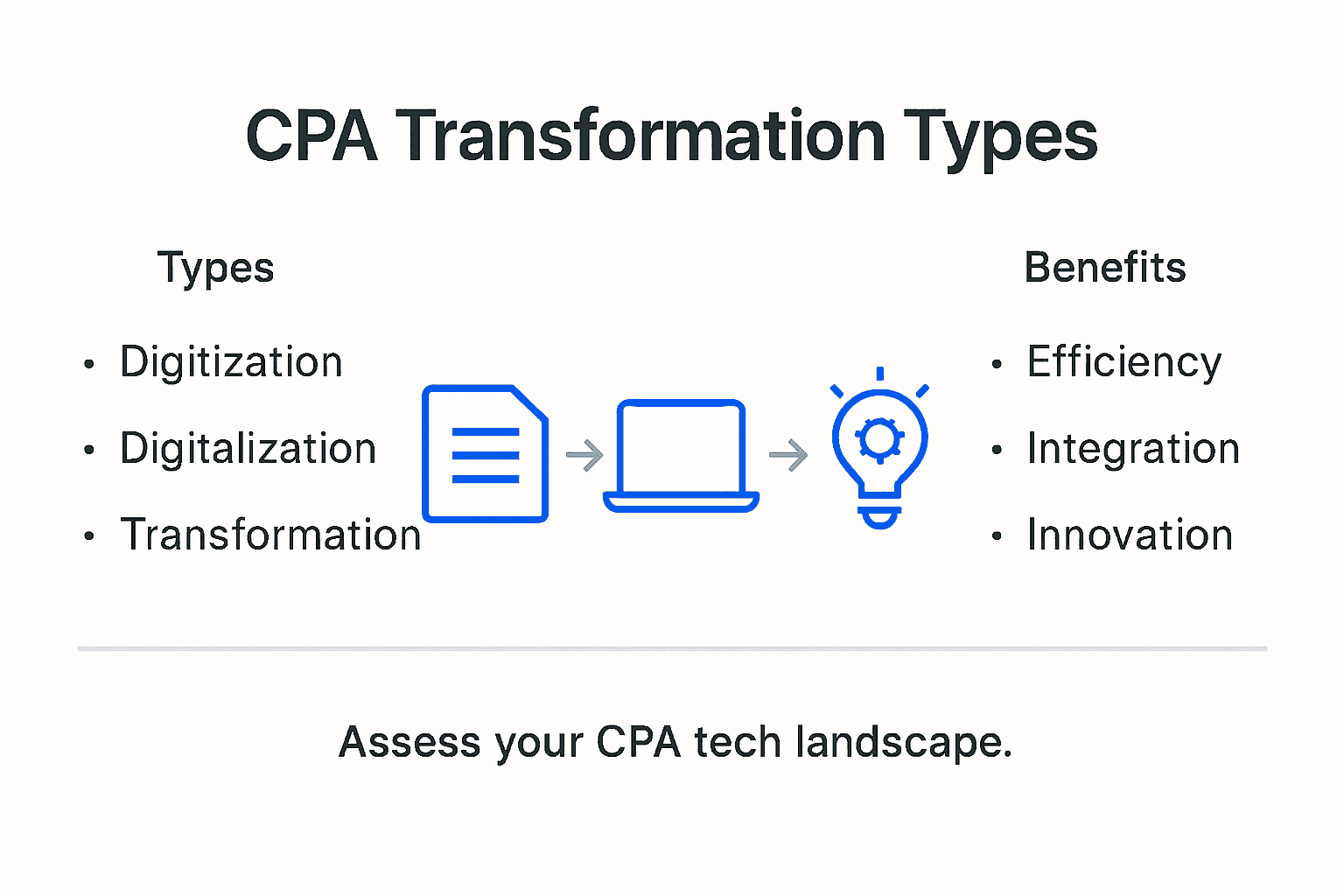
The first transformation type is Digitization, which focuses on converting traditional paper-based processes into digital formats. This basic level involves scanning documents, using digital spreadsheets, and implementing cloud storage solutions. For Miami CPAs, this might mean transitioning from physical file cabinets to secure digital document management systems that improve record-keeping efficiency and client data protection.

The second transformation type is Digitalization, which goes beyond simple digital conversion to create integrated digital workflows. This stage involves implementing advanced accounting software, automated reporting tools, and real-time financial analytics platforms. CPAs can leverage these technologies to provide more comprehensive, data-driven insights to clients, transforming their traditional service model into a more strategic advisory approach.
More advanced transformation types include Business Transformation and Innovation. Business transformation involves redesigning entire operational models using digital technologies, while innovation focuses on creating entirely new service offerings enabled by digital capabilities. These higher-level transformations allow CPAs to develop unique service models, potentially expanding revenue streams and differententiating themselves in a competitive market.
Pro tip: Assess your current technological infrastructure systematically and prioritize digital transformation investments that directly address your most significant operational bottlenecks or client service limitations.
The main types of digital transformation for CPAs can be distinguished by their scope and strategic impact:
| Transformation Type | Primary Focus | Typical Benefits | CPA Practice Impact |
|---|---|---|---|
| Digitization | Paper to digital | Streamlined records, reduced errors | More secure document management |
| Digitalization | Integrated workflows | Faster reporting, real-time insights | Enhanced client advisory services |
| Business Transformation | Model redesign | New revenue streams, market expansion | Differentiated competitive strategy |
| Innovation | New digital services | Cutting-edge offerings, brand growth | Market leadership opportunities |
How consulting drives revenue and efficiency
Digital transformation consulting offers independent CPAs a strategic pathway to dramatically increase revenue and operational efficiency. Professional service firms can unlock significant growth by aligning consulting practices with client-specific needs and technological innovations, creating opportunities to expand beyond traditional compliance services into higher-margin advisory roles.
Revenue generation through consulting occurs through multiple interconnected mechanisms. By streamlining routine tasks and implementing workflow automation, CPAs can reclaim valuable time traditionally spent on manual processes. This shift allows professionals to focus on high-value advisory services that command premium pricing. Specialized consulting helps identify inefficiencies, recommend targeted technological solutions, and develop strategic approaches that directly translate into increased billable hours and client retention.
Efficiency improvements represent another critical revenue driver for CPAs engaging in digital transformation consulting. Outsourcing routine tasks and implementing advanced workflow automation strategies enables accounting professionals to optimize their operational models, reducing administrative overhead while simultaneously improving service quality. These technological interventions create scalable business models that allow solo practitioners to manage larger client portfolios without proportional increases in staffing or operational costs.
The most successful CPA firms view consulting not as an additional service but as a fundamental reimagining of their business model. By integrating technology, strategic insights, and client-focused solutions, independent practitioners can transform from compliance-based service providers to strategic financial advisors who deliver measurable value beyond traditional accounting functions.
Pro tip: Develop a clear service menu that articulates the specific value-added consulting services you offer, helping potential clients understand exactly how your technological expertise translates into tangible business improvements.
Compliance, security, and ethical considerations
Digital transformation introduces complex regulatory challenges that demand sophisticated approaches from accounting professionals. CPAs must navigate increasingly nuanced ethical landscapes where technological innovation intersects with professional responsibility, requiring proactive strategies to maintain client trust and regulatory compliance.
Security considerations represent a critical dimension of digital transformation for independent CPAs. Protecting sensitive financial data involves implementing robust cybersecurity measures that go beyond traditional record-keeping practices. This includes utilizing advanced encryption technologies, establishing secure client communication protocols, and developing comprehensive data protection strategies that safeguard confidential financial information from potential breaches or unauthorized access.
Cybersecurity frameworks provide structured approaches for mapping compliance requirements across different regulatory standards, enabling CPAs to create comprehensive security infrastructures. These frameworks help professionals standardize their technological implementations while ensuring alignment with industry regulations like NIST and PCI DSS. By adopting systematic compliance mapping, accounting professionals can efficiently manage potential risks and demonstrate their commitment to maintaining the highest professional standards.
Ethical considerations extend beyond technical security measures. Digital transformation challenges traditional notions of professional independence, requiring CPAs to continuously evaluate how technological tools might influence their professional judgment. This means developing clear policies about technology usage, maintaining transparency with clients about digital service delivery, and ensuring that automated processes do not compromise the fundamental principles of professional accounting ethics.
Pro tip: Conduct quarterly comprehensive reviews of your digital security protocols and ethical guidelines to ensure ongoing alignment with emerging technological and regulatory standards.
Key risks, challenges, and common mistakes
Digital transformation introduces a complex landscape of potential risks that independent CPAs must carefully navigate. Emerging technologies present eight critical risk areas that can dramatically impact technological implementation and organizational success, demanding proactive and strategic approaches to technological adoption.
One of the most significant challenges is vendor lock-in, where CPAs become overly dependent on specific technological platforms that limit future flexibility. This risk emerges when firms invest heavily in proprietary systems without considering long-term scalability and interoperability. Accounting professionals must carefully evaluate technology solutions, ensuring they provide open architectures and seamless integration capabilities that support future growth and technological evolution.
Small and midsize firms frequently encounter strategic implementation challenges that can derail digital transformation efforts, including inadequate leadership alignment and poor understanding of transformation scope. Common mistakes include attempting comprehensive technological overhauls without clear strategic objectives, failing to develop necessary skill sets within the organization, and neglecting to adjust internal decision-making processes to support technological innovation. These pitfalls can result in significant financial investments with minimal returns and potential operational disruptions.
Additional critical risks involve skill gaps, regulatory compliance challenges, and the rapid pace of technological change. CPAs must continuously invest in professional development, maintain awareness of emerging technologies, and develop adaptive strategies that allow for incremental technological integration. This requires maintaining a balance between technological innovation and maintaining the core professional standards that define accounting practice.
Key risks and mitigation strategies for digital transformation in CPA firms:
| Risk Area | Potential Impact | Mitigation Strategy |
|---|---|---|
| Vendor Lock-in | Reduced flexibility, higher costs | Choose open systems and scalable solutions |
| Skill Gaps | Incomplete tech adoption | Invest in ongoing professional training |
| Compliance Failure | Regulatory sanctions, loss of trust | Regular compliance mapping and reviews |
| Poor Leadership Alignment | Project delays, minimal results | Ensure strategic goals are clearly defined |
Pro tip: Develop a comprehensive technology roadmap that includes regular skill assessments, technology evaluations, and strategic flexibility to mitigate potential implementation risks.
Unlock the Full Potential of Digital Transformation for Your Miami CPA Practice
The challenge many Miami CPAs face today is navigating the complex landscape of digital transformation while maintaining compliance, security, and operational efficiency. As highlighted in the article, overcoming pain points like vendor lock-in, skill gaps, and poor leadership alignment is essential to growing your practice beyond traditional accounting roles. You want to implement integrated workflows and automation that not only streamline processes but also elevate your advisory services to land bigger clients and scale without hiring more staff.
If you are ready to move beyond simple digitization and embrace strategic digital transformation that drives measurable revenue growth, explore how tailored consulting solutions can make a difference. Visit our Digital-transformation Archives – Stratgetic IT Consultants For Accountants to learn how technology can be applied thoughtfully to solve your unique challenges.
Take the next step toward scaling your CPA practice with confidence. Build the capabilities and compliance your clients expect by partnering with experts who understand your needs. Start your transformation journey today by visiting https://www.transform42inc.com/ and discover actionable strategies that reclaim your time and grow your revenue. For insight into refining your operational processes, check out our Processes Archives – Stratgetic IT Consultants For Accountants and see how optimized workflows empower your practice.
Frequently Asked Questions
What is digital transformation consulting?
Digital transformation consulting involves providing strategic guidance to businesses on how to leverage technology for comprehensive organizational change, aligning technological investments with specific business goals.
How does digital transformation benefit independent CPAs?
Digital transformation helps CPAs by streamlining operations, improving efficiency, and enabling them to transition from traditional compliance services to higher-margin advisory roles, enhancing client value.
What are the types of digital transformation that CPAs can implement?
CPAs can implement several types of digital transformation, including digitization, which converts paper-based processes to digital; digitalization, which creates integrated workflows; business transformation, which redesigns operational models; and innovation, which involves creating new digital services.
What are some common challenges CPAs face during digital transformation?
Common challenges include vendor lock-in, skill gaps, poor leadership alignment, and regulatory compliance issues. It’s essential to develop a clear strategy and invest in ongoing professional training to mitigate these risks.