
Most American accounting firms now rely on technology to drive productivity, yet more than 60 percent still struggle to keep IT issues from disrupting their operations. Keeping up with complex software, evolving compliance standards, and client data security makes seamless IT management essential for every professional accountant. This guide uncovers how the right IT Service Management approach helps American accountants create smoother workflows, reduce downtime, and elevate business reliability.
Table of Contents
- IT Service Management Defined For Accountants
- Types Of IT Service Management Solutions
- Key Features And Processes Explained
- Compliance And Security Risks For CPAs
- Maximizing Workflow Efficiency And Revenue
Key Takeaways
| Point | Details |
|---|---|
| Strategic IT Service Management (ITSM) | ITSM offers accountants a framework to enhance technological operations, ensuring technology aligns with business objectives. |
| Comprehensive Risk Management | Implement multi-layered security strategies to protect client data and navigate compliance challenges effectively. |
| Automation and Workflow Efficiency | Leverage advanced technologies like Cloud-based infrastructure and Accounting Information Systems to streamline processes and improve productivity. |
| Regular Technology Assessments | Conduct quarterly technology audits to identify areas for improvement and ensure alignment with evolving business needs. |
IT Service Management Defined for Accountants
IT Service Management (ITSM) represents a strategic framework that helps professional accountants streamline their technological operations and enhance overall business efficiency. At its core, ITSM is a structured approach organizations use to plan, deliver, manage, and improve IT services, ensuring technology supports critical accounting functions seamlessly.
For Miami accounting professionals, ITSM goes beyond basic technical support. It involves proactively managing technological investments across the entire service lifecycle, including conceptual design, implementation, and ongoing maintenance. This means accounting firms can create more predictable, reliable technology environments that minimize disruptions and maximize productivity.
The fundamental components of ITSM for accountants typically include service strategy, design, transition, operation, and continuous improvement. By adopting these principles, accounting practices can develop robust technological infrastructures that support complex service management across concept, design, and transition pipelines. These systems help firms manage everything from client data security to software integrations with minimal friction.
Pro Tip for Technology Management: Implement a regular technology assessment cycle every six months to ensure your IT services remain aligned with your accounting firm’s evolving strategic goals and client needs.
Types of IT Service Management Solutions
IT Service Management (ITSM) solutions for accounting professionals encompass a comprehensive range of technological processes designed to optimize operational efficiency. These solutions include critical components like IT asset management, knowledge management, and service request management, each addressing specific technological challenges faced by modern accounting practices.
The primary ITSM solutions typically break down into several key categories. Service Portfolio Management focuses on strategic alignment of IT services with business objectives, while Demand Management helps accounting firms anticipate and plan for technological resource requirements. Service Level Management provides frameworks for ensuring consistent, high-quality technological support across different operational areas.
For Miami accounting firms, these ITSM solutions can be categorized into operational, strategic, and support-oriented approaches. Operational solutions like incident management and change management help firms quickly resolve technical issues. Strategic solutions enable long-term technology planning, while support-oriented solutions ensure continuous improvement and alignment with evolving business needs.
Pro Tip for Solution Selection: Conduct a comprehensive technology audit annually to match your ITSM solutions with your accounting firm’s specific operational requirements and growth strategies.
Here’s a comparison of key ITSM solutions and their benefits for accounting firms:
| Solution Type | Main Focus | Example Benefit for Accountants |
|---|---|---|
| Service Portfolio Management | Align IT and business goals | Supports strategic resource planning |
| Demand Management | Forecast technology needs | Improves budgeting for tech upgrades |
| Incident Management | Resolve technical disruptions | Reduces downtime in client services |
| Change Management | Implement technology updates | Minimizes risk during software changes |
| Service Level Management | Ensure service quality | Guarantees reliable support for teams |
Key Features and Processes Explained
Core ITSM processes represent a comprehensive framework for managing technological resources and delivering efficient IT services within accounting practices. These processes encompass critical components like IT asset management, knowledge management, and service request management, each designed to address specific technological challenges faced by modern financial professionals.

The key features of ITSM processes can be systematically broken down into several essential categories. Incident Management focuses on rapid resolution of technical disruptions, while Problem Management aims to identify and eliminate underlying root causes of recurring issues. Strategic processes involve defining, analyzing, and approving services to ensure precise alignment with business objectives, enabling accounting firms to optimize their technological infrastructure.
These processes are not just theoretical concepts but practical tools for technological efficiency. Change management helps accounting firms implement technological updates smoothly, knowledge management ensures critical information is captured and shared effectively, and service request management streamlines how technological support is delivered. By integrating these processes, accounting practices can create a robust, responsive technological ecosystem that supports their complex operational needs.
Pro Tip for Process Implementation: Create a cross-functional technology governance team that meets quarterly to review and refine your ITSM processes, ensuring continuous improvement and strategic alignment.
This summary highlights major ITSM processes and their positive impacts on accounting operations:
| ITSM Process | Purpose | Business Impact |
|---|---|---|
| IT Asset Management | Track and optimize IT resources | Reduces unnecessary tech expenses |
| Knowledge Management | Capture/share critical know-how | Enhances staff onboarding and support |
| Service Request Mgmt | Streamline support requests | Improves response speed and quality |
| Problem Management | Prevent recurring tech issues | Lowers risk of repeated disruptions |
Compliance and Security Risks for CPAs
Protecting sensitive financial information represents a critical priority for accounting professionals, requiring comprehensive security strategies that address increasingly sophisticated cyber threats. Miami CPAs must recognize that their technological infrastructure represents both a valuable asset and a potential vulnerability, with client data serving as the most critical resource requiring robust protection.
Cybersecurity Risks in accounting practices encompass multiple dimensions, including data breaches, unauthorized access, and potential regulatory non-compliance. Managerial accounting principles underscore the importance of maintaining data accuracy and implementing rigorous security protocols, which involve continuous monitoring, advanced encryption technologies, and comprehensive employee training programs.
The primary compliance challenges for Miami CPAs involve navigating complex regulatory environments, protecting client confidentiality, and maintaining stringent data protection standards. These requirements extend beyond traditional security measures, demanding proactive risk management approaches that anticipate potential technological vulnerabilities. Accounting firms must develop multi-layered security strategies that integrate technological solutions, human awareness, and systematic risk assessment protocols.
Pro Tip for Security Management: Conduct quarterly comprehensive security audits and implement mandatory cybersecurity training for all team members to create a culture of continuous technological vigilance.
Maximizing Workflow Efficiency and Revenue
Cloud-based infrastructure enables accounting firms to dramatically enhance operational scalability and collaboration, creating unprecedented opportunities for workflow optimization and revenue growth. Modern Miami accounting practices can leverage technological solutions to streamline complex processes, reduce manual intervention, and allocate resources more strategically.
The integration of Accounting Information Systems (AIS) plays a critical role in transforming operational efficiency. These sophisticated systems encompass elements crucial to the accounting cycle, facilitating seamless data management and interdepartmental communication, which directly translates into improved productivity and reduced administrative overhead. By implementing advanced technological frameworks, accounting firms can automate routine tasks, minimize human error, and create more predictable revenue streams.
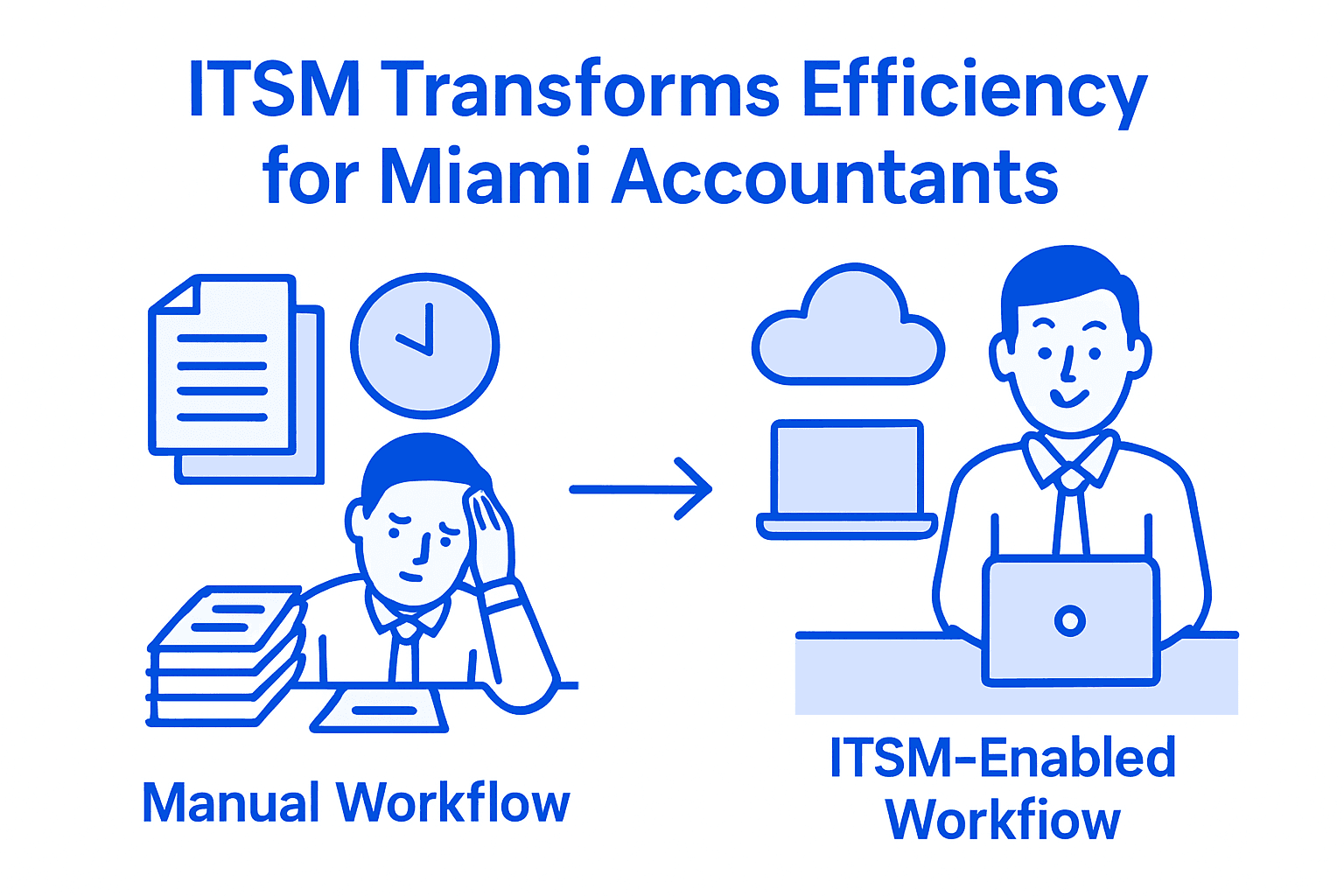
Workflow efficiency goes beyond simple technological implementation. Successful accounting practices develop comprehensive strategies that align technological capabilities with strategic business objectives. This involves continuous process evaluation, employee training, and adaptive technological solutions that can scale with the firm’s growth. Smart technological investments can help Miami accounting firms reduce operational costs, increase service delivery speed, and create more value-added client experiences.
Pro Tip for Efficiency Optimization: Conduct a quarterly technology audit to identify workflow bottlenecks and invest in targeted automation solutions that directly impact revenue generation and operational performance.
Empower Your Miami Accounting Firm with Strategic IT Service Management
IT Service Management is essential for Miami accountants who want to minimize disruptions and ensure technology drives growth instead of holding them back. If you are struggling with managing complex IT processes, ensuring compliance, or maximizing operational efficiency, it is time to build a reliable foundation that keeps your firm ahead of the curve. Key challenges include aligning IT services with your business goals, maintaining cybersecurity, and streamlining workflows without adding overhead.
Transform42 specializes in helping Miami accountants like you turn these challenges into strategic advantages. Our expert guidance on Technology and Processes empowers you to implement proven ITSM frameworks that support compliance, increase client trust, and drive larger revenue growth.
Take control of your firm’s technology and unlock its full potential today. Visit Transform42 to start building the capabilities and compliance your clients expect. Land bigger clients, scale without proportional hiring, and reclaim your life with tailored IT service management solutions designed for Miami accountants.
Frequently Asked Questions
What is IT Service Management (ITSM) for accountants?
IT Service Management (ITSM) is a strategic framework that helps accountants streamline their IT operations, ensuring technology effectively supports critical accounting functions throughout its entire service lifecycle.
How can ITSM enhance productivity in accounting firms?
By adopting ITSM principles, accounting practices can create more predictable and reliable technology environments, reducing disruptions and enhancing overall business efficiency, which ultimately leads to increased productivity.
What are the key components of ITSM that accounting firms should focus on?
Key components of ITSM include service strategy, design, transition, operation, and continuous improvement. Accounting firms should integrate these components to develop robust technological infrastructures that manage client data security and software integrations.
What ITSM solutions are specifically beneficial for accounting practices?
Beneficial ITSM solutions for accounting practices include service portfolio management, incident management, demand management, change management, and service level management, each tailored to address specific operational needs and enhance the overall efficiency of tech-related tasks.
Recommended
- Understanding the Role of IT Service Management
- Understanding The Role Of IT Service Management – Stratgetic IT Consultants For Accountants
- How to Evaluate Managed IT Services for Miami Accounting Firms
- How to Manage IT Services for Miami Accounting Firms
- Role of Accountants for SMEs – Ensuring Growth and Compliance