
Over 80 percent of American professionals now face higher expectations for digital leadership than just five years ago. As rapid technology shifts transform how teams interact and make decisions, understanding this new reality has become a defining skill for anyone hoping to lead effectively. This guide will help you recognize the essential traits, dangers, and digital tools reshaping what it means to be a true leader in the American professional landscape.
Table of Contents
- Defining Leadership in Digital Age for Professionals
- Essential Skills for Miami’s Digital Leaders
- Digital Tools Transforming Accounting and Law Firms
- Balancing Innovation With Compliance and Client Trust
- Common Leadership Pitfalls in Digital Transformation
Key Takeaways
| Point | Details |
|---|---|
| Digital Leadership Requires Adaptability | Professionals must merge digital literacy with emotional intelligence to lead effectively in a technology-driven landscape. |
| Essential Skills Include Technological Agility | Leaders need to quickly integrate new technologies and anticipate trends for informed decision-making. |
| Balancing Innovation With Compliance Is Crucial | Organizations must create frameworks that prioritize ethical practices while leveraging modern technologies. |
| Avoiding Common Pitfalls Is Vital | Leaders should foster inclusive change management strategies to mitigate resistance and ensure alignment with strategic goals. |
Defining Leadership in Digital Age for Professionals
Leadership in the digital age demands more than traditional management skills. Professionals must now navigate complex technological landscapes while maintaining human connections and strategic vision. The digital transformation requires leaders who can seamlessly integrate technological capabilities with interpersonal dynamics.
Modern leadership involves understanding how digital tools reshape organizational structures and communication channels. Digital leadership styles are increasingly characterized by adaptive, collaborative approaches that prioritize rapid information exchange and decentralized decision making. Leaders must develop digital literacy alongside traditional management competencies, recognizing that technological proficiency is now a core leadership requirement.
Successful digital leaders recognize that technology is not just a tool, but a fundamental way of reimagining organizational potential. They cultivate environments that encourage continuous learning, embrace technological innovation, and create flexible structures that can quickly respond to market changes. This means developing teams that are agile, digitally connected, and capable of working across traditional organizational boundaries.
The shift towards digital leadership also demands a more holistic approach to managing human talent. Leaders must balance technological implementation with emotional intelligence, creating spaces where team members feel empowered and supported through technological transitions.
Pro Tip – Digital Leadership Strategy: Invest at least two hours weekly in understanding emerging technologies and their potential impact on your industry, ensuring you remain adaptable and forward thinking in a rapidly evolving digital landscape.
Essential Skills for Miami’s Digital Leaders
Digital leadership in Miami’s dynamic business ecosystem requires a sophisticated blend of technological savvy and strategic thinking. Professionals must develop a comprehensive skill set that goes beyond traditional management approaches, embracing the unique challenges of the digital transformation landscape. Understanding digital strategy becomes crucial for maintaining competitive advantage in rapidly evolving markets like Miami’s diverse business environment.

Key essential skills for digital leaders include advanced technological literacy, adaptive communication, and strategic innovation. Technological agility means more than knowing how to use digital tools – it involves anticipating technological trends, understanding their potential impact, and rapidly integrating new technologies into organizational workflows. Miami’s leaders must cultivate an ability to bridge traditional business practices with cutting-edge digital solutions, creating flexible and responsive organizational structures.
Emotional intelligence and cross-cultural communication have become equally critical in the digital leadership toolkit. With Miami’s multicultural business landscape, leaders must navigate complex communication environments, understanding nuanced interpersonal dynamics while managing remote and distributed teams. This requires developing strong digital communication skills, active listening capabilities, and the ability to build trust in virtual environments.
Successful digital leaders also need robust analytical skills, enabling them to interpret complex data streams and make strategic decisions quickly. This means developing proficiency in data visualization, predictive analytics, and understanding the strategic implications of emerging technologies across different business sectors.
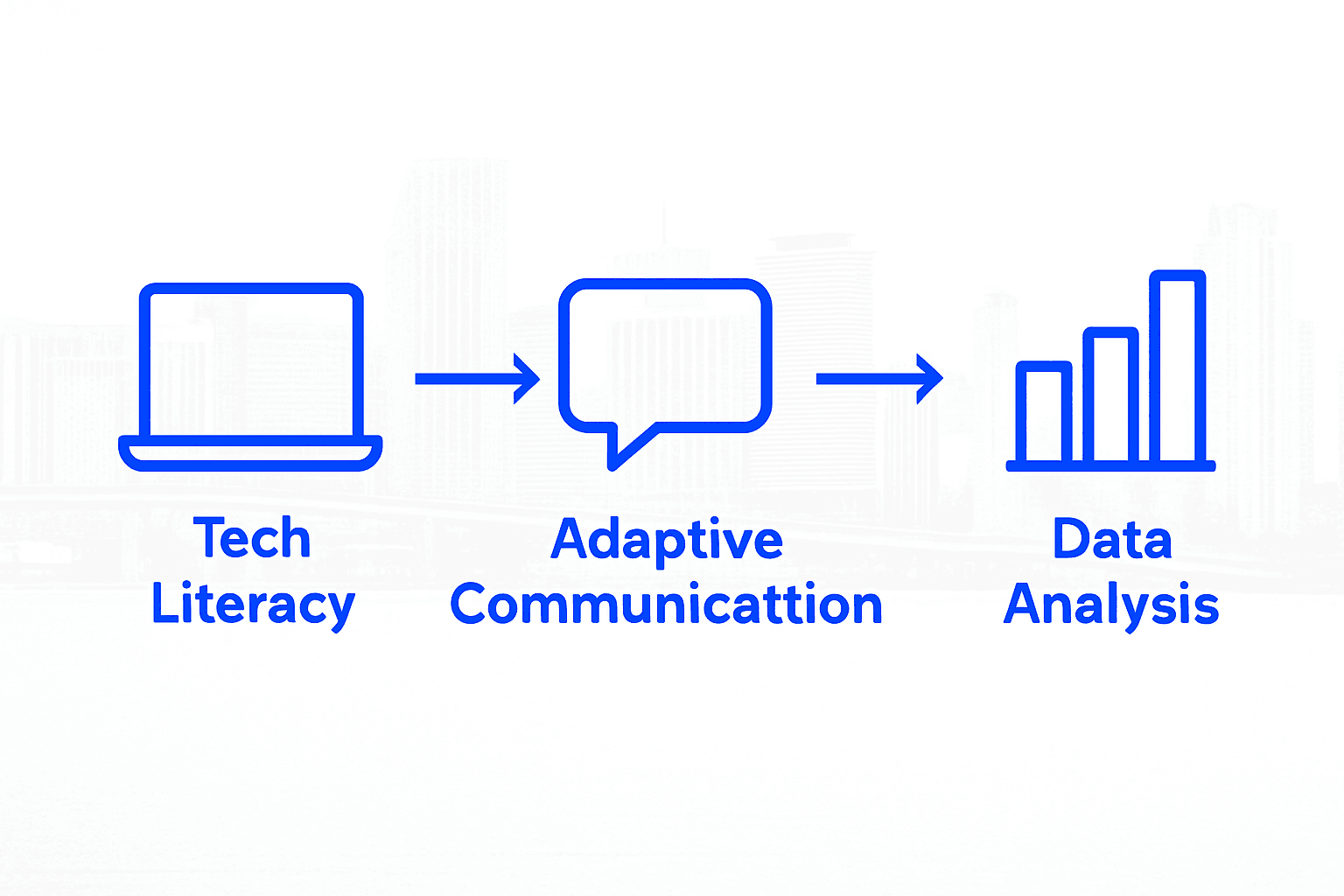
Here’s a summary of key digital leadership skills and their unique benefits in Miami’s dynamic market:
| Skill Area | Description | Business Impact |
|---|---|---|
| Technological Agility | Quickly integrate new digital tools | Faster adaptation to market changes |
| Emotional Intelligence | Manage diverse, remote teams effectively | Enhanced collaboration, team retention |
| Cross-Cultural Communication | Navigate multicultural business settings | Stronger client and partner relationships |
| Advanced Analytics | Interpret complex data streams | Better, data-driven strategic decisions |
Pro Tip – Digital Leadership Development: Dedicate at least one hour weekly to learning a new digital skill or technology trend, ensuring you remain adaptable and ahead of rapidly changing business innovation curves.
Digital Tools Transforming Accounting and Law Firms
The digital transformation is fundamentally reshaping how accounting and law firms operate, driving unprecedented efficiency and strategic capabilities. Professionals in these industries are increasingly adopting advanced technological solutions that streamline complex processes, enhance client experiences, and create competitive advantages. Professionals can leverage digital marketing certification programs to understand the technological landscape and strategically implement cutting-edge tools.
Cloud-based platforms have become game changers for accounting and legal practices, enabling seamless collaboration, secure document management, and real-time data access. These tools allow firms to decentralize operations, support remote work environments, and provide clients with more transparent and responsive services. Sophisticated software now automates routine tasks like document review, time tracking, billing, and compliance monitoring, freeing professionals to focus on high-value strategic work.
Data analytics and artificial intelligence are revolutionizing decision-making processes in accounting and law firms. Advanced predictive analytics tools help professionals identify potential risks, forecast financial trends, and develop more nuanced strategic recommendations. Machine learning algorithms can quickly process vast amounts of legal documentation, contract analysis, and financial records, dramatically reducing research time and improving accuracy.
Cybersecurity and integrated communication platforms have also become critical digital tools for modern professional services. Firms must invest in robust security infrastructure that protects sensitive client information while enabling smooth digital interactions. Integrated communication platforms now blend video conferencing, secure messaging, and collaborative workspaces, transforming how professionals connect with clients and team members across different locations.
Compare how key digital tools are transforming accounting and law firm operations:
| Digital Tool | Key Function | Strategic Benefit |
|---|---|---|
| Cloud-Based Platform | Real-time collaboration, data sharing | Increased productivity, remote work |
| AI & Analytics | Automate reviews, predict trends | Faster decisions, improved accuracy |
| Cybersecurity | Protect sensitive client information | Strengthened trust, regulatory compliance |
| Integrated Communication | Video, messaging, document sharing | Seamless client and team interactions |
Pro Tip – Digital Tool Integration: Conduct a quarterly technology audit to assess your current digital tools, identifying gaps and opportunities for streamlining your technological ecosystem and improving overall operational efficiency.
Balancing Innovation With Compliance and Client Trust
Balancing technological innovation with regulatory compliance requires a strategic and nuanced approach that prioritizes ethical leadership and client confidence. Developing a framework that emphasizes fairness, transparency, and sustainability has become critical for organizations seeking to leverage cutting-edge technologies while maintaining robust legal and ethical standards.
Ethical technology implementation demands more than simply following rules. Firms must create comprehensive governance structures that proactively address potential risks and demonstrate a genuine commitment to responsible innovation. This involves developing transparent decision-making processes, implementing rigorous data protection protocols, and cultivating a organizational culture that values integrity alongside technological advancement.
Building client trust in an increasingly digital landscape requires consistent communication and demonstrable commitment to ethical practices. Professionals must be prepared to articulate how technological solutions enhance rather than compromise client interests. This means developing clear explanations of how advanced tools protect sensitive information, improve service delivery, and create tangible value while maintaining strict compliance with industry regulations.
The human element remains paramount in balancing innovation and trust. Leaders must invest in continuous training programs that help team members understand the ethical implications of emerging technologies, develop critical thinking skills, and maintain a robust moral compass. By creating an environment that encourages open dialogue about technological challenges and ethical considerations, firms can develop more resilient and adaptive approach to digital transformation.
Pro Tip – Ethical Innovation Strategy: Establish a quarterly ethics review board that includes diverse perspectives to assess new technological implementations, ensuring alignment with organizational values and regulatory requirements.
Common Leadership Pitfalls in Digital Transformation
Digital transformation demands strategic leadership that goes beyond traditional management approaches. Understanding the critical role of specialized leadership positions like the Chief AI Officer becomes essential in navigating the complex technological landscape. Many organizations stumble by treating digital transformation as a simple technological upgrade rather than a comprehensive strategic reimagining of business processes.
Technology resistance represents one of the most significant leadership pitfalls. Leaders often fail to create inclusive change management strategies that address team members’ anxieties and potential skill gaps. This resistance can manifest through passive aggressive behaviors, decreased productivity, and active sabotage of new technological implementations. Successful digital transformation requires empathetic leadership that provides clear communication, robust training programs, and opportunities for team members to develop new skills.
Another critical pitfall involves misalignment between technological investments and strategic organizational objectives. Leaders frequently adopt trendy technologies without thoroughly analyzing their specific business needs, resulting in expensive implementations that provide minimal practical value. This scattered approach leads to wasted resources, employee frustration, and missed opportunities for meaningful technological integration. Effective digital transformation demands a disciplined, strategic approach that carefully evaluates technological solutions against clear performance metrics and long-term organizational goals.
Leaders must also recognize the human element in technological transitions. Successful digital transformation is not about replacing human talent but augmenting and empowering teams through intelligent technological integration. This requires developing a culture of continuous learning, maintaining open communication channels, and creating psychological safety that allows team members to experiment, fail, and grow alongside emerging technologies.
Pro Tip – Digital Leadership Assessment: Conduct a quarterly leadership skills audit to identify technological knowledge gaps and develop targeted professional development strategies that keep your leadership team adaptive and technologically competent.
Empower Your Leadership to Drive Miami Firms into the Digital Future
Leadership in the digital age is no longer just about managing teams or processes. It is about mastering technological agility, fostering emotional intelligence, and aligning innovation with compliance to transform your firm into a market leader. This article highlights the critical challenges of balancing rapid digital transformation with building client trust and scaling without proportional hiring. If you are a lawyer, accountant, or doctor in Miami looking to overcome technology resistance, integrate cutting-edge digital tools, and build strategic leadership capabilities, you need tailored solutions that work in your unique environment.
Discover how our Leadership Archives captures the proven strategies to develop adaptive leadership and drive technology adoption smoothly. Explore actionable insights on digital innovations and transformation at the Digital-transformation Archives. At transform42inc.com, we specialize in powering Miami firms to grow their monthly revenue by 7-8 figures using technology as a strategic advantage.
Take control of your firm’s future today by building the capabilities and compliance your clients expect. Land bigger clients, scale efficiently, and reclaim your life with expert guidance crafted for Miami’s demanding digital landscape. Visit https://www.transform42inc.com/ now to start transforming your leadership and business.
Frequently Asked Questions
What key skills are essential for leaders in the digital age?
Key skills for digital leaders include technological agility, emotional intelligence, cross-cultural communication, and advanced analytics. These skills enable leaders to integrate new technologies while managing diverse teams effectively.
How can firms balance technological innovation with compliance and client trust?
Firms can achieve this balance by creating governance structures that emphasize ethical practices, maintaining transparent communication, and investing in training programs to ensure all team members understand the implications of new technologies.
What are common pitfalls in digital transformation for organizations?
Common pitfalls include technology resistance, misalignment between technological investments and business objectives, and neglecting the human element in technological transitions. These issues can hinder successful digital transformation.
How can professionals stay updated with emerging technologies in their industry?
Professionals should invest time weekly in learning about new digital tools and trends relevant to their industry. Engaging in continuous education and participating in relevant training programs can keep leaders adaptable and ahead in the digital landscape.
Recommended
- Innovate, Transform, Lead: The Blueprint for Digital Success – Stratgetic IT Consultants for Accountants
- Embracing Tomorrow: The Leadership Guide to Digital Transformation – Stratgetic IT Consultants for Accountants
- Decentralized Leadership: Navigating the Digital Frontier – Stratgetic IT Consultants for Accountants
- The Compass of Hyper-Scaling Navigating with Visionary Leadership – Stratgetic IT Consultants for Accountants