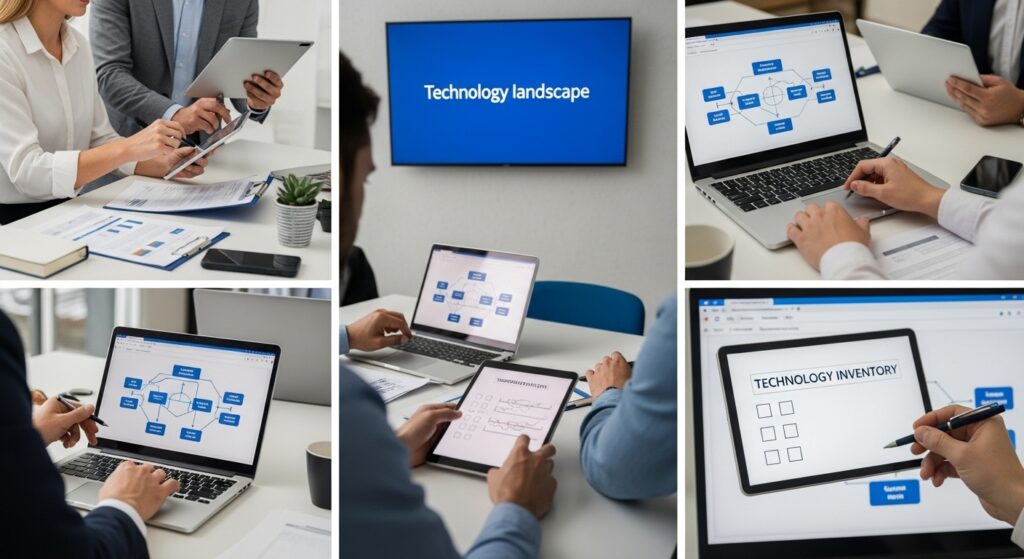
Over 80 percent of American accounting firms plan to increase their technology investment this year. For Miami professionals, the shift to digital tools can feel both urgent and complex as client expectations continue to rise. Understanding digital readiness, setting clear goals, and selecting the right solutions will help Miami CPAs build a modern practice that thrives in a fast changing market.
Table of Contents
- Step 1: Assess Client Needs and Digital Readiness
- Step 2: Define Measurable Business and Compliance Goals
- Step 3: Select Technology Solutions for Firm Growth
- Step 4: Implement Digital Tools and Client Workflows
- Step 5: Monitor Progress and Optimize Results
Quick Summary
| Key Insight | Explanation |
|---|---|
| 1. Assess Digital Readiness | Understand your clients’ tech infrastructure, challenges, and goals through a comprehensive digital maturity assessment. |
| 2. Set SMART Goals | Define Specific, Measurable, Achievable, Relevant, and Time-bound objectives for revenue growth and compliance. |
| 3. Choose Suitable Technologies | Select technology solutions that enhance operational efficiency and client engagement, avoiding trendy options. |
| 4. Implement Digital Workflows | Streamline processes and enhance client interactions by integrating user-friendly digital tools and client portals. |
| 5. Monitor and Optimize | Regularly track key performance indicators to evaluate progress and adjust strategies accordingly for continuous improvement. |
Step 1: Assess Client Needs and Digital Readiness
Assessing your clients’ digital readiness is crucial for creating an effective technology strategy that drives growth. This process involves understanding their current technological infrastructure, workflow challenges, and future aspirations.
Start by conducting a comprehensive digital maturity assessment with each client. According to the 2025 CPA Firm Tech Report, evaluating a firm’s technological capabilities requires a systematic approach. Begin with an in-depth questionnaire that explores their existing systems, pain points, and strategic objectives. Key areas to probe include current software usage, integration challenges, data management practices, and their comfort level with emerging technologies like cloud computing and artificial intelligence.
Pay special attention to workflow bottlenecks and manual processes that could benefit from digital transformation. The Future Ready Accountant report recommends focusing on moving core workflows to cloud platforms and training staff in digital tools. This means identifying repetitive tasks that could be automated and understanding which digital solutions might streamline their operations.
Warning: Avoid a one-size-fits-all approach. Each client’s digital readiness will vary significantly based on their size, industry, and technological comfort level. Customize your assessment and recommendations accordingly.
Once you complete this initial assessment, you’ll be prepared to develop a tailored digital strategy that addresses their specific needs and positions them for technological advancement.
Step 2: Define Measurable Business and Compliance Goals
Defining clear and actionable goals is the foundation of a successful digital strategy for Miami CPAs looking to boost revenue and ensure regulatory compliance. This crucial step will help transform your practice from reactive to proactive.
Start by implementing the SMART goal framework, which ensures your objectives are Specific, Measurable, Achievable, Relevant, and Time-bound. For your accounting practice, this means creating precise goals that go beyond vague aspirations. For instance, instead of saying “increase revenue,” define a specific target like “grow small business client base by 25% within six months by targeting local Miami entrepreneurs in tech and service industries.”
When developing these goals, focus on both business performance and compliance requirements. Wolters Kluwer recommends breaking down your objectives into quantifiable metrics that align with your firm’s strategic vision. This might include goals like reducing document processing time by 40%, implementing two new digital compliance tracking systems, or increasing client retention rate by 15% through enhanced digital service offerings.
Warning: Be realistic and avoid setting goals that stretch your resources too thin. Each objective should have a clear path to implementation and measurable outcomes that can be tracked and adjusted.
By establishing these precise, measurable goals, you create a strategic roadmap that will guide your digital transformation and help your Miami CPA practice navigate technological changes with confidence and purpose.
Step 3: Select Technology Solutions for Firm Growth
Selecting the right technology solutions is critical for Miami CPAs looking to transform their practice and drive sustainable growth. This step involves strategically evaluating and implementing tools that will modernize your operations and create competitive advantages.
Start by focusing on core technologies that can fundamentally improve your firm’s efficiency. The AICPA identifies key technologies essential for modern accounting practices, with cloud computing and digital workflow management standing out as game changers. Look for solutions that offer seamless integration across client management, document processing, tax preparation, and financial reporting platforms. Prioritize technologies that reduce manual data entry, automate repetitive tasks, and provide robust security measures for sensitive financial information.

Beyond basic functionality, Thomson Reuters emphasizes the importance of choosing technologies that not only improve operational efficiency but also help attract and retain top talent. Consider solutions with intuitive interfaces, mobile accessibility, and advanced analytics capabilities that can provide deeper insights for your clients. This might include AI powered tax preparation software, cloud based collaboration tools, secure client portals, and advanced reporting platforms that can help differentiate your firm in the competitive Miami market.
Warning: Avoid the temptation to implement every trendy technology. Select solutions that align directly with your specific business goals and client needs, and ensure your team receives comprehensive training to maximize adoption and effectiveness.
By carefully selecting technology solutions that enhance your firm’s capabilities, you will create a more agile, efficient, and client focused practice ready to thrive in the digital age.
Step 4: Implement Digital Tools and Client Workflows
Implementing digital tools and client workflows is a critical transformation that will modernize your accounting practice and create smoother interactions with your Miami clients. This step involves strategically integrating technology to streamline communication and service delivery.
Low cost digital tools can dramatically enhance client interactions, starting with shared document exchange platforms that provide secure and convenient file management. Focus on creating workflows that reduce manual touchpoints and minimize administrative overhead. For instance, implement client portals where documents can be uploaded electronically, automated intake forms that pre populate client information, and scheduling systems that allow clients to book consultations directly through your website.
When implementing these digital workflows, pay close attention to user experience and integration capabilities. CPA Crossings highlights the importance of strategic technology adoption that aligns with your firm’s specific operational needs. This means selecting tools that not only automate processes but also provide seamless communication channels between your team and clients. Consider solutions that offer real time document tracking, secure messaging, and integrated payment systems that make financial interactions more convenient for your Miami based clientele.
Warning: Successful digital workflow implementation requires comprehensive staff training. Ensure your team understands how to use new tools effectively and can guide clients through the transition.
By thoughtfully implementing digital tools and redesigning client workflows, you will create a more efficient practice that meets the expectations of modern clients and positions your firm as a technology forward accounting solution in the Miami market.
Step 5: Monitor Progress and Optimize Results
Monitoring progress and optimizing results is the final crucial step in your digital strategy roadmap that transforms data into actionable insights for your Miami accounting practice. This step ensures your digital transformation continues to drive meaningful growth and efficiency.
Selecting the right key performance indicators will be fundamental to tracking your firm’s digital strategy success. Focus on developing a comprehensive dashboard that tracks metrics across multiple dimensions including revenue growth, client acquisition rates, workflow efficiency, technology adoption speed, and staff productivity. Look for indicators that demonstrate both financial performance and operational improvements such as average time saved per client engagement, percentage of automated processes, client satisfaction scores, and new service line revenue.
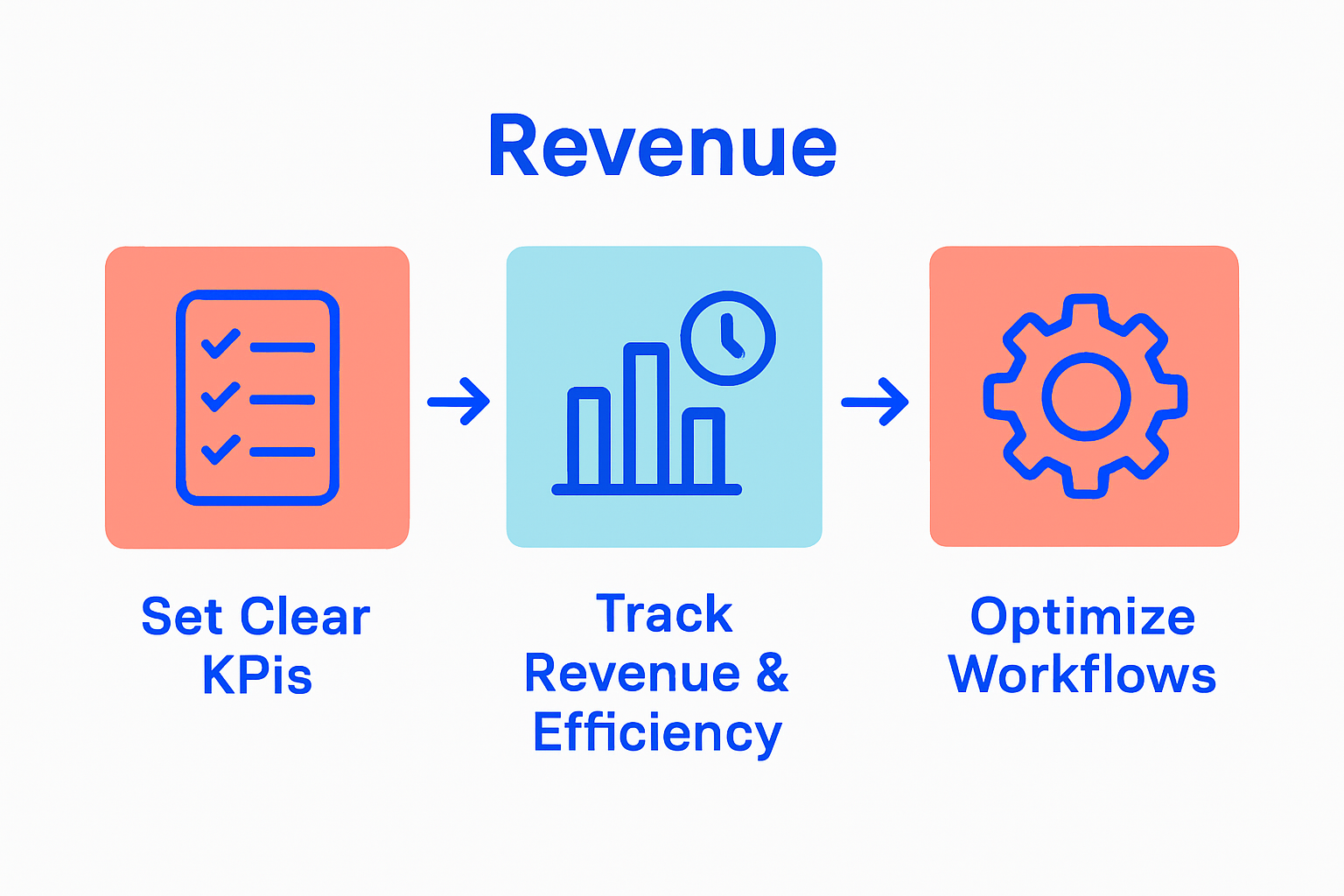
Beyond financial tracking, compliance professionals recommend establishing clear measurement frameworks that align technological investments with regulatory requirements and strategic objectives. This means creating quarterly review processes where you systematically assess how your digital tools are performing not just in terms of efficiency but also in maintaining rigorous compliance standards. Pay special attention to metrics that show risk mitigation, data security improvements, and consistent adherence to industry regulations.
Warning: Avoid becoming overly fixated on metrics. Remember that numbers tell a story but should not replace human judgment and strategic thinking.
By consistently monitoring your progress and remaining agile in your optimization approach, you will create a dynamic digital strategy that evolves with your Miami accounting firm’s growing needs and market opportunities.
Accelerate Your Digital Strategy and Boost Revenue Today
Miami CPAs face unique challenges in building digital readiness while defining measurable goals and selecting technology that truly drives firm growth. This journey can feel overwhelming when trying to transform workflows, maintain compliance, and stay competitive without stretching your resources thin. If you want to land bigger clients, scale efficiently, and reclaim your life, the key lies in a strategic, customized approach that adapts with your firm’s needs.
Start by exploring our Digital-transformation Archives – Stratgetic IT Consultants For Accountants to learn how proven technology solutions can streamline your workflows and enhance client engagement.
Take the decisive next step today. Visit Transform42 to discover how we help Miami professionals like you build the capabilities and compliance your clients expect. Learn effective process improvements through our Processes Archives and empower your leadership to embrace innovation at every level. Don’t let digital complexity hold your firm back. Connect with experts who understand your goals and can help turn your digital strategy roadmap into reality.
Frequently Asked Questions
How can I assess my CPA firm’s digital readiness?
To assess your CPA firm’s digital readiness, conduct a comprehensive digital maturity assessment through an in-depth questionnaire. Focus on understanding your existing technological infrastructure, workflow challenges, and future aspirations.
What is the SMART goal framework for CPA firms?
The SMART goal framework helps in defining clear and actionable goals that are Specific, Measurable, Achievable, Relevant, and Time-bound. For example, set a goal to increase the small business client base by 25% within six months by targeting local entrepreneurs.
What core technologies should I consider for my CPA firm?
Consider implementing cloud computing and digital workflow management as core technologies. Focus on solutions that improve efficiency, reduce manual data entry, and seamlessly integrate with your existing systems.
How do I effectively implement digital tools in my accounting practice?
Implement digital tools by creating workflows that streamline communication and service delivery. Start by setting up client portals for secure document exchange and automated workflows that minimize manual processes, aiming to reduce administrative overhead by at least 30%.
What key performance indicators (KPIs) should I track for my digital strategy?
Track KPIs such as revenue growth, client acquisition rates, and workflow efficiency to measure the success of your digital strategy. Establish a dashboard to review these metrics quarterly and adjust your strategy as necessary.
How can I optimize results from my digital transformation efforts?
Optimize results by continuously monitoring progress and remaining agile in your approach. Conduct quarterly assessments to evaluate your digital tools’ performance, focusing on efficiency and compliance metrics to ensure alignment with your strategic goals.
Recommended
- 8 Essential Digital Strategy Tips for Miami CPAs – Stratgetic IT Consultants for Accountants
- 8 Essential Digital Strategy Tips for Miami CPAs
- Digital Strategy Explained: Understanding Its Importance – Stratgetic IT Consultants for Accountants
- Digital Strategy Explained: Understanding Its Importance
- How to Set Business Goals for Measurable Growth Success – Projector Display
- Understanding the Importance of Customer Communication – My WordPress
- Content Strategy Guide for SMBs: Complete Approach – Go Online Now