
More than 60 percent of american accounting firms struggle with successful organizational change. In a fast-evolving industry, adapting quickly can mean the difference between growth and falling behind. Understanding proven steps for assessing readiness, building strong communication, and empowering your team gives your firm the edge needed for effective transformation. This guide breaks down each phase, providing practical insights for smoother transitions and lasting improvements that matter to every american accounting practice.
Table of Contents
- Step 1: Assess Readiness For Organizational Change
- Step 2: Develop A Tailored Communication Plan
- Step 3: Engage And Empower Key Team Members
- Step 4: Implement Changes With Supportive Resources
- Step 5: Monitor Progress And Address Challenges
- Step 6: Evaluate Results And Reinforce Improvements
Quick Summary
| Key Insight | Explanation |
|---|---|
| 1. Assess readiness early | Conduct a thorough assessment of your firm’s culture and systems to identify challenges and opportunities for change. |
| 2. Develop a strategic communication plan | Create a communication strategy that caters to different stakeholder needs, ensuring transparency and empathy throughout the transition. |
| 3. Engage key team members actively | Identify and empower influential staff to lead change efforts, making them feel valued and involved in the process. |
| 4. Implement with comprehensive resources | Build a support infrastructure, including training and resources, to assist team members as they adapt to changes. |
| 5. Continuously monitor and evaluate | Establish a framework for tracking progress and gathering feedback to make timely adjustments and reinforce improvements. |
Step 1: Assess readiness for organizational change
Assessing your accounting firm’s readiness for organizational change is the critical first step in creating a successful transformation strategy. By understanding your current organizational landscape, you can identify potential challenges and opportunities before implementing any significant shifts.
Start by conducting a comprehensive organizational assessment that examines multiple dimensions of your firm. Organizational readiness involves evaluating key systems, processes, and human dynamics that might impact your change initiatives. Focus on several core areas: leadership commitment, staff motivation, institutional resources, and overall organizational climate. A thorough evaluation will reveal potential resistance points and strengths you can leverage during the transition.
One practical approach is developing a structured readiness assessment survey for your team. This survey should explore employees’ attitudes toward change, their understanding of proposed modifications, and their perceived capacity to adapt. Pay special attention to personality attributes of team leaders and staff members. Remember that successful change management isn’t just about processes – it’s about people. Accounting firms with high cultural agility and strong communication channels typically experience smoother transitions. By understanding your company’s cultural dynamics, you can anticipate and mitigate potential implementation challenges before they become significant roadblocks.
Step 2: Develop a tailored communication plan
Creating a strategic communication plan is fundamental to successfully navigating organizational change within your accounting firm. Your goal is to design a communication approach that keeps everyone informed, aligned, and engaged throughout the transformation process.
Effective communication strategies are crucial for supporting organizational transitions and maintaining team morale. Start by mapping out key stakeholders and their potential reactions to change. This means understanding different communication needs for partners, senior accountants, junior staff, and administrative personnel. Internal communication trends now emphasize supporting mental health and work-life balance during significant organizational shifts, so your plan should prioritize transparency and empathy.
Your communication plan should include multiple channels and touchpoints. Consider a mix of team meetings, email updates, one-on-one discussions, and digital platforms to ensure consistent messaging. Be prepared to provide context about why changes are happening, what specific modifications will occur, and how these changes will ultimately benefit the firm and its employees. Anticipate questions and potential resistance by developing clear, concise responses that demonstrate thoughtful planning and genuine consideration for your team’s concerns. Regular check-ins and opportunities for feedback will help create a sense of inclusion and reduce uncertainty during the transition.
Step 3: Engage and empower key team members
Engaging and empowering your accounting firm’s key team members is critical to successful organizational change. Your mission is to transform potential resistance into active support by creating meaningful opportunities for involvement and leadership.

Research demonstrates a direct connection between work engagement and readiness to change, highlighting the importance of making your team feel valued during transitions. Start by identifying influential team members across different levels of your organization. These might include senior partners, experienced accountants, team leaders, and emerging talents who have demonstrated strong interpersonal skills and adaptability. Digital transformation requires assessing an organization’s culture and capability to effectively support change initiatives.
Create structured opportunities for these key team members to provide input and take ownership of the change process. This could involve establishing cross functional change management teams, hosting collaborative workshops, or designating change champions who can help communicate and model the desired organizational shifts. Provide additional training, resources, and support to help these team members feel equipped to lead by example. Remember that genuine empowerment means giving real decision making authority, not just symbolic gestures. By investing in your team’s development and creating a sense of shared purpose, you transform potential skeptics into active change advocates who can drive your firm’s transformation from within.
Step 4: Implement changes with supportive resources
Implementing organizational changes requires a strategic approach that goes beyond simply announcing modifications. Your goal is to create a comprehensive support system that guides your accounting firm smoothly through the transition while minimizing disruption and maintaining team confidence.
Successful change implementation depends on aligning your organization’s vision and strategies with the proposed changes. Begin by developing a detailed implementation roadmap that breaks down complex transformations into manageable phases. This roadmap should include clear timelines, specific milestones, and designated responsibilities for each team member involved in the change process. Effective governance structures play a critical role in facilitating successful change initiatives by providing oversight and support.
Prioritize creating a robust resource infrastructure to support your team during the transition. This might include specialized training programs, access to digital learning platforms, dedicated change management support staff, and regular check in sessions to address concerns and gather feedback. Consider establishing a central resource hub where team members can find guidance documents, video tutorials, FAQ sections, and direct contact information for change management support. Recognize that different team members will adapt at different rates, so your resources should be flexible and accessible across various learning styles and comfort levels with change. By providing comprehensive support, you demonstrate your commitment to your team’s success and make the transition feel more collaborative than intimidating.
Step 5: Monitor progress and address challenges
Monitoring organizational change requires a systematic and proactive approach that goes beyond simple observation. Your objective is to create a dynamic tracking mechanism that allows you to quickly identify potential roadblocks and adjust your strategy in real time.
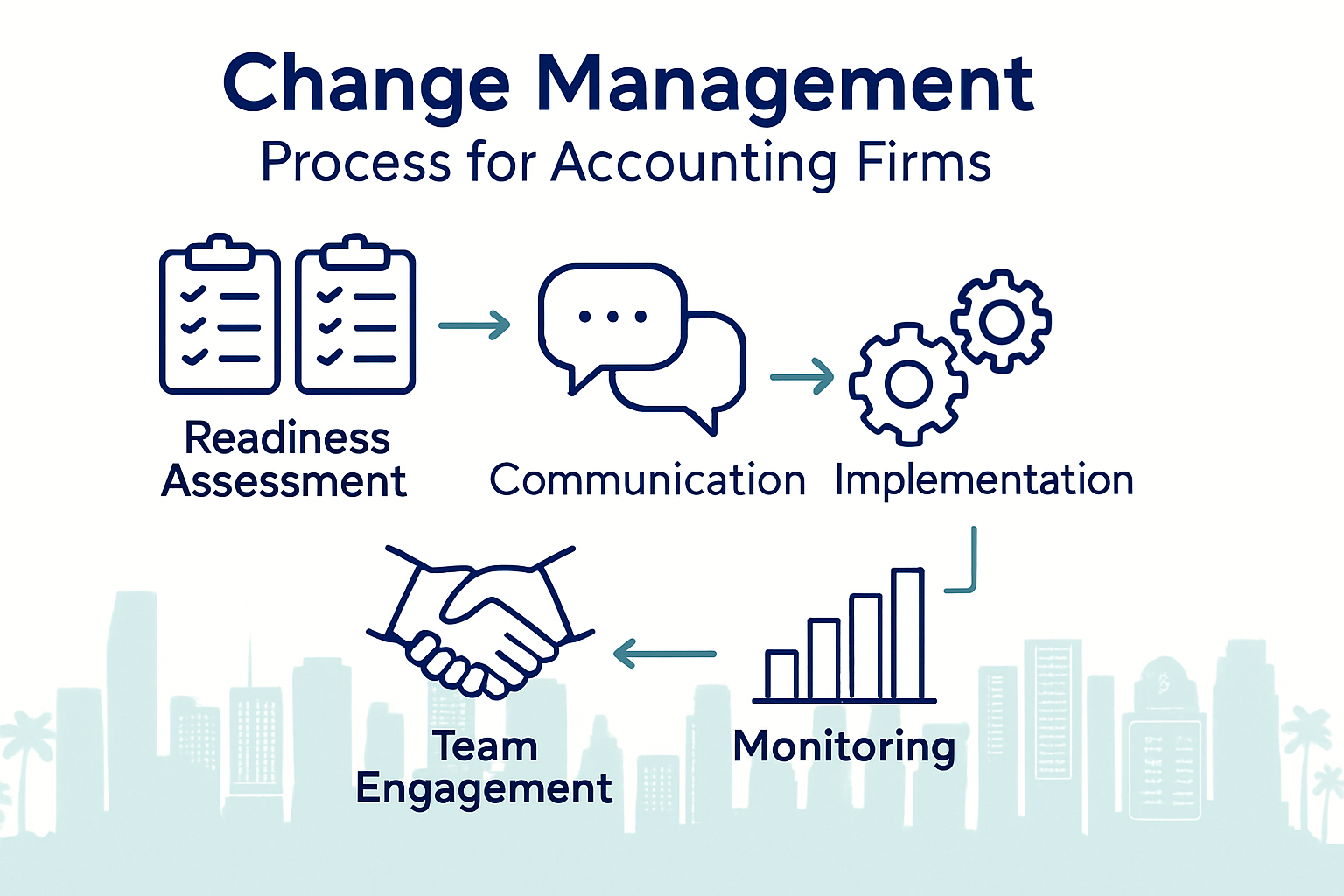
Digital readiness assessment tools can help organizations systematically evaluate transformation progress, providing critical insights into areas that need attention. Develop a comprehensive monitoring framework that includes quantitative metrics and qualitative feedback channels. This might involve regular team surveys, performance tracking dashboards, and structured check in meetings that allow team members to share their experiences and challenges openly. Structured assessment scales can help evaluate organizational readiness and identify potential obstacles during the change implementation process.
Create a responsive feedback loop that transforms challenges into opportunities for improvement. This means not just collecting data, but actively responding to the insights you gather. Be prepared to make nimble adjustments to your change management strategy, provide additional support where needed, and celebrate incremental victories. Recognize that change is not a linear process and that setbacks are normal. By maintaining transparency, showing genuine commitment to your team’s success, and demonstrating flexibility, you create an environment where continuous improvement becomes a shared organizational value.
Step 6: Evaluate results and reinforce improvements
Evaluating the outcomes of organizational change is more than just tallying metrics it is about understanding the deeper impact of your transformation efforts. Your goal is to create a comprehensive assessment that validates your change strategy and identifies opportunities for ongoing refinement.
Specialized assessment frameworks can help measure organizational readiness and effectiveness following major transitions. Develop a multifaceted evaluation approach that combines quantitative performance indicators with qualitative insights from team members. This might include comparing key performance metrics before and after the change, conducting in depth interviews, and analyzing team engagement surveys. Identifying key drivers and assigning specific metrics can help organizations understand their change readiness and continuously improve their approach.
Transform your evaluation into a catalyst for future growth by creating a culture of continuous learning. Share transparent results with your team, highlighting both successes and areas for improvement. Recognize and reward team members who have demonstrated exceptional adaptability and contributed to the change process. Develop targeted professional development programs that build on the skills and insights gained during the transformation. By treating evaluation as an opportunity for collective reflection and growth, you turn a potentially administrative exercise into a powerful mechanism for ongoing organizational development.
Strengthen Your Miami Accounting Firm’s Change Management with Trusted IT Solutions
Navigating organizational change in your accounting firm requires more than just good intentions. The challenges of aligning leadership, empowering teams, and maintaining clear communication demand strategic support designed for your unique needs. At Transform42, we understand these pain points from leadership commitment to team engagement and technology adoption. Our focus on seamless processes and cultural agility helps eliminate unplanned downtime and security risks that can derail your transition.
Discover how our expertise in Processes and People combined with robust Digital Transformation strategies delivers 99.99% uptime and rapid 15-minute response times. Don’t let technology challenges slow your firm’s growth or risk compliance issues during change. Visit Transform42 now to align your firm’s vision and strategy with IT solutions crafted to ensure a confident and smooth organizational change experience. Take control of your transformation today.
Frequently Asked Questions
How can I assess my accounting firm’s readiness for change?
To assess your accounting firm’s readiness for change, conduct a thorough organizational assessment that evaluates leadership commitment, staff motivation, and resources. Create a structured survey to gauge employee attitudes and perceptions, aiming to complete this assessment within two weeks.
What communication strategies should I use during the change process?
Develop a tailored communication plan that includes regular updates through team meetings, emails, and one-on-one discussions. Ensure your messaging addresses the reasons for change and its benefits, starting this communication at least one month before any major shifts occur.
How can I engage my team members in the change management process?
Engage your team by identifying influential members and involving them in the change process. Create opportunities for their input and establish cross-functional teams, aiming to have these structures in place within the first 30 days of your transformation strategy.
What resources should I provide to support my team during the changes?
Provide a robust support system that includes training programs, access to digital resources, and regular check-ins. Ensure these resources are available to all team members as changes are implemented, ideally launching them alongside major transitions.
How do I monitor the progress of my organizational changes?
Establish a comprehensive monitoring framework that includes both quantitative metrics and qualitative feedback from your team. Implement this tracking system continuously, reviewing progress weekly to identify and address any roadblocks promptly.
How can I evaluate the results of the changes made?
Create a multifaceted evaluation approach that combines performance metrics and team feedback following the changes. Plan to assess outcomes within one to three months after the implementation and use this evaluation to identify areas for improvement.
Recommended
- Role of Change Management: Everything You Need to Know
- Role of Change Management: Everything You Need to Know – Stratgetic IT Consultants for Accountants
- How to Manage IT Services for Miami Accounting Firms – Stratgetic IT Consultants for Accountants
- Understanding Digital Change Management in Accounting – Stratgetic IT Consultants for Accountants