
More than 60 percent of american accounting firms report that unclear project goals slow their digital transformation efforts. Streamlining project management is more urgent than ever, especially with shifting regulations and tight client deadlines. This guide shows how a proactive approach to organizing, tracking, and reviewing digital projects can help your team avoid confusion and drive measurable improvements in efficiency and compliance.
Table of Contents
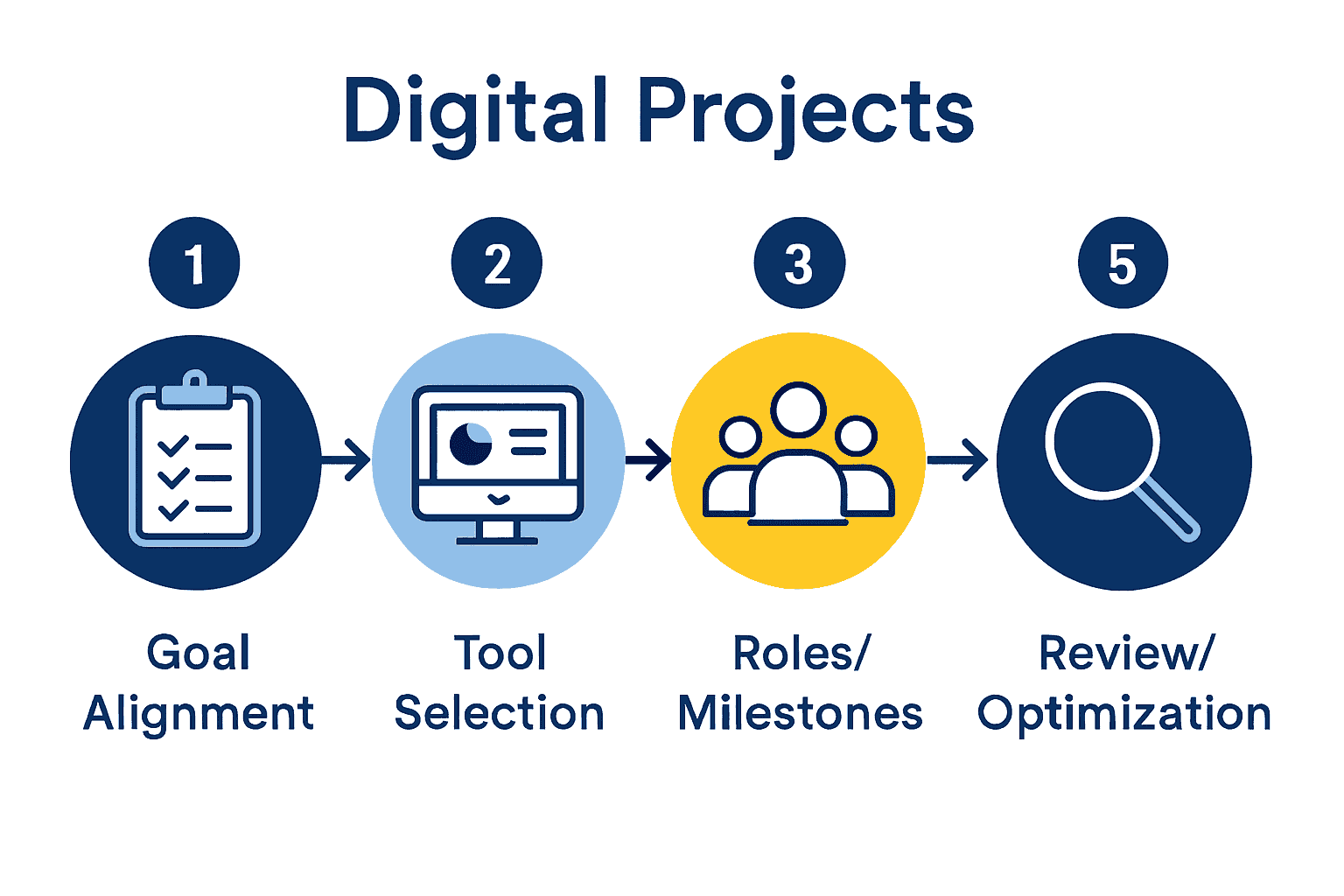
- Step 1: Assess Project Requirements And Align Business Goals
- Step 2: Select And Configure The Right Digital Project Tools
- Step 3: Assign Clear Roles And Set Project Milestones
- Step 4: Monitor Progress And Address Compliance Issues
- Step 5: Review Project Outcomes And Optimize Workflows
Quick Summary
| Key Message | Explanation |
|---|---|
| 1. Align project goals with business objectives | Clearly define project requirements linked to firm objectives to ensure successful outcomes and team alignment. |
| 2. Choose tools that integrate well | Select digital project management tools that can sync with existing workflows and enhance overall efficiency for your accounting firm. |
| 3. Define roles and set achievable milestones | Assign clear responsibilities and measurable milestones to empower team members and maintain accountability throughout the project. |
| 4. Monitor progress and ensure compliance | Implement a robust monitoring system to track project progress and compliance with regulations, allowing for timely adjustments. |
| 5. Conduct thorough post-project reviews | Analyze completed projects to identify successes and areas for improvement, fostering a continuous learning environment in your firm. |
Step 1: Assess project requirements and align business goals
Successful digital projects in accounting firms begin with crystal clear goal alignment and strategic requirement mapping. Your first critical task is understanding exactly what your firm needs and how those requirements connect to broader business objectives.
Start by conducting a comprehensive internal assessment that digs deep into your current operational workflows. According to Accounting Insights, utilizing project management tools like Asana or Trello can facilitate transparent task tracking and milestone monitoring. This helps ensure every team member understands their specific responsibilities and how they contribute to overarching firm goals.
When mapping project requirements, break down your objectives into measurable, specific components. Focus on quantifiable outcomes such as reducing processing time, improving client communication efficiency, or streamlining reporting mechanisms. Involve key stakeholders from different departments to gather comprehensive perspectives and validate your proposed digital transformation strategy.
ProTip: Always maintain flexibility in your goal setting. Digital projects rarely go exactly as planned, so build in buffer time and resources for potential adjustments. Rigidity can derail even the most well conceived project roadmap.
With your requirements clearly defined and goals strategically aligned, you are now prepared to move forward into detailed project planning and resource allocation. Your next step will involve selecting the right technological tools and team members to execute your vision.
Step 2: Select and configure the right digital project tools
Choosing the perfect digital project management tool can make or break your accounting firm productivity. This step focuses on identifying and implementing software that will streamline your workflows and maximize team efficiency.
Cloudwards.net highlights the critical importance of selecting tools with robust integration capabilities. For Miami accounting firms, this means finding solutions like Wrike that offer over 400 potential integrations, allowing you to customize project management processes to match your unique workflow requirements. When evaluating tools, prioritize platforms that can seamlessly connect with your existing accounting software, client management systems, and communication platforms.
Start by mapping out your specific operational needs. Look for tools that provide comprehensive features such as real time task tracking, customizable dashboards, client collaboration spaces, and automated reporting. Pay close attention to security features, especially given the sensitive financial data accountants manage.
 Consider cloud based solutions that offer strong encryption, two factor authentication, and compliance with financial industry regulations.
ProTip: Schedule free trials with multiple project management platforms. Test each tool with actual team members and collect feedback on usability, integration potential, and overall workflow enhancement before making a final commitment.
With the right digital tools selected and configured, you are now prepared to implement your project management strategy and train your team on the new system. Your next step involves creating a comprehensive onboarding and training plan to ensure smooth adoption of your chosen digital project management solution.
Step 3: Assign clear roles and set project milestones
Successful digital projects in accounting firms demand precise role definition and strategic milestone planning. Your goal is to create a transparent roadmap that empowers every team member to understand their specific responsibilities and contribution to the overall project.
According to Karbon, utilizing workflow templates and precise task assignments ensures team members fully comprehend their individual duties. By leveraging Accounting Insights recommended project management platforms like Asana or Trello, you can establish clear tracking mechanisms that maintain accountability throughout the project lifecycle.
Begin by conducting a comprehensive skills assessment of your team. Match individual strengths with specific project components, ensuring each team member is positioned to excel in their assigned role. Create detailed role descriptions that outline expectations, deliverables, and key performance indicators.
Break down your project into distinct phases and establish measurable milestones for each stage, with clear deadlines and specific outcome targets.
ProTip: Build flexibility into your milestone planning. While structured goals are essential, allow room for adaptive problem solving and unexpected challenges that might arise during complex digital transformation projects.
With roles clearly defined and milestones strategically mapped, you are now prepared to launch your project and begin active implementation. Your next step involves initiating team communication and kickoff protocols to ensure everyone understands their responsibilities and the project vision.
Step 4: Monitor progress and address compliance issues
Effective digital project management in accounting firms requires vigilant progress tracking and proactive compliance management. Your objective is to create a robust monitoring system that ensures project success while maintaining strict regulatory standards.
Karbon highlights the critical importance of integrated workflows and real-time updates for identifying and addressing potential compliance challenges. Thomson Reuters recommends establishing clear performance metrics to enable proactive strategy adaptation. This means implementing daily or weekly check-ins that review key performance indicators such as task completion rates, regulatory adherence, and potential risk factors.
Develop a comprehensive dashboard that provides real-time visibility into project progress and compliance metrics. This should include detailed tracking of critical milestones, resource allocation, potential bottlenecks, and emerging regulatory requirements. Leverage your project management tools to set up automated alerts that notify team leaders about potential delays, compliance risks, or performance gaps that require immediate attention.
ProTip: Create a flexible compliance matrix that allows for quick adjustments. Regulatory environments change rapidly, so your monitoring approach must be adaptable and responsive to new guidelines and industry standards.
With a solid progress monitoring and compliance tracking system in place, you are now prepared to manage potential risks and maintain project momentum. Your next step involves implementing continuous improvement mechanisms and preparing for potential mid project course corrections.
Step 5: Review project outcomes and optimize workflows
The final stage of digital project management is a critical reflection and improvement process that transforms your team learn and grow from every completed engagement. Your goal is to conduct a comprehensive review that uncovers insights and opportunities for workflow enhancement.
Karbon emphasizes the importance of thoroughly analyzing completed projects to identify areas for improvement. Accounting Insights recommends utilizing project management tools to track tasks and milestones, which facilitates a structured approach to reviewing project outcomes and aligning future strategies with organizational objectives.
Begin by organizing a comprehensive post project review meeting with key team members. Conduct a detailed analysis of project metrics including time spent on various tasks, budget adherence, client satisfaction, and compliance with initial project goals. Create a structured evaluation framework that allows for objective assessment of both successes and challenges. Identify specific workflow bottlenecks, communication gaps, and technological limitations that emerged during the project.
ProTip: Implement a continuous improvement mindset. Treat each project review as a learning opportunity rather than a fault finding exercise. Encourage team members to provide candid feedback and propose innovative solutions for future workflow optimization.
With a thorough review completed and insights gathered, you are now positioned to implement meaningful improvements in your digital project management approach. Your next step involves translating these insights into actionable strategies that will enhance your firm efficiency and project delivery capabilities.
Empower Your Miami Accounting Firm with Expert Digital Project Management Support
Managing digital projects comes with unique challenges such as aligning strategic goals, ensuring regulatory compliance, and adopting the right tools for seamless collaboration. This article highlights how Miami accounting firms must focus on clear role assignment, continuous progress monitoring, and flexible workflows to drive successful digital transformations. At the core of your digital success is the need to avoid costly downtime and security risks while maintaining ironclad compliance.
Expert guidance can make all the difference. Our team at Strategic IT Consultants For Accountants understands these pain points and is dedicated to aligning your technology strategy precisely with your business goals. With guaranteed 99.99% uptime and a 15-minute response promise, we eliminate the stresses around system failures and regulatory setbacks so you can focus on delivering client value.
Take control of your digital projects today by exploring how our proven processes and leadership-driven approach can streamline your firm’s operations. Visit transform42inc.com to schedule a consultation and start transforming your firm’s project outcomes with confidence and peace of mind.
Frequently Asked Questions
How can I assess the digital project requirements for my accounting firm?
Start by conducting a comprehensive internal assessment of your current operational workflows. Determine specific objectives, such as reducing processing time or improving client communication, and gather input from key stakeholders across departments to ensure all perspectives are considered.
What factors should I consider when selecting project management tools?
Focus on integration capabilities with your existing systems, such as accounting software and communication platforms. Prioritize features like real-time tracking, customizable dashboards, and strong security measures to ensure that the tool enhances productivity and protects sensitive data.
How do I assign roles and set project milestones effectively?
Begin by conducting a skills assessment of your team to match strengths with specific project components. Create detailed role descriptions and establish measurable milestones for each project phase, ensuring clear expectations and deadlines for all team members.
What steps can I take to monitor project progress and compliance?
Implement a robust monitoring system that includes regular check-ins to review key performance indicators. Use a dashboard to track project milestones and compliance metrics, and set up automated alerts for potential delays or compliance risks to maintain project momentum.
How can I review project outcomes to optimize future workflows?
Conduct a post-project review meeting with your team to analyze project metrics and gather feedback.
 Identify successes and challenges, then formulate specific improvements to enhance efficiency and address any workflow bottlenecks for future digital projects.
Recommended
- Blog Archives – Stratgetic IT Consultants For Accountants
- Digital Strategy Explained: Understanding Its Importance
- Understanding the Role of Project Management in Digital Transformation
- Understanding the Role of Project Management in Digital Transformation – Stratgetic IT Consultants for Accountants
- Understanding the Role of Digital Marketing Agencies | Reddog Consulting Group
- Doing Small Things Right-A Finance Perspective – team I