
Over 60 percent of american organizations report that digital transformation leads to measurable gains in efficiency and customer satisfaction. As technology shifts the rules of business, understanding what digital transformation truly means becomes critical for any professional striving to stay ahead. This article clears up the confusion around digital transformation and cuts through the hype, offering practical insights for american firms eager to navigate the evolving digital landscape with confidence.
Table of Contents
- Defining Digital Transformation and Its Purpose
- Core Technologies Driving Digital Transformation
- Digital Transformation for Miami Accounting Firms
- Key Risks, Compliance, and Security Concerns
- Costs, ROI, and Common Implementation Challenges
Key Takeaways
| Point | Details |
|---|---|
| Digital Transformation as a Strategy | It is a fundamental business strategy that shifts organizations to become digital-centric, integrating technology into core planning. |
| Core Technologies for Transformation | Important technologies like cloud computing, AI, and data analytics are essential for reshaping operations and enhancing decision-making. |
| Risks and Compliance | Digital transformation increases cybersecurity risks; firms must implement robust security measures to protect sensitive data and ensure regulatory compliance. |
| Investment vs. ROI | Firms need to treat digital transformation as a strategic investment with the potential for significant long-term benefits in efficiency and client service. |
Defining Digital Transformation and Its Purpose
Digital transformation isn’t just another tech buzzword – it’s a fundamental business strategy that reshapes how organizations operate and deliver value. According to Walton, it represents a profound shift from simply using technology to becoming a digital-centric organization that integrates digital resources into core strategic planning.
At its heart, digital transformation goes way beyond implementing new software or buying fancy gadgets. TD explains it as a comprehensive process of using digital technologies to create entirely new business models and processes. This isn’t a one-time project – it’s a continuous journey that demands a company-wide culture shift to modernize practices and deliver enhanced value to customers.
For accountants and financial professionals, digital transformation means reimagining traditional workflows. It’s about leveraging technology to:

- Automate repetitive manual tasks
- Improve data accuracy and real-time reporting
- Enhance client communication and service delivery
- Reduce operational costs
- Enable more strategic, value-added consulting work
The ultimate goal? Transforming from a compliance-focused practice to a proactive, technology-enabled advisory service that provides deeper insights and more meaningful client relationships. Navigating the Digital Future: Culture, Strategy, and Success offers more insights into this strategic approach that goes far beyond mere technological implementation.
Core Technologies Driving Digital Transformation
Digital transformation isn’t just about adopting new technologies – it’s about strategically leveraging powerful tools that fundamentally reshape business operations. Energy-Security highlights cloud computing as a cornerstone technology, offering businesses unprecedented flexibility, scalability, and cost-efficiency that enables rapid adaptation to evolving market demands.
Beyond cloud infrastructure, Technology emphasizes the critical role of artificial intelligence, machine learning, and data analytics in powering digital transformation. These technologies facilitate data-driven decision-making, dramatically improve customer interactions, and optimize operational workflows across industries.
For accounting professionals, these core technologies translate into tangible benefits:
- Automated data processing and reconciliation
- Real-time financial reporting and insights
- Predictive analytics for financial forecasting
- Enhanced cybersecurity and compliance monitoring
- Intelligent client service and personalized advisory capabilities
As the technology landscape continues to evolve, professionals who embrace these transformative tools will position themselves at the forefront of innovation. Redefining Growth: The Tech Innovations Hyper-Scaling Modern Businesses provides deeper insights into how cutting-edge technologies are reshaping business strategies across sectors.
Digital Transformation for Miami Accounting Firms
Miami’s dynamic business landscape demands that accounting firms evolve beyond traditional number-crunching. Digital transformation isn’t just a tech upgrade – it’s a strategic imperative for local firms looking to compete in an increasingly digital marketplace. From Little Havana to Brickell, accounting professionals are reimagining how they deliver value to clients through innovative technological solutions.
Local accounting firms face unique challenges that make digital transformation critical. Miami’s multicultural business environment, with its heavy concentration of small businesses, startups, and international enterprises, requires flexible, adaptive technological approaches. This means implementing cloud-based solutions that can handle complex multilingual reporting, integrating advanced data analytics to provide deeper insights, and developing robust cybersecurity protocols that protect sensitive financial information.
Key digital transformation strategies for Miami accounting firms include:
- Multilingual cloud accounting platforms
- Automated compliance and tax preparation tools
- Real-time financial dashboards for diverse client bases
- Secure remote collaboration technologies
- AI-powered financial forecasting and risk assessment
8 Types of Digital Transformation for Miami Accounting Firms offers a comprehensive roadmap for local firms looking to navigate this technological transition, ensuring they remain competitive in South Florida’s rapidly evolving business ecosystem.
Key Risks, Compliance, and Security Concerns
Digital transformation introduces a complex landscape of potential risks that accounting firms must carefully navigate. The shift to digital platforms dramatically expands potential vulnerabilities, transforming cybersecurity from a technical issue into a critical business strategy. Firms are now dealing with unprecedented challenges in protecting sensitive financial data, maintaining client confidentiality, and ensuring regulatory compliance across multiple digital touchpoints.
The stakes are incredibly high for accounting professionals. A single security breach can result in catastrophic consequences – from massive financial penalties and legal liabilities to irreparable damage to professional reputation. Compliance isn’t just about avoiding penalties; it’s about maintaining the trust that is the cornerstone of any successful accounting practice. This means implementing robust security protocols that can protect against evolving cyber threats while maintaining the flexibility and accessibility that modern clients demand.
Key security and compliance considerations include:
- Multi-factor authentication systems
- End-to-end data encryption
- Regular security vulnerability assessments
- Comprehensive staff cybersecurity training
- Strict access control and user permission management
- Continuous monitoring and real-time threat detection
- Compliance with industry-specific regulations like GDPR and CCPA
Complete Guide to Cyber Security for Miami CPAs offers accounting professionals a strategic roadmap for building a resilient, secure digital infrastructure that protects both client data and professional reputation.
Costs, ROI, and Common Implementation Challenges
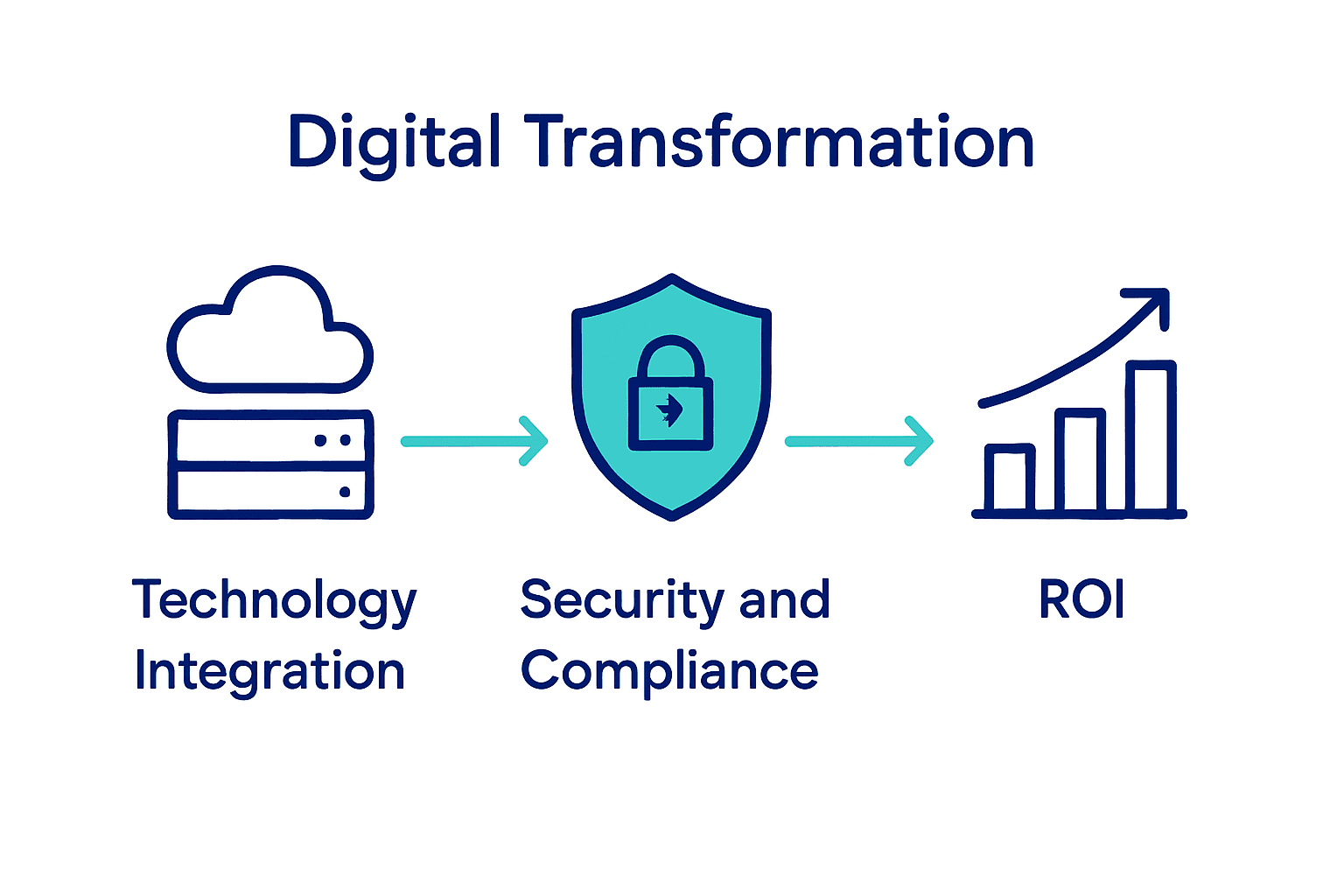
Digital transformation represents a significant investment that goes far beyond simple technology purchases. According to McKinsey, successful digital transformation requires clear leadership, realistic budgeting, and proactively addressing challenges like legacy systems and skill gaps to achieve meaningful return on investment.
Accounting firms must view digital transformation as a strategic investment, not just an expense. The initial costs can be substantial – including technology infrastructure, software licenses, training programs, and potential workflow redesigns. However, the long-term benefits often dramatically outweigh these upfront expenses. Firms can expect increased operational efficiency, improved client service, enhanced data accuracy, and the ability to offer more sophisticated, value-added advisory services.
Common implementation challenges include:
- High initial technology investment costs
- Resistance to change from staff and leadership
- Complex integration with existing legacy systems
- Skill gaps and need for continuous staff training
- Data migration and system compatibility issues
- Maintaining regulatory compliance during transition
- Balancing technological innovation with cost constraints
Redefining Project Management: Digital Solutions for Budget Overruns provides additional insights into managing the financial complexities of technological transformation for professional services firms.
Unlock the Full Potential of Digital Transformation for Your Miami Accounting Firm
Digital transformation is more than just technology updates. It requires rethinking processes, navigating compliance challenges, and securing sensitive client data while embracing innovation. Your firm needs a partner who understands these critical pain points and delivers ironclad compliance, nonstop reliability, and strategic alignment with your business goals. This journey demands expert guidance to avoid costly downtime and regulatory risks while maximizing digital tools that empower your team and clients.
Empower your Miami accounting firm with tailored solutions from Transform42, where we align IT strategy with your vision. Explore how our services lead the way in Digital-transformation Archives – Stratgetic IT Consultants For Accountants and streamline your workflows with best-in-class Processes Archives – Stratgetic IT Consultants For Accountants. Ready to experience unmatched uptime, guaranteed rapid response, and secure digital innovation? Visit Transform42 now and take the first step toward a future-proof, digitally empowered practice.
Frequently Asked Questions
What is digital transformation?
Digital transformation is a comprehensive business strategy that reshapes how organizations operate and deliver value by integrating digital technologies into their core processes and models.
Why is digital transformation important for businesses?
Digital transformation is crucial for businesses as it enables them to adapt to market demands, improve operational efficiency, enhance customer experiences, and maintain a competitive edge in an increasingly digital landscape.
What are the key technologies driving digital transformation?
Key technologies driving digital transformation include cloud computing, artificial intelligence, machine learning, data analytics, and automation tools, which facilitate improved decision-making, operational workflows, and customer interactions.
What are the challenges of implementing digital transformation in accounting firms?
Challenges of implementing digital transformation in accounting firms include high initial costs, resistance to change from staff, integration with legacy systems, skill gaps among employees, and maintaining compliance during the transition.
Recommended
- Avoiding Digital Transformation Failure
- Navigating the Digital Future: Culture, Strategy, and Success
- Understanding Digital Transformation Trends 2025 – Stratgetic IT Consultants for Accountants
- Understanding What is Business Digitalization
- Role of Digital Transformation: Complete Guide for Retailers | Reddog Consulting Group