
Over 90 percent of american accountants now recognize that a digital workplace is no longer optional for client service and growth. Yet for many Miami CPA firms, upgrading technology brings big questions and even bigger pressure to choose the right path. This step by step approach breaks down digital transformation into manageable tasks, offering practical solutions for security, efficiency, and real progress in your accounting practice.
Table of Contents
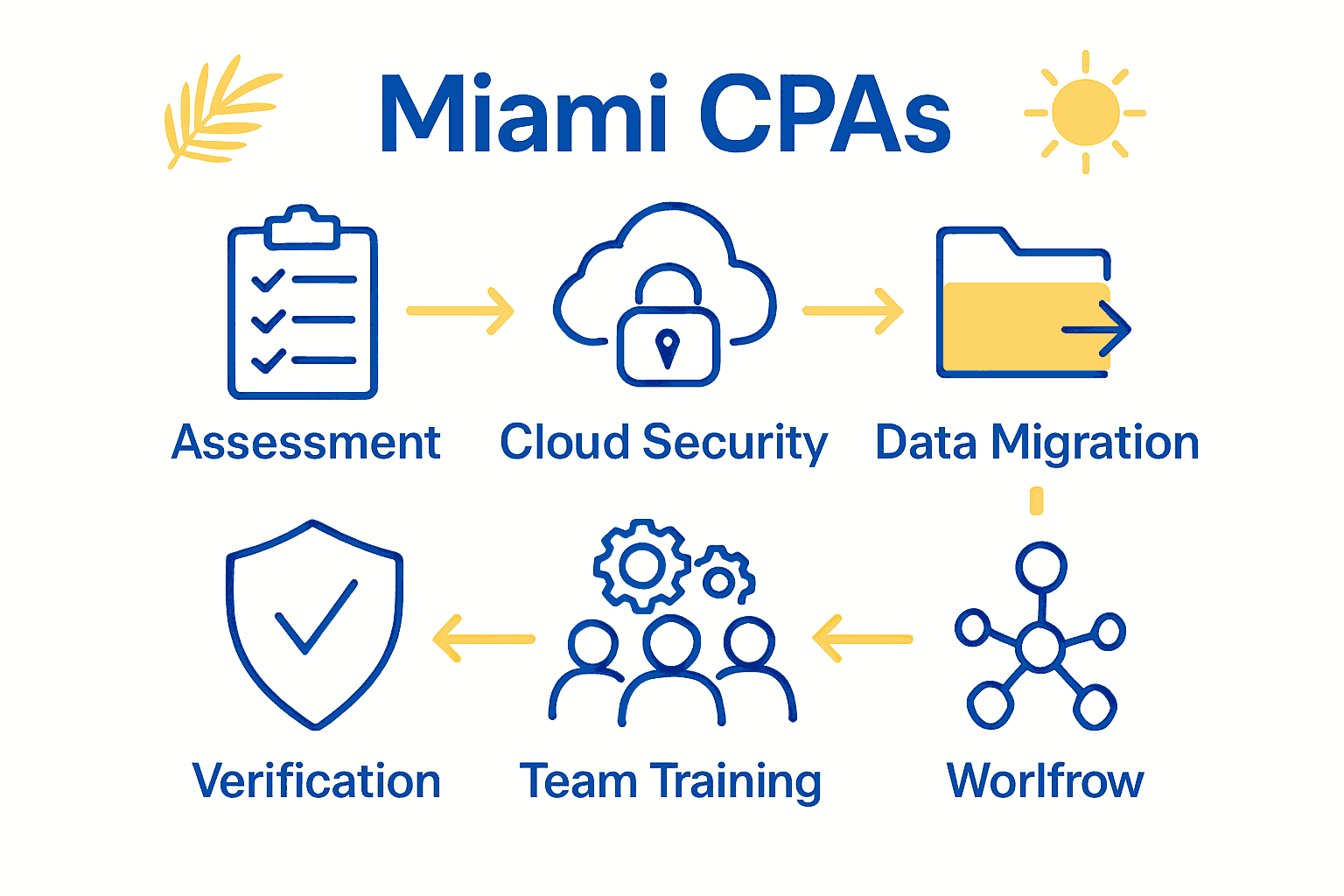
- Step 1: Assess Digital Readiness And Set Clear Goals
- Step 2: Choose And Deploy Secure Cloud Solutions
- Step 3: Migrate Client Data With Compliance Safeguards
- Step 4: Integrate Communication And Workflow Tools
- Step 5: Train Your Team And Ensure Adoption
- Step 6: Verify Security, Compliance, And Performance
Quick Summary
| Key Message | Explanation |
|---|---|
| 1. Assess Digital Readiness Thoroughly | Evaluate technology, skills, processes, and goals to understand your firm’s digital capabilities and identify areas for improvement. |
| 2. Prioritize Secure Cloud Solutions | Choose cloud services with strong security features and compliance with financial regulations to protect client data during and after migration. |
| 3. Implement a Structured Data Migration Plan | Ensure client data migration follows strict security protocols and compliance measures, involving phases for verification and contingency plans. |
| 4. Integrate Effective Communication Tools | Select workflow and communication tools that enhance collaboration and streamline tasks, with clear usage guidelines and training for staff. |
| 5. Focus on Comprehensive Team Training | Provide multi-tiered training that accommodates different learning styles, ensuring all team members can effectively use new technologies while tracking their progress. |
Step 1: Assess digital readiness and set clear goals
For Miami CPAs looking to upgrade their digital workplace, the first crucial step is understanding where your practice currently stands in terms of technological capabilities and strategic goals. According to the Cyber Harvard Readiness Guide, a systematic approach helps organizations determine their true digital preparedness.
Start by conducting a comprehensive internal assessment focusing on five key areas: technology infrastructure, staff digital skills, current workflow processes, client communication methods, and financial resources for potential upgrades. Document your current technology stack including software, hardware, cloud services, and cybersecurity measures. Evaluate your team members computer literacy levels and comfort with digital tools. Ask honest questions like How efficiently are we managing client data? Can our current systems handle increased digital complexity? What technological barriers slow down our work?
As you map out your digital readiness, remember that goal setting is equally important. Develop specific measurable objectives such as reducing manual data entry by 40%, implementing secure client portals within six months, or enabling remote work capabilities for your accounting team.
 These clear targets will guide your digital transformation journey and provide tangible benchmarks for progress. Our digital strategy guide offers additional insights into creating realistic technology roadmaps for professional services firms.
Pro tip for Miami accounting professionals these technology changes can feel overwhelming. Start small. Choose one or two strategic improvements rather than attempting a complete overhaul simultaneously. Your digital workplace will evolve gradually making the transition smoother and less stressful.
Step 2: Choose and deploy secure cloud solutions
As a Miami CPA firm, selecting and implementing secure cloud solutions requires strategic planning and thorough understanding of your specific technological needs. CISA Cloud Security Technical Reference Architecture provides critical guidance for organizations navigating cloud deployment with robust security considerations.
Begin by conducting a comprehensive evaluation of potential cloud providers. Focus on key criteria such as data encryption standards, compliance with financial industry regulations, access control mechanisms, and disaster recovery capabilities. For accounting practices, prioritize solutions offering end to end protection for sensitive client financial information. Look for cloud platforms that provide multi factor authentication, granular user permissions, and comprehensive audit trails. Consider solutions specifically designed for professional services that understand the unique compliance requirements of accounting firms.
When evaluating cloud solutions, create a structured comparison matrix that ranks providers based on security features, cost effectiveness, scalability, and integration potential with your existing accounting software. Pay special attention to data residency requirements regulatory compliance specific to financial services. Miami accounting firms dealing with international clients should ensure their cloud solutions meet both local and global data protection standards. Securing the Defense Industry article offers additional insights into developing robust security architectures that can be adapted for professional service environments.
Pro tip remember that cloud migration is not a one time event but an ongoing process. Start with migrating less sensitive workflows and gradually expand your cloud infrastructure. Always maintain local backups and develop a comprehensive disaster recovery plan to ensure business continuity during and after cloud deployment.
Step 3: Migrate client data with compliance safeguards
Migrating sensitive client financial data requires a meticulous approach that prioritizes security and regulatory compliance. HHS Security Guidance provides critical insights into protecting confidential information during digital transformation for professional services.
Begin your data migration process by conducting a comprehensive risk assessment. Create a detailed inventory of all existing client data including tax records financial statements personal identification information and contact details. Develop a secure mapping strategy that identifies each data type classification level and specific compliance requirements. Implement robust encryption protocols for data in transit and at rest ensuring that every piece of information remains protected throughout the migration process. Select cloud platforms with advanced security features including multi factor authentication end to end encryption and granular access controls that align with financial industry regulations.
Establish a systematic migration workflow that includes multiple verification checkpoints. Break down the migration into manageable phases starting with less sensitive client information and progressively moving to more critical datasets. Create comprehensive audit trails that document every step of the data transfer process. How to Improve Cybersecurity for Miami Accounting Firms offers additional strategies for maintaining rigorous security standards during digital transitions.
Pro tip always maintain redundant backup systems during data migration. Prepare a contingency plan that allows immediate restoration of client information in case of any unexpected transfer complications. Test your migration process multiple times in a controlled environment before executing the final transfer to minimize potential risks to your clients confidential data.
Step 4: Integrate communication and workflow tools
Transforming your Miami CPA practice requires thoughtful integration of communication and workflow tools that streamline operations and enhance team collaboration. Why Automate Workflows: Complete Guide for Accountants offers valuable insights into modernizing your practice management approach.
Start by evaluating your current communication and workflow gaps. Identify manual processes that consume excessive time such as tracking client interactions managing document approvals and coordinating team projects. Select integrated platforms that offer seamless communication channels secure document sharing real time collaboration features and automated task management. Look for solutions that provide comprehensive dashboards allowing you to monitor project status client interactions and team productivity from a single interface. Prioritize tools with robust integration capabilities that can connect with your existing accounting software customer relationship management systems and cloud storage platforms.
Implement a phased rollout strategy for your new communication and workflow tools. Begin with pilot testing among a small team segment to identify potential challenges and training requirements. Develop clear standard operating procedures that outline how team members should use these new tools ensuring consistent adoption and maximizing their potential. Create training materials and conduct interactive workshops to help your staff understand the new systems functionality and benefits. Establish clear communication protocols that define expected response times collaboration guidelines and documentation standards for each tool.
Pro tip when introducing new technology always prioritize user experience and ease of adoption. Select tools with intuitive interfaces and provide comprehensive onboarding support. Remember that successful digital transformation depends not just on technology but on how effectively your team embraces and utilizes these new capabilities.
Step 5: Train your team and ensure adoption
Successful digital transformation in your Miami CPA firm hinges on comprehensive team training and strategic technology adoption. NIST IT Security Awareness and Training Program provides a robust framework for developing effective technology training strategies.
Design a multi tiered training approach that addresses different learning styles and technological proficiency levels within your team. Create interactive workshops that combine theoretical instruction with hands on practical exercises. Develop customized training modules that break down complex digital tools into digestible segments focusing on real world accounting scenarios. Implement a mentorship program where more technologically savvy team members can support colleagues struggling with new digital workflows. Utilize a combination of live training sessions video tutorials written documentation and interactive online learning platforms to accommodate diverse learning preferences.
Establish clear metrics and accountability mechanisms to track technology adoption progress. CISA Cybersecurity Workforce Training Guide recommends creating performance indicators that measure both technical proficiency and practical application of new digital tools. Schedule regular check ins to assess individual and team progress gather feedback and address any implementation challenges. Consider implementing a recognition program that rewards team members who demonstrate exceptional digital skill development and workflow optimization.
Pro tip approach team training with empathy and patience. Recognize that technological change can be intimidating for some professionals. Create a supportive learning environment that encourages questions experimentation and continuous improvement. Remember that successful adoption is less about the technology itself and more about building confidence and enthusiasm among your team members.
Step 6: Verify security, compliance, and performance
The final stage of your digital workplace transformation requires a comprehensive verification process that ensures your new technological infrastructure meets the highest standards of security, regulatory compliance, and operational efficiency. NIST Security Certification Guide provides a robust framework for systematically evaluating your digital systems.
Conduct a multi layered verification process that examines security protocols performance metrics and regulatory adherence. Perform penetration testing to identify potential vulnerabilities in your network infrastructure. Implement comprehensive security audits that assess access controls data encryption methods and user authentication processes. Create detailed performance benchmarks that measure system response times workflow efficiency and resource utilization. Compare your new digital infrastructure against industry specific compliance requirements for accounting firms including data protection regulations financial reporting standards and client confidentiality protocols.
Develop a continuous monitoring strategy that allows real time tracking of system performance and security status. Zero Trust Security Guide for Accountants offers advanced insights into maintaining rigorous security standards. Schedule regular comprehensive reviews that include both automated scanning tools and manual expert assessments. Document all verification results create improvement action plans and establish clear escalation procedures for addressing any identified gaps or potential risks.
Pro tip remember that verification is not a one time event but an ongoing process. Technology evolves rapidly and your security strategies must remain adaptive and proactive.
 Cultivate a culture of continuous improvement where team members are encouraged to report potential security concerns and contribute to enhancing your digital workplace infrastructure.
Elevate Your Miami CPA Firm With a Strategic Digital Workplace
Transitioning your Miami CPA practice to a secure digital workplace can feel overwhelming. The article highlights key challenges such as choosing secure cloud solutions, protecting sensitive client data, and ensuring full compliance throughout your digital transformation. Your goals may include reducing manual workflows and enabling seamless remote collaboration while maintaining ironclad security and regulatory standards.
We understand these pressures and offer expert guidance to help you confidently navigate this journey. Our services are designed specifically for accounting professionals seeking a reliable, compliant, and efficient technology infrastructure. Explore how thoughtful digital transformation can streamline your processes and empower your team.
Take control of your firm’s future by partnering with us at Transform42. Discover tailored solutions that align IT strategy with your business objectives, backed by 99.99 percent uptime and a 15-minute response guarantee. Learn how our focus on processes and people ensures your team embraces new digital tools with confidence. Visit us now to start transforming your CPA firm into a secure, agile digital workplace that delivers peace of mind every day.
Frequently Asked Questions
How do I assess the digital readiness of my CPA firm?
To assess your digital readiness, begin by evaluating your technology infrastructure, staff skills, workflow processes, communication methods, and financial resources. Document your current technology stack and identify the areas needing improvement.
What specific goals should I set for my digital transformation?
Set measurable objectives tailored to your needs, such as reducing manual data entry by 40% or implementing secure client portals within six months. These specific targets will guide your digital strategy and help you track progress effectively.
What key factors should I consider when choosing cloud solutions?
When selecting cloud solutions, prioritize security features, compliance with financial regulations, and the ability to integrate with your existing systems. Develop a comparison matrix to evaluate providers based on these criteria to ensure a suitable choice for your accounting needs.
How can I ensure a smooth data migration process?
To ensure a smooth migration, conduct a thorough risk assessment and implement encryption protocols for secure data transfer. Start with less sensitive data and set up verification checkpoints to monitor the progress of your migration phases.
What training methods are effective for my team’s digital adoption?
Utilize a multi-tiered training approach that combines hands-on workshops with online tutorials to accommodate various learning styles. Encourage mentorship among team members to support those needing extra guidance with the new tools and systems.
How can I verify the security and compliance of my new digital systems?
Conduct regular security audits and performance assessments to ensure your systems meet industry compliance standards. Schedule ongoing reviews and develop a continuous monitoring plan to quickly identify and address any potential vulnerabilities.
Recommended
- 7-Step Digital Transformation Checklist for Miami CPAs – Stratgetic IT Consultants for Accountants
- 8 Essential Digital Strategy Tips for Miami CPAs – Stratgetic IT Consultants for Accountants
- 8 Essential Digital Strategy Tips for Miami CPAs
- 7 Digital Transformation Best Practices for Miami CPAs – Stratgetic IT Consultants for Accountants