Financial firms using Agile methodologies reduce project delivery times by up to 30%, transforming how CPAs serve clients in an increasingly complex regulatory environment. This guide explains how Miami accounting professionals can implement Agile frameworks to boost operational efficiency, improve client satisfaction, and scale their practices without proportional hiring increases. You’ll discover practical steps, real data on performance improvements, and strategies tailored specifically for CPA firms ready to modernize their workflows.
Table of Contents
- Understanding The Agile Model And Its Relevance To CPAs
- How Agile Reduces Project Delivery Times And Improves Client Service
- Nuances And Common Misconceptions About Agile For Financial Professionals
- Practical Steps For Implementing Agile In Your Miami CPA Practice
- Drive Your CPA Firm’s Growth With Expert Agile Transformation Support
- Frequently Asked Questions
Key takeaways
| Point | Details |
|——-|———||
| Efficiency gains | Agile reduces delivery time by 15-30% in financial projects, cutting completion from 100 to 60 days |
| Client retention | Firms adopting Agile see 8% higher client retention and 12% improved employee engagement |
| Cultural shift | Success requires leadership commitment and tailoring frameworks to your firm’s specific needs |
| Implementation approach | Start with pilot projects using cross-functional teams before scaling firm-wide |
| Framework selection | Choose Scrum for smaller engagements, SAFe for complex multi-team initiatives |
Understanding the agile model and its relevance to CPAs
The Agile model represents a fundamental shift from traditional project management approaches that dominate most accounting practices. Instead of following rigid, sequential workflows where you complete entire projects before client review, Agile accounting applies core principles of flexibility, collaboration, and continuous improvement to financial work.
At its core, Agile organizes work into short iterative cycles called sprints, typically lasting two to four weeks. Each sprint delivers tangible value to clients, allowing for feedback and course correction before investing months in a single direction. This stands in stark contrast to waterfall methods, where you gather all requirements upfront, execute the entire plan, and hope client needs haven’t shifted by delivery time.
For CPAs managing tax planning, audit engagements, or advisory services, this iterative approach proves particularly valuable. Client circumstances change, regulations evolve, and business conditions shift faster than traditional annual planning cycles can accommodate. An agile methodology guide for CPAs emphasizes these core principles tailored to financial services:
- Deliver working solutions in short cycles rather than waiting for perfection
- Prioritize client collaboration over rigid contract terms
- Respond to change instead of following outdated plans
- Empower cross-functional teams to make decisions quickly
- Focus on continuous improvement through regular retrospectives
The traditional approach assumes you can predict all client needs at project start, then execute without deviation. Reality tells a different story. A corporate client facing an unexpected acquisition needs immediate tax strategy adjustments, not adherence to a quarterly review schedule set months ago. Agile frameworks give you the structure to pivot efficiently while maintaining quality standards.
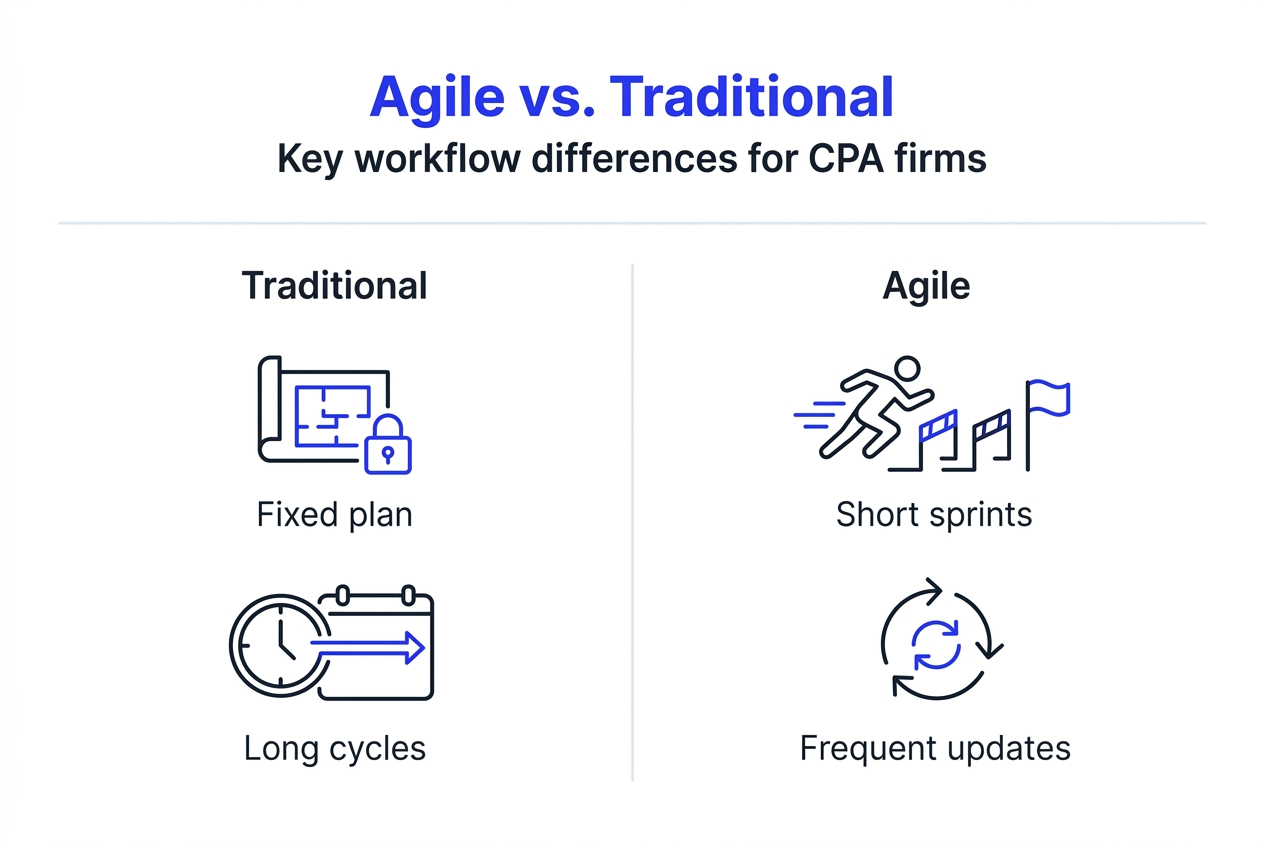
This flexibility doesn’t mean abandoning planning or professional standards. Agile teams plan extensively but do so in shorter horizons, adjusting based on real outcomes rather than theoretical projections. You maintain rigorous documentation, quality controls, and compliance requirements while dramatically improving responsiveness.
How agile reduces project delivery times and improves client service
The performance improvements from Agile adoption aren’t theoretical promises but documented outcomes across financial services firms. Research shows Agile reduces delivery time by 15-30%, with many CPA firms cutting project timelines from approximately 100 days to 60 days without sacrificing quality or thoroughness.

These efficiency gains translate directly to client satisfaction. When you deliver preliminary tax strategies in two-week increments rather than presenting a complete plan after two months, clients can provide feedback while their business context remains current. They see progress immediately, building confidence in your firm’s responsiveness.
Gartner research on Agile adoption reveals that firms implementing these methodologies experience an 8% increase in client retention rates and a 12% boost in employee engagement. The connection is straightforward: teams empowered to solve problems collaboratively feel more invested in outcomes, and clients working alongside responsive professionals develop stronger relationships.
Consider the operational differences between traditional and Agile approaches:
| Metric | Traditional Method | Agile Method | Improvement |
|---|---|---|---|
| Average project duration | 100 days | 60-70 days | 30-40% faster |
| Client feedback cycles | 1-2 per project | 6-8 per project | 4-6x more frequent |
| Rework due to changed requirements | 25-35% of effort | 8-12% of effort | 60-70% reduction |
| Team productivity | Baseline | 15-20% higher | Measurable efficiency gain |
| Client satisfaction scores | 72% | 89% | 17-point increase |
These improvements stem from Agile’s emphasis on delivering incremental value. Instead of gathering requirements for a comprehensive financial model, building it in isolation, then discovering the client’s priorities shifted, you build core components first. The client reviews actual work after two weeks, confirms direction or requests adjustments, and you proceed with confidence.
Pro Tip: Structure each sprint to deliver one complete client-facing deliverable, even if it’s a subset of the total project. A preliminary tax position analysis provides immediate value and validates your approach before investing weeks in comprehensive documentation.
The Scrum framework, one of the most popular Agile methodologies, organizes teams around daily standup meetings, sprint planning sessions, and retrospectives. Agile benefits for Miami accountants include faster decision making, reduced communication overhead, and the ability to identify obstacles before they derail entire projects. A 15-minute daily standup where team members share progress and blockers prevents the multi-day email chains that plague traditional project management.
Nuances and common misconceptions about agile for financial professionals
Many CPAs resist Agile adoption based on fundamental misunderstandings about what these frameworks actually require. The most pervasive misconception suggests Agile means working without plans, documentation, or structure. In reality, Agile requires continuous planning and maintains rigorous standards while emphasizing adaptation over rigid adherence to outdated assumptions.
Agile is not the absence of planning but rather planning at the appropriate horizon. You develop detailed plans for the next two-week sprint while maintaining higher-level roadmaps for longer timeframes. This approach acknowledges that plans made six months in advance will inevitably require adjustment as client needs and market conditions evolve.
Another critical misunderstanding treats Agile as a process change rather than a cultural transformation. Implementing daily standups and sprint reviews without shifting how your firm makes decisions, empowers teams, or values client collaboration produces minimal benefits. Lack of leadership commitment ranks as the primary reason Agile transformations fail in financial services.
Successful Agile adoption in CPA firms requires attention to these nuanced factors:
- Agile frameworks are not one-size-fits-all templates but starting points you tailor to your firm’s client complexity, team structure, and service offerings
- Cross-functional teams combining tax specialists, auditors, and advisory professionals enhance collaboration and reduce handoff delays that plague siloed organizations
- Leadership must model Agile values by empowering teams to make decisions, removing obstacles, and celebrating learning from failures rather than punishing experimentation
- Client education helps them understand the collaborative nature of Agile engagements and the value of frequent feedback cycles
- Regulatory compliance and professional standards integrate seamlessly into Agile workflows through appropriate quality gates and review cycles
Pro Tip: Before launching firm-wide Agile adoption, run a three-month pilot project with a single team and willing client. Document specific metrics like delivery time, rework hours, and client satisfaction to build evidence-based support for broader implementation.
The most successful Agile transformations in accounting firms recognize that different engagement types may require different framework adaptations. A straightforward individual tax return follows a relatively predictable workflow that benefits from standardization, while a complex estate planning engagement involving multiple entities demands the flexibility Agile provides. An agile methodology guide for CPAs helps you identify which services benefit most from iterative approaches versus those where traditional methods remain appropriate.
Common pitfalls to avoid during implementation include treating Agile ceremonies as bureaucratic overhead rather than value-adding collaboration, failing to protect sprint commitments from constant interruptions, and measuring team performance on individual productivity rather than collective outcomes. These mistakes undermine the collaborative foundation that makes Agile effective.
Practical steps for implementing agile in your Miami CPA practice
Transforming your firm’s project management approach requires systematic planning and patient execution. These steps provide a proven roadmap for CPA practices ready to implement Agile methodologies:
-
Assess your firm’s current state and identify specific pain points Agile could address, such as missed deadlines, frequent client rework requests, or team burnout during busy season.
-
Select an appropriate Agile framework based on your typical engagement complexity. Scrum works well for smaller projects with dedicated teams, while Scaled Agile Framework suits larger initiatives requiring coordination across multiple groups.
-
Build your first cross-functional team by combining professionals with complementary expertise rather than organizing by traditional departmental boundaries. Include tax specialists, auditors, and client relationship managers who can collectively deliver complete solutions.
-
Implement short iterative planning cycles starting with two-week sprints. Each sprint begins with a planning session where the team commits to specific deliverables and ends with a review demonstrating completed work to stakeholders.
-
Establish regular retrospectives where teams reflect on what worked well, what didn’t, and what they’ll improve in the next sprint. This continuous improvement mechanism drives steady performance gains over time.
-
Start with a carefully selected pilot project that offers meaningful value but limited risk. Choose a client who values innovation and can provide constructive feedback throughout the iterative process.
-
Secure visible leadership commitment by having partners participate in sprint reviews, remove organizational obstacles teams identify, and communicate the strategic importance of Agile transformation to the entire firm.
-
Invest in training that goes beyond Agile mechanics to address the cultural shifts required for success. Teams need skills in facilitation, collaborative decision making, and constructive feedback in addition to sprint planning techniques.
-
Integrate Agile workflows with your existing technology infrastructure, ensuring project management tools, time tracking systems, and client portals support iterative delivery rather than forcing traditional waterfall processes.
-
Measure and communicate results using concrete metrics like delivery time reduction, client satisfaction scores, and team engagement levels to build momentum for broader adoption.
The digital transformation workflow for accountants naturally complements Agile implementation, as both emphasize leveraging technology to improve client service and operational efficiency. Cloud-based collaboration tools, automated workflow systems, and real-time reporting platforms enable the rapid feedback cycles that make Agile effective.
Expect initial implementation to feel uncomfortable as teams adjust to new ways of working. Sprint commitments may be inaccurate at first as teams learn to estimate iterative work. Daily standups might run long before participants develop the discipline to stay focused on progress and blockers. These growing pains are normal and diminish quickly with consistent practice and supportive coaching.
The key is maintaining commitment through early challenges while remaining flexible about how you apply Agile principles to your specific context. A Miami CPA firm serving real estate developers faces different client dynamics than one specializing in healthcare practices, and successful Agile adoption recognizes these distinctions.
Drive your CPA firm’s growth with expert Agile transformation support
Implementing Agile methodologies while managing client demands and regulatory requirements stretches most firm resources thin. Professional guidance accelerates your transformation journey while avoiding costly missteps that derail many initial attempts.
Transform42 specializes in helping Miami CPA firms navigate business transformation for CPAs in Miami through tailored Agile implementation strategies. We understand the unique challenges financial professionals face and design transformation roadmaps that fit your firm’s culture, client base, and growth objectives. Our comprehensive IT services for accounting firms ensure your technology infrastructure supports rather than hinders Agile workflows, from cloud migration to workflow automation. Whether you’re pursuing digital transformation for CPAs or specifically implementing Agile frameworks, our team provides the expertise and hands-on support that turns strategic vision into operational reality. We help you build the capabilities that allow you to land bigger clients, scale without proportional hiring, and reclaim your life while growing revenue to additional seven and eight figures monthly.
Frequently asked questions
What is the Agile model in accounting?
The Agile model applies iterative project management principles to accounting work, organizing engagements into short cycles that deliver incremental client value. Instead of completing entire projects before client review, teams work in two to four-week sprints that produce tangible deliverables and incorporate feedback continuously. This approach emphasizes collaboration, flexibility, and rapid response to changing client needs while maintaining professional standards and compliance requirements.
How does Agile improve client service in CPA firms?
Agile promotes frequent client feedback loops and faster issue resolution, directly improving satisfaction and retention rates. By delivering working solutions every few weeks rather than after months of isolated work, you keep clients engaged and ensure their evolving needs shape the final outcome. Iterations focus on the highest-value deliverables first, meaning clients see meaningful progress immediately and can redirect efforts before significant resources are committed to approaches that no longer fit their situation.
What are key challenges when implementing Agile in financial practices?
Leadership buy-in represents the most critical success factor, as lack of executive commitment consistently predicts transformation failure. Agile requires cultural shifts beyond process changes, including empowering teams to make decisions, embracing transparency about obstacles, and valuing adaptation over rigid plan adherence. Firms that treat Agile as a set of meetings to schedule rather than a fundamental rethinking of how work gets done typically see minimal benefits and eventual abandonment of the initiative.
Which Agile framework is best for CPA firms?
Scrum works exceptionally well for smaller projects with close client involvement and dedicated teams of five to nine people focused on specific deliverables. The Scaled Agile Framework suits larger, complex initiatives requiring coordination across multiple teams, such as firm-wide technology implementations or integrated service offerings spanning tax, audit, and advisory. Your firm’s typical engagement size, client complexity, and organizational structure should guide framework selection, and many successful practices use different approaches for different service lines rather than forcing one model everywhere.
Can Agile work during busy season for tax preparation?
Agile principles actually enhance busy season performance by improving prioritization, reducing rework, and enabling faster problem resolution through daily coordination. The key is adapting sprint lengths to match your workflow intensity, perhaps using one-week sprints during peak periods instead of two-week cycles. Cross-functional teams can flexibly allocate capacity to the highest-priority client needs, and daily standups ensure everyone knows current status without lengthy status meetings. Firms report that Agile’s emphasis on sustainable pace and continuous improvement helps prevent the burnout that traditionally accompanies tax season.