Over 80 percent of American accounting firms are rethinking their entire approach to managing business processes in a digital world. The shift from traditional methods to smart, adaptive systems is changing what clients expect and how professionals deliver value. By learning how process improvements drive accuracy, efficiency, and client satisfaction, you can spot the trends shaping the future of American accounting and find practical ways to stay ahead.
Table of Contents
- Defining Business Process Change In Accounting
- Types Of Process Change For CPA Firms
- Essential Steps For Effective Implementation
- Navigating Regulatory And Compliance Requirements
- Mitigating Risks And Avoiding Common Pitfalls
Key Takeaways
| Point | Details |
|---|---|
| Business Process Change | Accounting firms are redefining their operational workflows to enhance efficiency and strategic value through technology integration and process redesign. |
| Role of Management Accountants | Modern accountants now act as strategic partners, engaging in process reengineering and requiring new skills in change management and technological integration. |
| Continuous Improvement | Successful change is an ongoing journey, necessitating agile adaptations and regular assessments to improve client satisfaction and operational efficiency. |
| Regulatory Compliance Navigation | Firms must develop adaptive systems for compliance that balance technological advances with stringent legal requirements, ensuring transparency and integrity. |
Defining Business Process Change in Accounting
Business process change represents the strategic transformation of how accounting firms and professionals approach their operational workflows, moving beyond traditional number-crunching toward more dynamic, technology-enabled service delivery. At its core, this concept involves reimagining and redesigning core accounting processes to drive efficiency, accuracy, and strategic value.
Traditionally, management accountants operated primarily as record-keepers and compliance specialists. However, modern accounting demands a more proactive role. Management accountants are now strategic partners who actively participate in process reengineering, performance evaluation, and organizational transformation. This shift requires developing sophisticated skills in change management, technological integration, and strategic thinking.
The mechanics of business process change in accounting typically involve several critical components. These include comprehensive workflow analysis, identifying inefficient procedures, leveraging technological solutions, and creating adaptable systems that can quickly respond to evolving business needs. Structured change management approaches help accounting professionals systematically evaluate and implement meaningful process improvements.
Key focus areas for business process change include:
- Automating repetitive administrative tasks
- Implementing cloud-based accounting platforms
- Developing real-time reporting and analytics capabilities
- Enhancing data security and compliance protocols
- Creating more collaborative, cross-functional workflows
Successful business process change is not about wholesale replacement of existing systems, but strategic, incremental improvements that compound over time. For Miami CPAs, this means staying agile, embracing technology, and continuously refining operational approaches to deliver exceptional value to clients.
Types of Process Change for CPA Firms
CPA firms are experiencing a transformative era where multiple types of process changes are critical for staying competitive and delivering exceptional client value. Modernization strategies reveal that successful accounting practices are embracing comprehensive approaches to operational evolution.

The primary types of process change for CPA firms can be categorized into three strategic dimensions: technological integration, service model transformation, and organizational restructuring. Technological integration involves adopting advanced digital tools that streamline complex accounting workflows, such as cloud-based accounting platforms, artificial intelligence-driven analytics, and automated compliance tracking systems.
Service model transformation represents another crucial change type, where firms move beyond traditional compliance services to become strategic advisory partners. This shift requires developing new skill sets, creating more consultative client engagement models, and expanding service offerings beyond traditional tax and audit functions. Digital change management plays a critical role in facilitating these sophisticated transitions.
Key types of process change include:
- Technological Automation
- Digital Service Delivery
- Data Analytics Integration
- Client Experience Redesign
- Skill Set Modernization
Successful process change is not a one-time event but a continuous journey of adaptation. Miami CPA firms must remain agile, continuously assess their operational models, and be willing to experiment with innovative approaches that enhance efficiency, client satisfaction, and competitive positioning.
Essential Steps for Effective Implementation
Implementing business process change requires a structured and strategic approach that goes beyond simple technological upgrades. Understanding the interdependence between organizational structures and accounting practices is fundamental to creating meaningful and sustainable transformations within CPA firms.
The implementation process begins with comprehensive process classification, which involves meticulously mapping existing workflows and identifying areas requiring optimization. Researchers studying organizational transformation suggest categorizing processes into core, auxiliary, and controlling categories to create a comprehensive blueprint for change. This systematic approach allows firms to understand their current operational landscape and strategically plan targeted improvements.
Successful implementation demands a multifaceted strategy that encompasses technological, human, and organizational dimensions. Key steps include conducting thorough diagnostic assessments, developing clear change management protocols, securing leadership buy-in, and creating robust training programs that support skill development and cultural adaptation.
Critical implementation steps include:
- Conduct comprehensive workflow diagnostics
- Develop a detailed change management roadmap
- Identify and prioritize improvement opportunities
- Design targeted staff training and development programs
- Establish measurable performance indicators
- Create feedback mechanisms for continuous improvement
For Miami CPA firms, effective implementation is not about radical disruption but strategic, incremental enhancements that align technology, people, and processes. The goal is creating an adaptive, responsive organizational ecosystem that can quickly evolve to meet changing client needs and market dynamics.
Navigating Regulatory and Compliance Requirements
Business process change in accounting demands meticulous attention to regulatory landscapes, where even minor operational shifts can trigger complex compliance implications. Business process re-engineering requires careful alignment with existing regulatory standards, ensuring that technological and structural transformations meet stringent legal requirements.
Organizational structure plays a critical role in compliance management. Accounting firms must carefully evaluate their legal entity configurations, understanding how different business structures impact governance, reporting, and regulatory obligations. This might involve strategic decisions about transitioning between Limited Liability Partnership (LLP) and Limited Liability Company (LLC) configurations to optimize compliance and operational flexibility.
Navigating regulatory requirements involves a multifaceted approach that goes beyond simple checkbox compliance. Navigating regulations through intelligent automation has become increasingly important for Miami CPA firms seeking to balance technological innovation with strict adherence to legal standards.
Key compliance navigation strategies include:
- Continuous regulatory education and training
- Implementing robust documentation systems
- Developing proactive risk management protocols
- Leveraging technology for real-time compliance monitoring
- Creating transparent reporting mechanisms
- Establishing clear internal compliance governance
Successful regulatory navigation is not about rigid adherence but creating adaptive systems that can respond quickly to changing legal landscapes while maintaining the highest standards of professional integrity and client trust.
Mitigating Risks and Avoiding Common Pitfalls
Business process change in accounting firms requires strategic risk management and proactive problem prevention. Advanced methods for detecting sudden and gradual changes provide critical insights into identifying potential risks before they escalate into significant operational challenges.
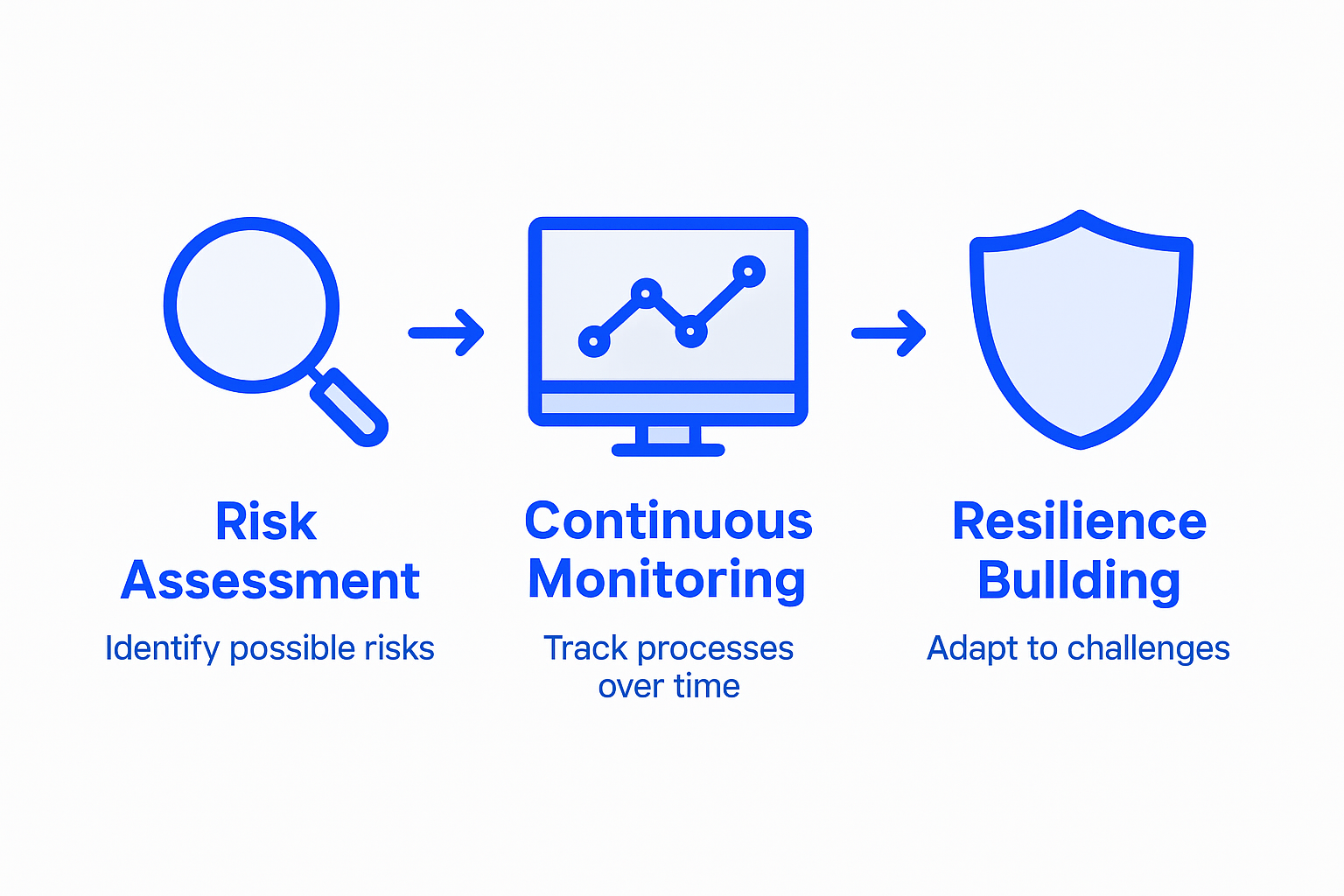
Process monitoring emerges as a fundamental strategy for risk mitigation. Change logging and comprehensive process analysis enable accounting firms to create robust early warning systems that track operational shifts, technological implementations, and potential vulnerabilities. This approach transforms risk management from a reactive to a predictive discipline, allowing Miami CPA firms to anticipate and neutralize potential disruptions.
Navigating industry challenges demands a multifaceted approach that combines technological sophistication with human expertise. Successful risk mitigation involves creating adaptive systems that can quickly identify, assess, and respond to emerging operational complexities.
Key risk mitigation strategies include:
- Implementing comprehensive change tracking mechanisms
- Developing scenario-based risk assessment protocols
- Creating flexible operational contingency plans
- Establishing continuous learning and adaptation frameworks
- Investing in predictive analytics technologies
- Maintaining transparent communication channels
Ultimately, risk management is not about eliminating all potential challenges but building organizational resilience that allows Miami CPA firms to navigate uncertainties with confidence, agility, and strategic foresight.
Transform Your Miami CPA Firm with Strategic Business Process Change
Facing the growing demands of technological automation, compliance, and client experience redesign can be overwhelming for Miami CPA firms. This article highlights critical challenges like navigating regulatory requirements, mitigating risks, and implementing effective change management. At Transform42, we understand that successful business process change requires aligning your firm’s vision with strategies that deliver ironclad compliance and nonstop operational reliability.
Explore how our Digital-transformation Archives – Stratgetic IT Consultants For Accountants offer valuable insights and tools to modernize your workflows. Combining innovation with professional expertise, our solutions are designed to help your firm embrace technology confidently while maintaining the highest standards.
Don’t risk costly downtime or regulatory penalties during your transformation journey. Visit Transform42 now to see how we guarantee 15-minute response times and 99.99% uptime that safeguard your firm’s growth. Take the first step toward a resilient, future-ready CPA firm by learning more at our Processes Archives – Stratgetic IT Consultants For Accountants. Make the change today and secure peace of mind for tomorrow.
Frequently Asked Questions
What is business process change in accounting?
Business process change in accounting refers to the strategic transformation of accounting workflows to enhance efficiency, accuracy, and value delivery, moving from traditional roles to more proactive, technology-integrated approaches.
How do CPA firms implement business process changes effectively?
Effective implementation involves a structured approach, including comprehensive workflow analysis, developing a change management roadmap, securing leadership support, and establishing training programs to adapt to new systems and processes.
What types of process changes can CPA firms undertake?
CPA firms can focus on technological integration, service model transformation, and organizational restructuring. This may involve adopting cloud-based platforms, redesigning client engagement models, and modernizing skill sets for staff.
How can CPA firms mitigate risks during business process changes?
Firms can mitigate risks by implementing comprehensive change tracking mechanisms, developing flexible contingency plans, and utilizing predictive analytics technologies to anticipate and respond to operational complexities.
Recommended
- 8 Essential Digital Strategy Tips for Miami CPAs
- 8 Essential Digital Strategy Tips for Miami CPAs – Stratgetic IT Consultants for Accountants
- 7 Types of Management Consulting Every Miami CPA Should Know – Stratgetic IT Consultants for Accountants
- Business Process Automation Guide for Miami CPAs – Stratgetic IT Consultants for Accountants
- What To Do In Miami: Top Spots And Business Inspiration