
Cyberattacks on small businesses have surged by over 40 percent in just the last year. For Miami accounting firms, the stakes are even higher when sensitive financial data is at risk. Clients trust you with personal details and confidential records, so any security lapse can be devastating. This guide sheds light on the vital role of endpoint security and offers actionable solutions to help protect your firm’s reputation, your clients’ information, and your peace of mind.
Table of Contents
- Defining Endpoint Security for Accounting Firms
- Core Components and How Solutions Work
- Types of Endpoint Security Technologies
- Compliance and Regulatory Considerations
- Risks, Liabilities, and Avoidable Mistakes
Key Takeaways
| Point | Details |
|---|---|
| Importance of Endpoint Security | Endpoint security is crucial for protecting sensitive financial data in accounting firms against cyber threats and is vital for maintaining client trust. |
| Core Components of Protection | Effective endpoint security includes antivirus software, firewalls, encryption, and access control to safeguard devices connected to the network. |
| Compliance Necessity | Robust endpoint security is essential for adhering to regulations such as GDPR and HIPAA, ensuring the protection of confidential information. |
| Recognizing Cybersecurity Risks | Failing to implement strong endpoint security can lead to data breaches, financial losses, and reputational damage, making vigilance critical. |
Defining Endpoint Security for Accounting Firms
For Miami accounting firms, endpoint security is your digital fortress against cybercriminals trying to breach your sensitive financial data. According to Palo Alto Networks, endpoint security involves protecting network endpoints like computers and mobile devices from cyber threats, which is absolutely critical to safeguarding confidential client information.
In practical terms, endpoint security means creating a protective shield around every device connected to your accounting firm’s network. Proofpoint explains that this involves implementing robust measures to prevent unauthorized access and potential data breaches. Think of it like having a security guard checking credentials for every single device that wants to enter your firm’s digital workspace.
For accounting professionals, endpoint security isn’t just a technical requirement – it’s a trust contract with your clients. Your devices hold incredibly sensitive information like tax records, financial statements, and personal client data. A single compromised laptop or smartphone could expose everything from social security numbers to detailed financial histories. This means your endpoint security strategy needs to be comprehensive, covering:
- Protection against malware and viruses
- Encryption of sensitive data
- Access control and authentication protocols
- Real-time monitoring of device activities
- Rapid response to potential security incidents
When you implement strong endpoint security, you’re not just protecting technology – you’re protecting your firm’s reputation, client trust, and professional credibility. In the world of accounting, where precision and confidentiality are paramount, your digital defense matters just as much as your financial expertise.
Core Components and How Solutions Work
Endpoint security is like a complex security system for your digital workspace, with multiple layers of protection working in harmony. PG-P highlights that effective solutions typically include several critical components: antivirus software, firewalls, intrusion detection systems, encryption, and patch management. Each of these acts like a specialized security guard with a specific job in protecting your accounting firm’s digital environment.
According to TechTarget, the core focus of endpoint security platforms revolves around three primary capabilities: data protection, threat detection, and response. Imagine these as the immune system of your technological infrastructure – constantly scanning, identifying potential risks, and neutralizing threats before they can cause serious damage.
Let’s break down how these components work together in a typical endpoint security solution:
- Antivirus Software: Scans and blocks malicious software
- Firewalls: Monitor network traffic and block suspicious connections
- Intrusion Detection Systems: Identify potential security breaches in real-time
- Encryption: Protect sensitive data from unauthorized access
- Patch Management: Keep all systems updated with latest security fixes
For Miami accounting firms, this isn’t just technical jargon – it’s about creating an impenetrable digital vault. Each component acts like a different lock and security measure, ensuring that your clients’ most sensitive financial information remains completely protected from potential cyber threats.
 Your endpoint security isn’t just a technical requirement; it’s a promise of professional integrity and data protection.
Types of Endpoint Security Technologies
In the world of accounting, where financial data is your most precious asset, understanding endpoint security technologies is crucial. Palo Alto Networks outlines several key technologies that form the backbone of digital protection, including antivirus software, firewalls, intrusion detection systems, and endpoint detection and response (EDR) solutions. Each of these technologies acts like a specialized security expert, targeting different types of cyber threats that could compromise your firm’s sensitive information.
Proofpoint explains that modern endpoint security technologies typically fall into two primary categories: Endpoint Protection Platforms (EPP) and Endpoint Detection and Response (EDR) systems. Think of EPP as your preventative shield – working to stop threats before they enter your network – while EDR functions like a forensic investigator, tracking and responding to threats that might have slipped through initial defenses.
Here’s a breakdown of the most critical endpoint security technologies for Miami accounting firms:
- Antivirus Software: Blocks known malware and viruses
- Firewalls: Prevent unauthorized network access
- Intrusion Detection Systems: Monitor network for suspicious activities
- Endpoint Detection and Response (EDR): Identify and mitigate advanced threats
- Data Encryption: Protect sensitive information from unauthorized access
- Multi-Factor Authentication: Add extra layers of device access protection
For accounting professionals, choosing the right mix of these technologies isn’t just about buying software – it’s about creating a comprehensive security strategy that protects your clients’ most confidential financial data. Your endpoint security is essentially a digital vault, ensuring that every device connected to your network is a fortress against potential cyber threats.
Compliance and Regulatory Considerations
Regulatory compliance is the heartbeat of professional accounting, and endpoint security plays a critical role in meeting these stringent requirements. Palo Alto Networks emphasizes that implementing robust endpoint security is essential for complying with key regulations like GDPR and HIPAA, which mandate comprehensive protection of sensitive financial data. For Miami accounting firms, this isn’t just a technical checkbox – it’s a legal imperative that directly impacts your professional standing.
Proofpoint highlights that endpoint security solutions are fundamental in helping organizations meet regulatory standards by safeguarding sensitive information and ensuring data integrity. Think of these solutions as your firm’s compliance bodyguard, continuously monitoring and protecting the confidential financial information that could make or break your professional reputation.
Key compliance considerations for Miami accounting firms include:
- Data Protection: Ensuring all client financial records are securely stored and accessed
- Access Controls: Implementing strict authentication and permission protocols
- Audit Trails: Maintaining comprehensive logs of data access and system interactions
- Encryption: Protecting sensitive information both at rest and in transit
- Regular Security Assessments: Continuously evaluating and updating security measures
Navigating regulatory compliance is like walking a tightrope – one misstep can result in severe penalties, loss of client trust, and potential legal consequences. Your endpoint security strategy isn’t just about preventing cyber attacks; it’s about creating a comprehensive shield that demonstrates your commitment to protecting your clients’ most sensitive financial information.
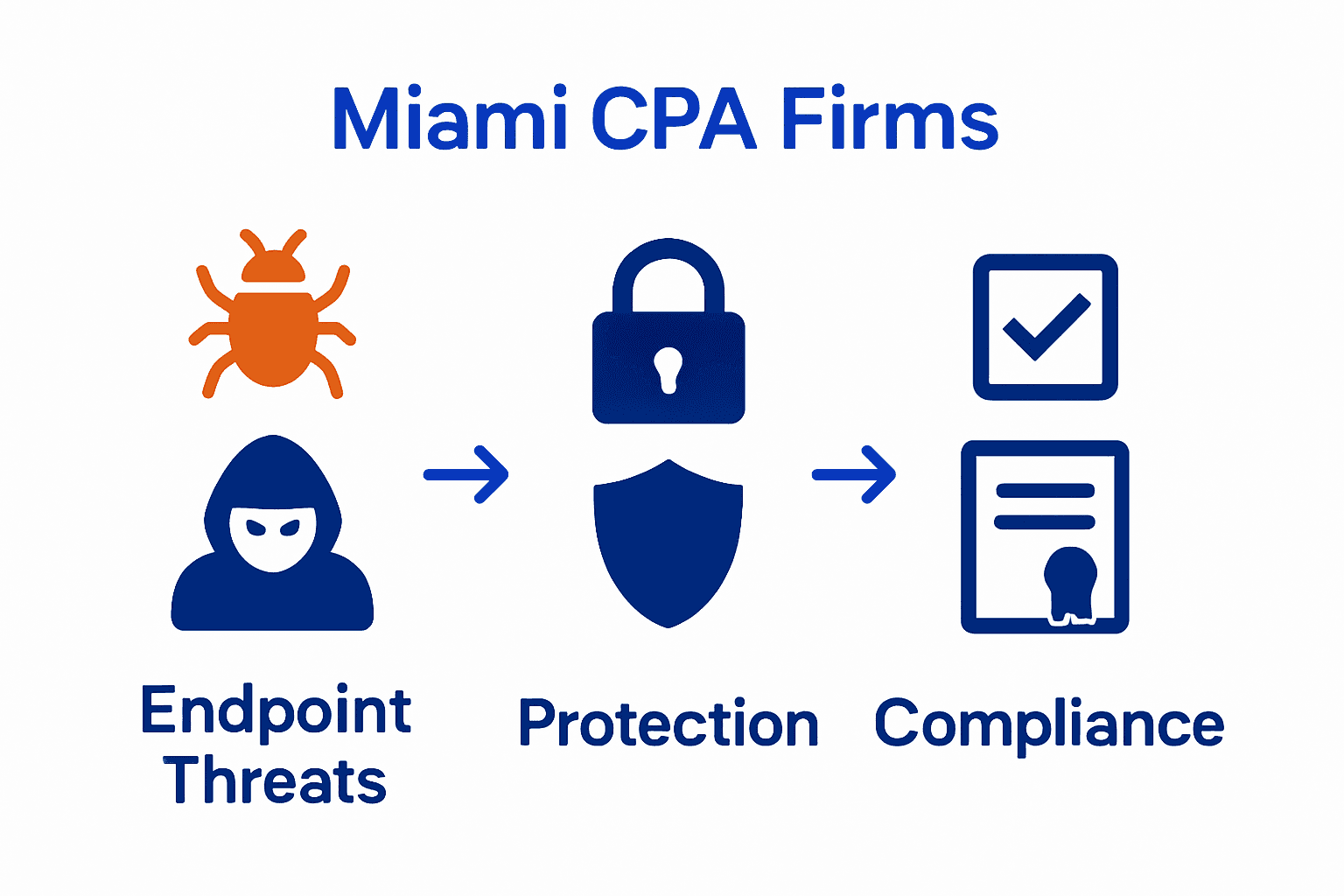
Risks, Liabilities, and Avoidable Mistakes
Cybersecurity vulnerabilities are the silent assassins of professional accounting practices. Palo Alto Networks warns that neglecting endpoint security can lead to catastrophic consequences – data breaches that don’t just compromise numbers, but potentially destroy entire careers. For Miami accounting firms, these risks translate into very real threats: financial losses, reputational damage, and potential legal nightmares that can wipe out years of professional reputation in moments.
Proofpoint emphasizes that failing to implement robust endpoint security exposes organizations to serious risks like malware infections and data theft. The most dangerous mistakes aren’t dramatic hacks, but mundane oversights: missed software updates, weak passwords, and underestimating how vulnerable your digital infrastructure can be. One unpatched laptop, one team member who doesn’t understand security protocols, can become the entry point for a complete system compromise.
Critical risks every Miami accounting firm must recognize:
- Data Theft: Potential loss of confidential client financial information
- Regulatory Penalties: Massive fines for compliance failures
- Reputation Destruction: Losing client trust permanently
- Financial Liability: Direct monetary losses from security breaches
- Operational Disruption: Extended downtime during recovery
Think of endpoint security like hurricane protection for your digital practice. In Miami, you wouldn’t ignore hurricane preparedness – so why would you ignore your digital defenses? Every unprotected device is a potential disaster waiting to happen, capable of wiping out everything you’ve built in one devastating moment.
Secure Your Miami Accounting Firm with Expert Endpoint Protection
Miami CPA firms face an urgent challenge: safeguarding highly sensitive client data against sophisticated cyber threats like malware, unauthorized access, and regulatory penalties. The risks go beyond just technology – they threaten your reputation, client trust, and business continuity. With crucial concepts like encryption, multi-factor authentication, and real-time monitoring at stake, you need an IT partner who truly understands the accounting landscape and compliance demands.
Discover how our tailored solutions can help you build an unbreachable digital fortress. Learn more about comprehensive strategies in our Security Archives – Strategic IT Consultants For Accountants and see why firms in Miami rely on us for 99.99% uptime and guaranteed rapid response.
Take the next step toward total peace of mind with Transform42 Inc. We align your IT strategy perfectly with your firm’s goals to prevent costly downtime and regulatory fallout. Don’t wait until a breach puts everything at risk. Contact us today and secure your firm’s future with endpoint security designed specifically for Miami accounting professionals.
Frequently Asked Questions
What is endpoint security and why is it important for CPA firms?
Endpoint security protects devices like computers and smartphones from cyber threats, ensuring sensitive financial data remains secure, which is essential for maintaining client trust and professional integrity.
What are the core components of endpoint security solutions?
Core components typically include antivirus software, firewalls, intrusion detection systems, encryption, and patch management. Each component plays a critical role in creating a secure digital environment.
How do Endpoint Protection Platforms (EPP) and Endpoint Detection and Response (EDR) differ?
EPP acts as a preventative measure to stop threats before they enter a network, while EDR focuses on detecting and responding to threats that have already infiltrated the system.
What compliance regulations should CPA firms consider regarding endpoint security?
CPA firms must comply with regulations like GDPR and HIPAA, which mandate the protection of sensitive financial data through measures such as data encryption, access controls, and regular security assessments.
Recommended
- Complete Guide to Cyber Security for Miami CPAs
- Complete Guide to Cyber Security for Miami CPAs – Stratgetic IT Consultants for Accountants
- How to Improve Cybersecurity for Miami Accounting Firms – Stratgetic IT Consultants for Accountants
- Securing the Defense Industry: Tackling Cybersecurity in an Interconnected World