Over 60 percent of accounting firms have faced an IT security incident in the past year. As financial data moves deeper into digital systems, the risks to sensitive information are greater than ever. Understanding IT risk management helps you spot vulnerabilities before they become real threats and shows you how to safeguard your clients, your reputation, and the future of your practice.
Table of Contents
- Defining IT Risk Management In Accounting
- Key Types Of IT Risks Facing CPAs
- Core Steps In IT Risk Management Process
- Regulatory Compliance And Legal Obligations
- Best Practices And Common IT Risk Mistakes
Key Takeaways
| Point | Details |
|---|---|
| Importance of IT Risk Management | IT risk management is crucial for protecting digital assets and client information, requiring a holistic approach beyond basic cybersecurity measures. |
| Types of IT Risks for CPAs | Accounting firms face various IT risks, including cybersecurity threats, human error, software vulnerabilities, and compliance challenges. |
| Systematic Risk Management Process | Effective IT risk management involves a structured process of identifying, assessing, mitigating, and continuously monitoring risks. |
| Need for Compliance | Regulatory compliance is essential for maintaining professional standards, protecting client data, and ensuring organizational integrity. |
Defining IT Risk Management in Accounting
For accounting professionals, IT risk management isn’t just another buzzword—it’s a critical strategy to protect your firm’s digital assets and client information. According to Georgia Southern University, risk management represents the comprehensive process of identifying, controlling, and managing potentially harmful events while maintaining an economic balance between risk costs and protective measures.
In the accounting world, IT risk management goes beyond basic cybersecurity. It’s about creating a holistic approach to understanding and mitigating potential technological vulnerabilities that could compromise financial data, client confidentiality, and your firm’s reputation. EC-Council describes this as a method that analyzes and eliminates risks to optimize investment profits and protect against inherent company threats.
Key aspects of IT risk management for accounting firms include:
- Identifying potential technological vulnerabilities
- Assessing the potential financial and reputational impact of these risks
- Developing comprehensive strategies to prevent data breaches
- Implementing robust security protocols
- Creating incident response plans
- Regularly updating and testing security systems
The goal isn’t just prevention—it’s about creating a resilient technological infrastructure that allows your accounting practice to operate confidently and securely. By proactively managing IT risks, you’re not just protecting data; you’re safeguarding your clients’ trust and your firm’s long-term success.
Key Types of IT Risks Facing CPAs
Accounting firms face a complex landscape of IT risks that can threaten their operational integrity, financial stability, and client trust. American InterContinental University highlights several critical risk categories that CPAs must carefully navigate, including financial, human, environmental, and physical risks.
Financial risks represent perhaps the most direct threat to accounting practices. These risks emerge from management practices, technological vulnerabilities, and potential system failures that could compromise financial data integrity. Imagine a scenario where a simple software glitch could accidentally transpose numbers, leading to incorrect tax filings or financial reports—the potential damage to a CPA’s reputation could be catastrophic.
Key IT risk categories for accounting professionals include:
- Cybersecurity Risks: Potential data breaches, hacking attempts, and unauthorized access to sensitive financial information
- Human Error Risks: Mistakes in data entry, accidental deletion, or improper handling of digital financial records
- Software Vulnerability Risks: Outdated systems, unpatched software, and potential exploits in accounting and tax preparation platforms
- Network and Infrastructure Risks: Potential failures in IT infrastructure, including server downtimes, network security gaps
- Compliance and Regulatory Risks: Failure to meet industry standards for data protection and financial record keeping
- Cloud Storage and Remote Access Risks: Potential vulnerabilities in cloud-based accounting systems and remote work technologies
Proactive risk management isn’t just about prevention—it’s about creating a robust technological ecosystem that protects your firm’s most valuable assets. How to Manage IT Services for Miami Accounting Firms can provide additional insights into developing a comprehensive IT risk strategy that keeps your accounting practice secure and resilient.
Core Steps in IT Risk Management Process
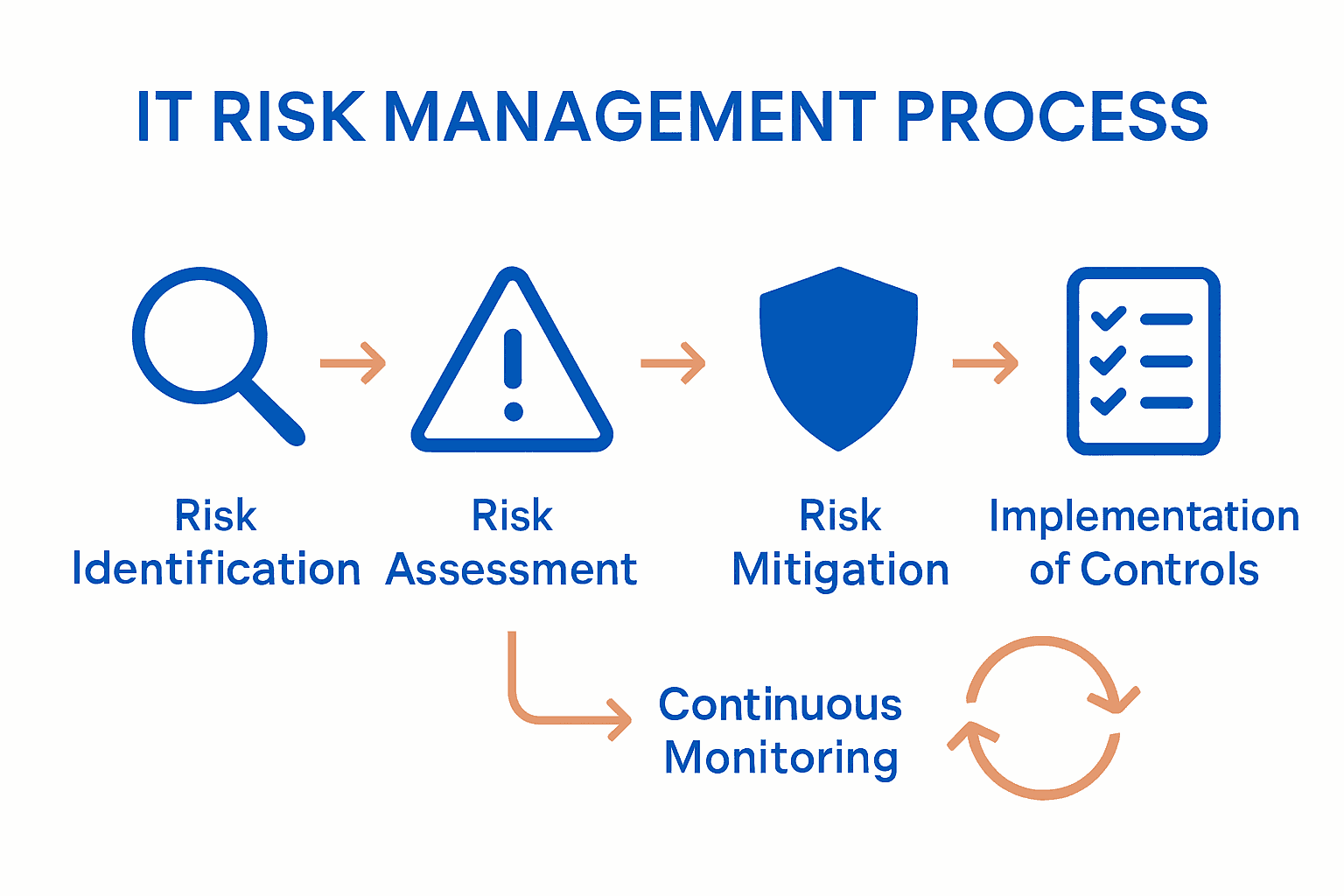
Navigating the IT risk management process requires a systematic and strategic approach that goes beyond simple checklist compliance. Institute of Chartered Accountants of Nigeria outlines a comprehensive framework that breaks down risk management into critical, interconnected steps: risk identification, risk assessment, risk mitigation, and continuous monitoring and review.
The first crucial phase is risk identification. For accounting firms, this means conducting a thorough audit of existing technological infrastructure, examining potential vulnerabilities in software, hardware, networks, and human processes. Think of this as a digital health check-up—you’re looking for any potential weak spots that could compromise your firm’s data integrity, client confidentiality, or operational efficiency.
Key steps in the IT risk management process include:
- Risk Identification: Systematically mapping out potential technological and operational vulnerabilities
- Risk Assessment: Evaluating the potential impact and likelihood of each identified risk
- Risk Prioritization: Ranking risks based on their potential financial and operational consequences
- Risk Mitigation: Developing targeted strategies to address and minimize identified risks
- Implementation of Controls: Putting technical and procedural safeguards in place
- Continuous Monitoring: Regularly reviewing and updating risk management strategies
How to Improve Cybersecurity for Miami Accounting Firms can provide additional insights into developing a robust risk management approach. The Government Finance Officers Association emphasizes that formalizing the risk management function is critical for improving overall management, financial performance, regulatory compliance, and internal controls. By treating IT risk management as a dynamic, ongoing process rather than a one-time event, accounting firms can create a proactive defense against potential technological threats.
Regulatory Compliance and Legal Obligations
Navigating the complex landscape of regulatory compliance is a critical challenge for modern accounting firms. Illinois CPA Society highlights the importance of identifying applicable rules and regulations, particularly emphasizing the AICPA’s Code of Conduct, which holds accounting professionals responsible for all work performed—even when outsourced to third-party service providers.
Compliance isn’t just about avoiding penalties—it’s about maintaining the highest professional standards and protecting your firm’s reputation. Legal obligations in IT risk management extend far beyond simple technological safeguards. They encompass data protection, client confidentiality, financial reporting accuracy, and maintaining robust internal controls that meet or exceed industry standards.
Key regulatory compliance considerations for accounting firms include:
- Data Privacy Regulations: Protecting sensitive client financial information
- Cybersecurity Standards: Implementing comprehensive security protocols
- Record Keeping Requirements: Maintaining accurate and secure digital documentation
- Professional Conduct Guidelines: Adhering to industry ethical standards
- Audit Trail Maintenance: Ensuring transparent and traceable financial processes
- Third-Party Vendor Management: Verifying the compliance of external service providers
Navigating Regulations: Automation In Accounting Compliance can offer deeper insights into managing these complex requirements. The International Federation of Accountants emphasizes that good risk management is not merely about ticking compliance boxes—it’s an integral part of professional accounting practice. Ultimately, regulatory compliance is about building trust, protecting your clients, and demonstrating the highest level of professional integrity.
Best Practices and Common IT Risk Mistakes
In the world of accounting technology, avoiding critical IT risk mistakes can mean the difference between protecting your firm’s reputation and facing potential catastrophic data breaches. Illinois CPA Society provides crucial guidance, particularly emphasizing the need for robust security protocols and transparent communication with clients about third-party service providers.
Many accounting firms unknowingly expose themselves to significant technological vulnerabilities through seemingly innocent oversights. The most common mistakes often stem from a lack of comprehensive risk assessment, inadequate staff training, and insufficient ongoing monitoring of IT infrastructure. Think of your firm’s technology ecosystem like a complex financial statement—every line item matters, and a single overlooked detail can create substantial risk.
Key best practices and common mistakes include:
- Best Practice: Implement comprehensive staff cybersecurity training
- Mistake: Assuming employees automatically understand security protocols
- Best Practice: Regularly update and patch all software systems
- Mistake: Delaying critical security updates and system maintenance
- Best Practice: Develop and maintain detailed incident response plans
- Mistake: Having no clear strategy for addressing potential security breaches
- Best Practice: Conduct regular security audits and vulnerability assessments
- Mistake: Believing your current systems are permanently secure
- Best Practice: Establish clear vendor management and compliance protocols
- Mistake: Overlooking the security practices of third-party service providers
Complete Guide to Cyber Security for Miami CPAs offers additional insights into developing a robust security strategy. The Pennsylvania Institute of Certified Public Accountants emphasizes that effective cybersecurity isn’t just about prevention—it’s about establishing comprehensive controls that protect your entire operational ecosystem, including your network of service providers.
Strengthen Your CPA Firm With Expert IT Risk Management Solutions
The article highlights how vital IT risk management is for CPAs who must protect sensitive financial data while maintaining strict regulatory compliance and operational reliability. You know the pressure of guarding against cybersecurity threats, human errors, and complex compliance requirements. These challenges can feel overwhelming. But with the right IT partner, your Miami accounting firm can confidently eliminate unplanned downtime, reduce security risks, and avoid costly penalties.
Take control of your firm’s IT risk today with solutions that deliver 99.99% uptime and guaranteed 15-minute response times.
Discover how our strategic approach aligns with your business goals to keep your data safe and your operations seamless. Visit Transform42 to learn how we help Miami accounting firms build ironclad defenses against IT risks. Don’t wait for the next cyber incident or compliance slipup. Act now to gain peace of mind and protect the trust your clients place in you. Explore our Complete Guide to Cyber Security for Miami CPAs and see why we are the partner your firm deserves.
Frequently Asked Questions
What is IT risk management in accounting?
IT risk management in accounting involves identifying, controlling, and managing technological vulnerabilities that could compromise financial data and client confidentiality while ensuring a balance between risk costs and protective measures.
What are the key types of IT risks faced by CPAs?
CPAs face various IT risks including cybersecurity risks, human error risks, software vulnerability risks, network infrastructure risks, compliance risks, and cloud storage risks. Each type presents different challenges that need to be proactively managed.

What are the core steps in the IT risk management process for accounting firms?
The IT risk management process includes risk identification, risk assessment, risk prioritization, risk mitigation, implementation of controls, and continuous monitoring. This systematic approach is essential for addressing potential vulnerabilities effectively.
Why is regulatory compliance important in IT risk management for CPAs?
Regulatory compliance is crucial as it involves adhering to data protection regulations, cybersecurity standards, and professional conduct guidelines. Complying with these requirements helps protect sensitive client information and maintain the firm’s reputation.