
More than 60 percent of American accounting firms name vendor management as a leading factor in operational success. With technology and compliance needs rising every year, Miami practices face constant decisions about which partners to trust. Understanding how to systematically manage IT and service vendors not only safeguards sensitive financial data but also helps American firms drive long-term business growth with greater confidence.
Table of Contents
- Vendor Management Defined For Accounting Firms
- Types Of IT Vendors Serving CPAs In Miami
- How Vendor Management Processes Work
- Essential Benefits For Growing Miami Practices
- Risks, Compliance, And Common Pitfalls
Key Takeaways
| Point | Details |
|---|---|
| Strategic Vendor Management | Effective vendor management is essential for CPA firms to optimize relationships and enhance operational efficiency. |
| Diverse IT Vendor Needs | Miami accounting firms require various IT vendors, including cybersecurity, cloud services, and compliance technology, to support their technological infrastructure. |
| Benefits of Vendor Management | Robust vendor management leads to improved operational efficiency, cost predictability, and enhanced cybersecurity, driving firm growth. |
| Risk Awareness | Understanding potential risks, such as data breaches and compliance issues, is critical for establishing secure vendor partnerships. |
Vendor Management Defined for Accounting Firms
Vendor management represents a strategic approach for accounting firms to systematically manage and optimize relationships with external technology and service providers. At its core, vendor management involves creating and maintaining detailed vendor records while ensuring comprehensive compliance with regulatory requirements.
For Miami accounting practices, effective vendor management goes beyond simple record-keeping. It involves carefully evaluating technology partners, negotiating contract terms, monitoring performance, and managing potential risks. Software systems designed for vendor relationship management provide critical tools that help businesses gain independence and establish better engagement methods with their technology and service providers.
Specifically for CPA firms, vendor management encompasses several key responsibilities. These include:
- Thoroughly vetting potential technology vendors
- Conducting comprehensive cost-benefit analyses
- Monitoring vendor performance and service level agreements
- Managing contractual obligations and compliance requirements
- Ensuring data security and protecting sensitive client information
- Negotiating favorable pricing and contract terms
Successful vendor management transforms external partnerships from transactional interactions into strategic relationships that drive operational efficiency and technological innovation for accounting practices.
Pro Vendor Selection Tip: Always conduct comprehensive background checks and request detailed references before committing to any technology vendor partnership, ensuring they have proven experience working with accounting and financial services firms.
Types of IT Vendors Serving CPAs in Miami
Miami accounting firms require a diverse range of specialized IT vendors to support their technological infrastructure and operational needs. These technology partners offer critical services designed specifically for accounting practices, enabling CPAs to maintain robust, secure, and efficient technology ecosystems.
The primary categories of IT vendors serving Miami accounting firms include:
- Cloud Service Providers: Offering secure data storage, backup, and remote access solutions
- Cybersecurity Vendors: Specializing in protecting sensitive financial data and client information
- Practice Management Software Vendors: Providing specialized accounting workflow and client management platforms
- Network Infrastructure Providers: Supporting reliable internet, networking, and communication technologies
- Compliance and Regulatory Technology Vendors: Ensuring technology meets industry-specific regulatory requirements
- Managed IT Service Providers: Offering comprehensive technology support and strategic technology planning
Each vendor type plays a unique role in supporting the technological needs of accounting practices. Cloud service providers, for instance, enable CPAs to securely store and access massive amounts of financial data, while cybersecurity vendors protect against increasingly sophisticated digital threats targeting financial institutions.
Moreover, specialized practice management software vendors understand the unique workflow challenges faced by accounting professionals, developing tools that streamline complex tasks like client reporting, tax preparation, and financial analysis. Miami accounting firms can strategically leverage these specialized IT services to enhance operational efficiency.
Here’s a quick reference comparing the main types of IT vendors valuable to Miami accounting firms:
| Vendor Type | Typical Services Offered | Strategic Value for CPAs |
|---|---|---|
| Cloud Service Providers | Data storage, secure backups | Enables remote, scalable access |
| Cybersecurity Vendors | Threat detection, encryption | Protects client financial data |
| Practice Management Software | Workflow and client platforms | Improves operational productivity |
| Network Infrastructure | Networking, communications | Maintains stable tech environment |
| Compliance/Regulatory Tech | Regulatory monitoring tools | Reduces compliance risks |
| Managed IT Services | Ongoing IT support, planning | Offers strategic tech guidance |
Pro Technology Partnership Tip: Always conduct thorough due diligence by requesting detailed security certifications, checking references from other accounting firms, and performing comprehensive risk assessments before finalizing any IT vendor partnership.
How Vendor Management Processes Work
Vendor management processes represent a systematic approach for accounting firms to strategically oversee and optimize their relationships with technology and service providers. These comprehensive processes involve multiple interconnected stages designed to ensure maximum operational efficiency and minimal technological risk.
The typical vendor management workflow includes several critical stages:
- Vendor Selection
- Conducting thorough market research
- Evaluating potential vendors based on specific criteria
- Assessing technological capabilities and compatibility
- Onboarding and Integration
- Establishing initial contracts and service level agreements
- Configuring technical integrations
- Setting performance expectations
- Performance Monitoring
- Tracking vendor performance metrics
- Conducting regular performance reviews
- Identifying potential improvements or issues
Effective vendor management processes include integrating and standardizing invoice data from various vendors, automating data entry, and streamlining accounts payable processes to enhance efficiency and reduce errors. This approach transforms vendor interactions from transactional exchanges into strategic partnerships that drive technological innovation and operational excellence.
For Miami accounting firms, implementing robust vendor management processes means developing a structured approach that goes beyond simple transactional relationships. By creating comprehensive vendor evaluation frameworks, firms can systematically assess technological partners based on their ability to meet specific operational requirements, security standards, and compliance needs.
Pro Vendor Management Tip: Develop a standardized vendor scorecard that objectively measures performance across key metrics like reliability, technological innovation, customer support, and cost-effectiveness, enabling data-driven decision-making in vendor partnerships.
Essential Benefits for Growing Miami Practices
IT vendor management provides transformative advantages for accounting practices seeking sustainable growth and technological excellence. Miami CPA firms face unique challenges that require strategic technological partnerships to remain competitive and efficient.
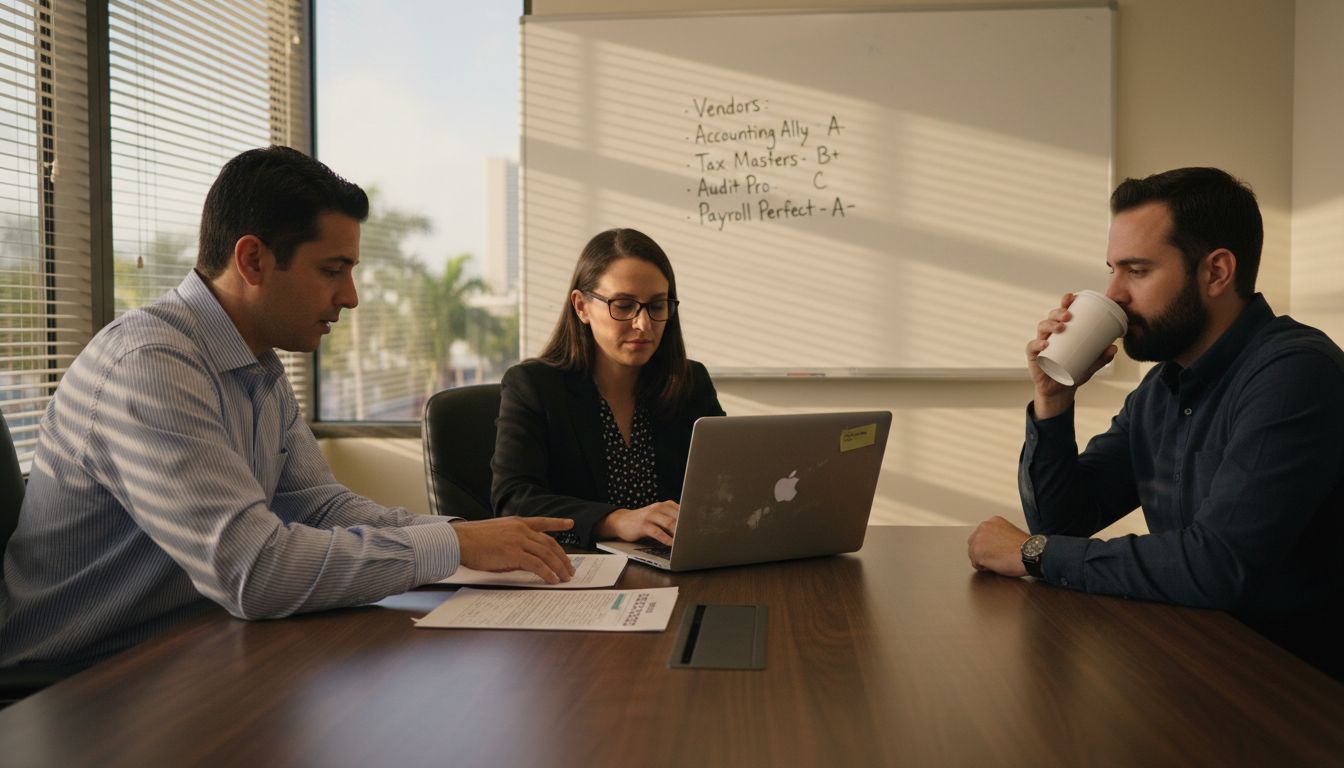
Managed IT services provide accounting firms with critical benefits such as improved workflow efficiency, cost predictability, access to IT specialists, and enhanced cybersecurity measures. These benefits translate directly into tangible business advantages for growing accounting practices.
The key benefits for Miami accounting practices include:
- Operational Efficiency: Streamlining technological processes and reducing manual interventions
- Cost Management: Predictable monthly technology expenses and reduced unexpected IT expenditures
- Scalability: Flexible technology infrastructure that grows alongside the practice
- Cybersecurity Protection: Advanced security measures protecting sensitive financial data
- Compliance Assurance: Ensuring technology meets industry-specific regulatory requirements
- Strategic Technology Planning: Access to expert guidance for technological decision-making
- Performance Optimization: Continuous monitoring and improvement of technological systems
By implementing robust vendor management strategies, Miami accounting practices can transform their technological infrastructure from a potential liability into a strategic competitive advantage. This approach enables firms to focus on core business objectives while maintaining cutting-edge technological capabilities.
This summary outlines how effective vendor management directly benefits growing accounting practices:
| Benefit Area | Practical Outcome | Impact on Firm Growth |
|---|---|---|
| Operational Efficiency | Faster processes, fewer errors | Frees up staff for new clients |
| Cost Management | Predictable tech expenses | Eases budgeting for expansion |
| Scalability | Tech grows with practice needs | Supports rapid client addition |
| Cybersecurity | Better data protection | Safeguards firm reputation |
| Compliance Assurance | Meets industry regulations | Prevents costly penalties |
Pro Technology Investment Tip: Develop a comprehensive technology roadmap that aligns vendor partnerships with your firm’s long-term strategic goals, ensuring each technological investment directly contributes to practice growth and client service excellence.
Risks, Compliance, and Common Pitfalls
IT vendor management represents a critical strategic process for Miami accounting practices, fraught with potential challenges that require careful navigation. Understanding these risks is fundamental to developing a robust technological partnership strategy that protects the firm’s operational integrity.
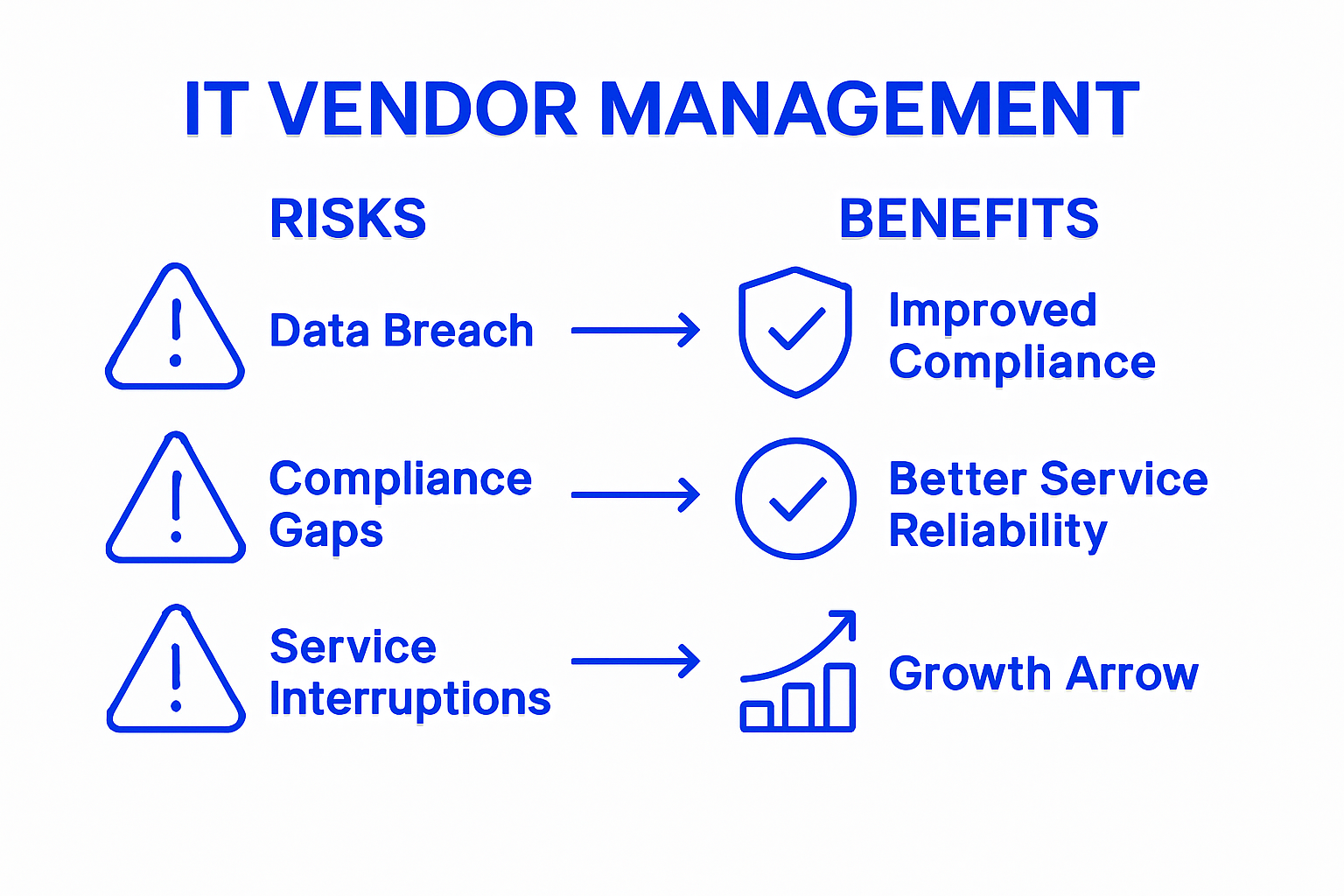
Accounting firms face significant risks including data breaches and regulatory non-compliance, making comprehensive cybersecurity solutions and industry standard adherence paramount. These technological vulnerabilities can potentially expose sensitive financial information and compromise client trust.
Common risks and pitfalls in vendor management include:
-
Inadequate Security Protocols
- Weak data protection mechanisms
- Insufficient encryption standards
- Lack of comprehensive cybersecurity frameworks
-
Compliance Challenges
- Misalignment with industry regulatory requirements
- Incomplete documentation of vendor interactions
- Inconsistent audit trail maintenance
-
Operational Disruption Risks
- Unclear service level agreements
- Undefined support response times
- Potential technology compatibility issues
A pervasive challenge in vendor management involves ambiguity surrounding software support responsibilities, which can lead to significant confusion and potential service gaps. Miami accounting firms must establish crystal-clear expectations and communication channels to mitigate these potential misunderstandings.
Navigating these risks requires a proactive, strategic approach that prioritizes comprehensive vendor assessment, continuous monitoring, and adaptable technological partnerships. Successful practices develop rigorous vendor evaluation frameworks that extend beyond initial contract negotiations.
Pro Risk Mitigation Tip: Implement a quarterly vendor performance review process that systematically evaluates technological capabilities, compliance adherence, security protocols, and alignment with your firm’s evolving strategic objectives.
Elevate Your Miami CPA Firm with Strategic IT Vendor Management
Managing multiple IT vendors presents complex challenges like ensuring compliance, maintaining cybersecurity, and optimizing performance. As this article highlights, Miami accounting firms need a robust vendor management process to protect sensitive data, control costs, and scale efficiently without adding staff. By mastering these critical areas, you can turn technology from a liability into your strategic advantage.
Our team at Transform42 specializes in empowering accounting firms through tailored IT solutions that build compliance and operational excellence. Discover how to streamline your vendor selection and monitoring processes by exploring our Processes Archives – Strategic IT Consultants For Accountants.
Take control of your technology ecosystem today to safeguard your firm’s reputation and accelerate growth. Visit Transform42 now to learn how our expert consulting can help you land bigger clients, scale seamlessly, and reclaim your peace of mind.
Frequently Asked Questions
What is IT vendor management?
IT vendor management is a strategic approach for organizations, particularly accounting firms, to oversee and optimize their relationships with technology and service providers. It includes processes such as vendor selection, onboarding, performance monitoring, and compliance management.
Why is vendor management important for Miami CPAs?
Vendor management is crucial for Miami CPAs as it helps streamline technological processes, manage risks, ensure compliance with regulatory requirements, and enhance operational efficiency through strategic partnerships with technology vendors.
What are the key responsibilities involved in vendor management for accounting firms?
Key responsibilities in vendor management for accounting firms include vetting potential vendors, monitoring performance, managing contractual obligations, ensuring data security, conducting cost-benefit analyses, and negotiating contract terms and pricing.
How can accounting firms mitigate risks associated with vendor management?
Accounting firms can mitigate risks by implementing thorough vendor evaluation frameworks, conducting regular performance reviews, establishing clear service level agreements, and maintaining comprehensive security protocols to protect sensitive client information.
Recommended
- Understanding the Role of IT Service Management
- How to Evaluate Managed IT Services for Miami Accounting Firms – Stratgetic IT Consultants for Accountants
- How to Evaluate Managed IT Services for Miami Accounting Firms
- Understanding Managed Services vs In-House IT for CPAs – Stratgetic IT Consultants for Accountants