
Over eighty percent of American banks have adopted at least one form of Artificial Intelligence, changing the way financial services operate across the country. AI is reshaping everything from fraud detection to customer service, making banking smarter and more personalized than ever before. As new technologies continue to emerge, understanding the unique benefits and challenges for American accounting firms is crucial for anyone looking to stay ahead in the rapidly evolving financial industry.
Table of Contents
- Defining Artificial Intelligence in Banking
- Types of AI Solutions Used in Banking
- How AI Automates Accounting and Compliance
- AI’s Impact on Fraud Detection and Risk
- Challenges and Legal Risks for Miami Firms
Key Takeaways
| Point | Details |
|---|---|
| AI Transforms Banking | AI enhances operational efficiency and customer experiences, allowing banks to automate complex decision-making processes. |
| Diverse Applications | AI solutions are used in fraud detection, risk assessment, customer service, compliance, and operational efficiency. |
| Legal Challenges | Miami firms face regulatory compliance issues and potential algorithmic biases, necessitating robust frameworks for oversight. |
| Improved Risk Management | AI technologies continuously learn to detect fraud and assess risks, providing proactive protection for financial institutions. |
Defining Artificial Intelligence in Banking
Artificial Intelligence (AI) represents a transformative technology that enables computer systems to perform tasks traditionally requiring human intelligence. In the banking sector, AI goes far beyond simple automation, creating intelligent systems capable of learning, adapting, and making sophisticated decisions. The American Bankers Association highlights that AI is not a singular product but a collection of adaptive technologies designed to enhance operational efficiency and customer experiences.
At its core, AI in banking involves complex algorithms and machine learning models that analyze massive volumes of financial data with unprecedented speed and accuracy. These systems can detect intricate patterns, predict potential risks, and generate actionable insights faster than human analysts. From fraud detection to personalized customer service, AI technologies are revolutionizing how financial institutions operate. Advanced machine learning techniques are fundamentally reshaping decision-making processes in retail banking, wealth management, and corporate banking ecosystems.
The practical applications of AI in banking are remarkably diverse. Banks now leverage intelligent systems for critical functions like:
- Fraud Detection: Real-time transaction monitoring and anomaly identification
- Risk Assessment: Sophisticated credit scoring and lending decisions
- Customer Service: Intelligent chatbots and personalized interaction platforms
- Compliance: Automated anti-money laundering and regulatory tracking
- Operational Efficiency: Streamlined back-office processes and resource allocation
By embracing AI technologies, Miami accounting firms can dramatically improve their strategic capabilities, reduce operational costs, and deliver more precise financial services to their clients.
Types of AI Solutions Used in Banking
Banking institutions are increasingly deploying sophisticated AI solutions that transform traditional financial operations. Supervised machine learning techniques offer powerful tools for analyzing complex financial data and making precise predictions, enabling banks to enhance risk management, customer insights, and operational efficiency. These intelligent systems range from basic algorithms to advanced neural networks capable of processing massive datasets with remarkable accuracy.
Several key AI solutions have emerged as game changers in the banking sector. Machine Learning Algorithms are particularly transformative, enabling predictive capabilities across multiple domains. Comprehensive research reveals AI technologies are revolutionizing financial services through advanced applications in credit scoring, fraud detection, and digital insurance platforms. These technologies can rapidly analyze patterns that human analysts might overlook, providing unprecedented insights into financial risks and opportunities.
The most prominent AI solutions in banking include:
- Predictive Analytics: Advanced algorithms that forecast financial trends and customer behaviors
- Neural Networks: Complex systems mimicking human brain processing for intricate financial modeling
- Natural Language Processing: AI systems understanding and interpreting human communication for customer service and compliance
- Robotic Process Automation: Intelligent software automating repetitive administrative tasks
- Blockchain AI: Hybrid technologies enhancing security and transparency in financial transactions
By strategically implementing these AI solutions, Miami accounting firms can dramatically improve their operational efficiency, reduce human error, and provide more sophisticated financial services to their clients.
How AI Automates Accounting and Compliance
AI technologies are revolutionizing accounting and compliance processes by dramatically reducing manual work and enhancing operational precision. Advanced artificial intelligence systems are transforming banking sector efficiency through automated decision-making and sophisticated fraud detection mechanisms, enabling accounting firms to streamline complex regulatory requirements with unprecedented accuracy. These intelligent systems can process massive volumes of financial data faster and more reliably than traditional human-driven approaches.

The automation capabilities of AI extend far beyond simple data entry and basic calculations. Generative AI technologies are now capable of handling intricate compliance workflows, generating detailed reports, and identifying potential regulatory risks with remarkable sophistication. Emerging research indicates that generative AI is fundamentally reshaping financial institutions’ approach to complex administrative processes, while simultaneously addressing potential cybersecurity and ethical challenges.
Key areas where AI automates accounting and compliance include:
- Transaction Monitoring: Real-time tracking and flagging of suspicious financial activities
- Regulatory Reporting: Automated generation of comprehensive compliance documents
- Risk Assessment: Intelligent evaluation of financial risks and potential regulatory violations
- Audit Trail Management: Systematic documentation and verification of financial transactions
- Predictive Compliance: Anticipating potential regulatory changes and proactively adjusting processes
By implementing these AI-driven automation strategies, Miami accounting firms can significantly reduce human error, minimize compliance risks, and allocate their professional resources toward more strategic, value-added services that require nuanced human expertise.
AI’s Impact on Fraud Detection and Risk
Artificial Intelligence has become a game-changing technology in identifying and mitigating financial risks, transforming how accounting firms protect their clients from fraudulent activities. Advanced AI technologies are revolutionizing fraud detection strategies by analyzing complex transaction patterns with unprecedented speed and accuracy, enabling real-time monitoring and immediate risk identification that traditional methods could never achieve.
The power of Machine Learning Algorithms lies in their ability to continuously learn and adapt to emerging fraud tactics. These intelligent systems can process thousands of transactions simultaneously, detecting subtle anomalies that human analysts might overlook. By establishing baseline behavior patterns for individual accounts and comparing real-time transactions against these profiles, AI can instantly flag suspicious activities, dramatically reducing potential financial losses and protecting both institutions and their clients.
Key capabilities of AI in fraud detection and risk management include:
- Predictive Pattern Recognition: Identifying potential fraudulent activities before they occur
- Real-Time Transaction Monitoring: Instant analysis of financial transactions across multiple channels
- Behavioral Analysis: Creating comprehensive risk profiles for individual accounts
- Anomaly Detection: Identifying statistical deviations from normal financial behaviors
- Adaptive Learning: Continuously improving fraud detection accuracy through machine learning
By implementing these advanced AI technologies, Miami accounting firms can provide their clients with robust, proactive protection against financial risks, ultimately building trust and demonstrating technological sophistication in an increasingly complex financial landscape.
Challenges and Legal Risks for Miami Firms
Significant legal challenges are emerging for Miami accounting firms as artificial intelligence technologies transform financial operations. The rapid integration of AI introduces complex regulatory compliance requirements that demand sophisticated risk management strategies. Financial institutions must navigate intricate legal landscapes while implementing cutting-edge technologies that can potentially introduce algorithmic biases and unpredictable decision-making processes.
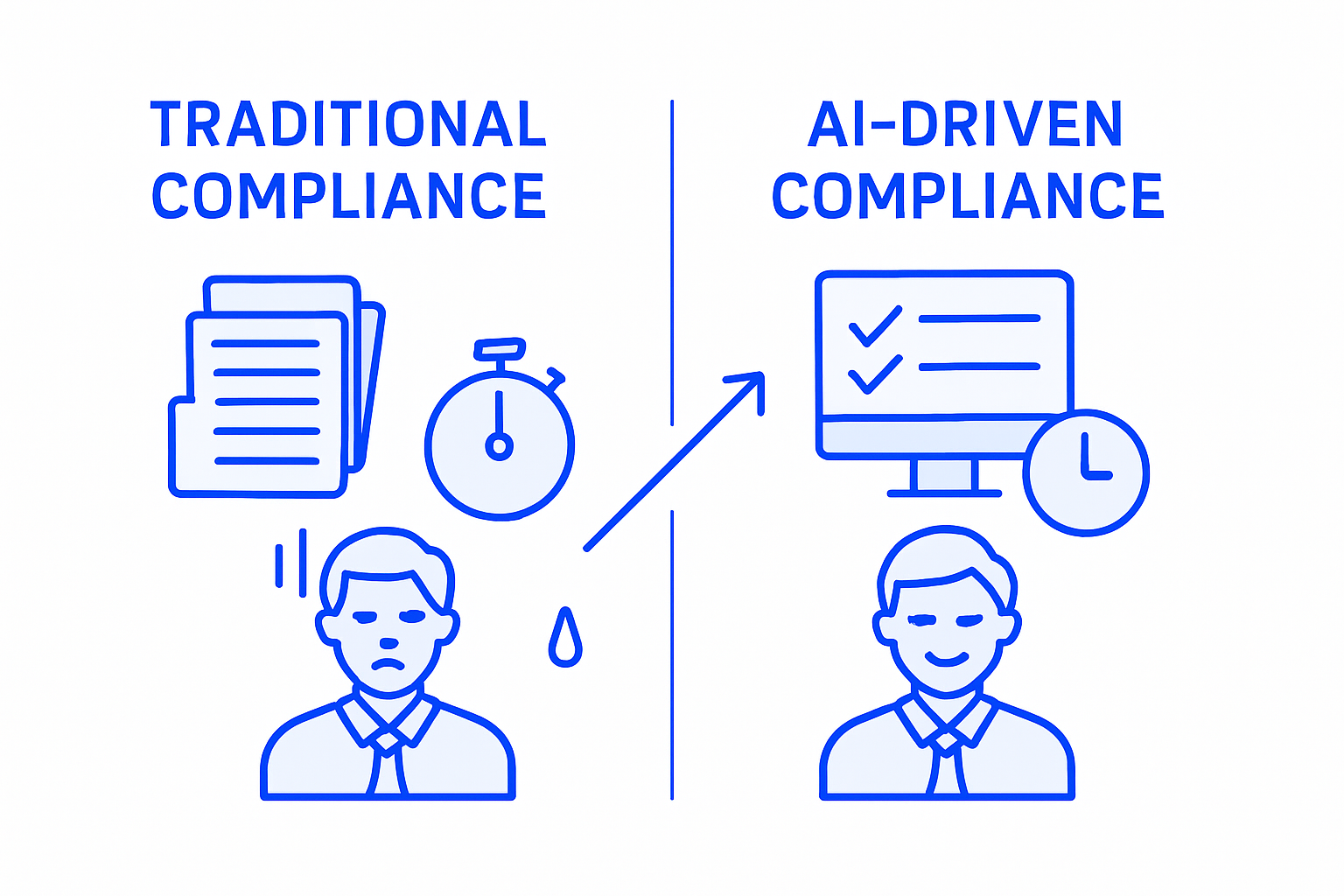
Regulatory Compliance represents a critical challenge for Miami firms adopting AI technologies. These intelligent systems must meet stringent financial regulations while maintaining transparency and accountability. The potential for unintended algorithmic discrimination creates substantial legal exposure, requiring firms to implement robust monitoring and validation mechanisms. Advanced AI solutions are being strategically deployed to mitigate anti-money laundering risks, demonstrating the industry’s proactive approach to technological integration.
Key legal risks and challenges for Miami accounting firms include:
- Algorithmic Bias: Potential discriminatory outcomes in financial decision-making
- Data Privacy Compliance: Protecting sensitive client information
- Cybersecurity Vulnerabilities: Mitigating risks of AI system breaches
- Regulatory Uncertainty: Adapting to evolving AI-related financial regulations
- Ethical Decision-Making: Ensuring AI systems maintain professional standards
Successful Miami accounting firms will need to invest in comprehensive legal and technological frameworks that balance innovation with rigorous compliance requirements, ultimately protecting both their clients and their professional reputation.
Unlock the Power of AI to Transform Your Miami Accounting Practice
The article highlights the critical challenges Miami accounting firms face today with AI adoption, from managing complex compliance risks to leveraging advanced fraud detection and automated risk assessment. If you want to build the strategic capabilities your clients expect without growing your team proportionally, embracing AI-driven technology solutions is essential. These technologies will enable you to dramatically improve operational efficiency while minimizing costly errors and regulatory exposure.
Explore innovative AI strategies tailored for accountants by visiting our Technology Archives.
Take control of your firm’s growth and compliance future today. At Transform42, we empower Miami accountants like you to land bigger clients, scale smartly, and reclaim your time through technology-driven transformation. Discover how effective AI integration and intelligent automation can give you a powerful competitive edge by visiting our Digital-transformation Archives and learn how to balance innovation with regulatory demands in our Grc Archives. Don’t wait for AI risks to become your problem. Get started now at Transform42.
Frequently Asked Questions
What are the key applications of AI in banking?
AI is used in banking for fraud detection, risk assessment, customer service enhancement, compliance automation, and improving operational efficiency. It helps institutions analyze data quickly and accurately.
How does AI improve fraud detection in the banking sector?
AI enhances fraud detection through real-time transaction monitoring, predictive pattern recognition, and behavioral analysis. These technologies can identify suspicious activities faster and more accurately than traditional methods.
What challenges do accounting firms face when integrating AI?
Accounting firms may encounter challenges such as regulatory compliance, data privacy concerns, algorithmic bias, and cybersecurity vulnerabilities when implementing AI technologies.
How does AI automate compliance processes in accounting?
AI automates compliance by generating reports, monitoring transactions for suspicious activities, and anticipating regulatory changes, thus streamlining complex compliance workflows and reducing manual effort.
Recommended
- Understanding the Role of AI in Business Strategies
- Understanding the Role of AI in Business Strategies – Stratgetic IT Consultants for Accountants
- How AI Enhances Financial Reporting Accuracy – Stratgetic IT Consultants For Accountants
- How Are Different Accounting Firms Using AI In 2026? – Stratgetic IT Consultants For Accountants
- AI implementation in LightMirror processes | LightMirror 2023
- AI-Driven Content for Businesses: Complete Guide